


How to choose the right moisturizer for your skin
TL;DR:
- Choosing the right moisturizer depends on matching the formula, texture, and key ingredients to your skin’s needs and environment.
- Understanding ingredient functions and your skin type ensures you select effective products rather than relying on marketing or price.
Choosing the right moisturizer means matching the formula, texture, and key ingredients directly to your skin’s needs and environment. The right product is not the most expensive one or the most heavily marketed. It is the one that contains the correct balance of humectants like hyaluronic acid and glycerin, emollients like ceramides and squalane, and occlusives like dimethicone, calibrated to your skin type and the climate you live in. Concerns like dryness, sensitivity, and hyperpigmentation each require a different formulation approach. Understanding ingredient function, not brand reputation, is what separates a moisturizer that genuinely works from one that simply feels pleasant for an hour.
How to choose the right moisturizer by identifying your skin type
Your skin type is the single most reliable starting point for selecting a moisturizer. Texture, ingredient concentration, and formula weight all follow from it. A rich occlusive cream that transforms dry skin will clog pores and trigger breakouts on oily skin. Getting this step right saves you from months of trial and error.
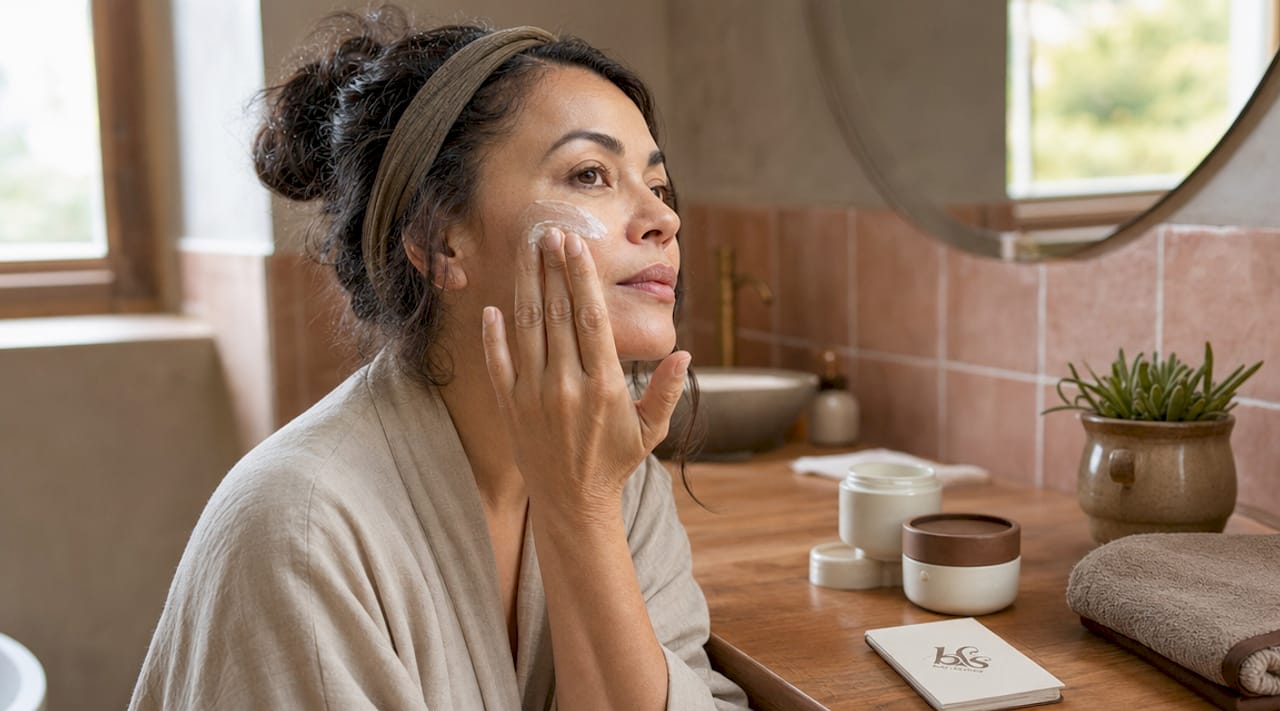
A simple 30-minute skin test is the most reliable home method. Wash your face with a gentle cleanser, apply nothing, and wait half an hour. Tightness and flaking signal dry skin. Shine across the forehead, nose, and chin indicates oily skin. A mix of both points to combination skin. Redness, stinging, or reactivity after cleansing suggests sensitivity.
Once you know your type, the selection criteria become clear:
- Dry skin requires rich creams with emollients like ceramides and shea butter, plus occlusives like petrolatum to seal moisture in. Fragrance-free formulas with ceramides are particularly effective for barrier repair.
- Oily skin benefits from lightweight, water-based gels with niacinamide and dimethicone. Skipping moisturizer worsens oiliness because dehydrated skin compensates by producing more sebum.
- Sensitive skin needs fragrance-free, minimal-ingredient formulas. Shorter ingredient lists reduce the risk of irritation and allergic response.
- Combination skin responds well to water-gel hybrids that hydrate without overwhelming drier cheek areas or congesting the T-zone.
Pro Tip: Before committing to a full-size product, apply a small amount to the inside of your wrist or behind your ear for 24 to 48 hours. This patch test catches reactions before they spread across your face.
What are the key moisturising ingredients and what do they do?
Moisturiser efficacy depends on three functional categories working together: humectants draw water into the skin, emollients smooth and soften the skin surface, and occlusives form a physical barrier to prevent water from escaping. A formula that relies on only one category will underperform.
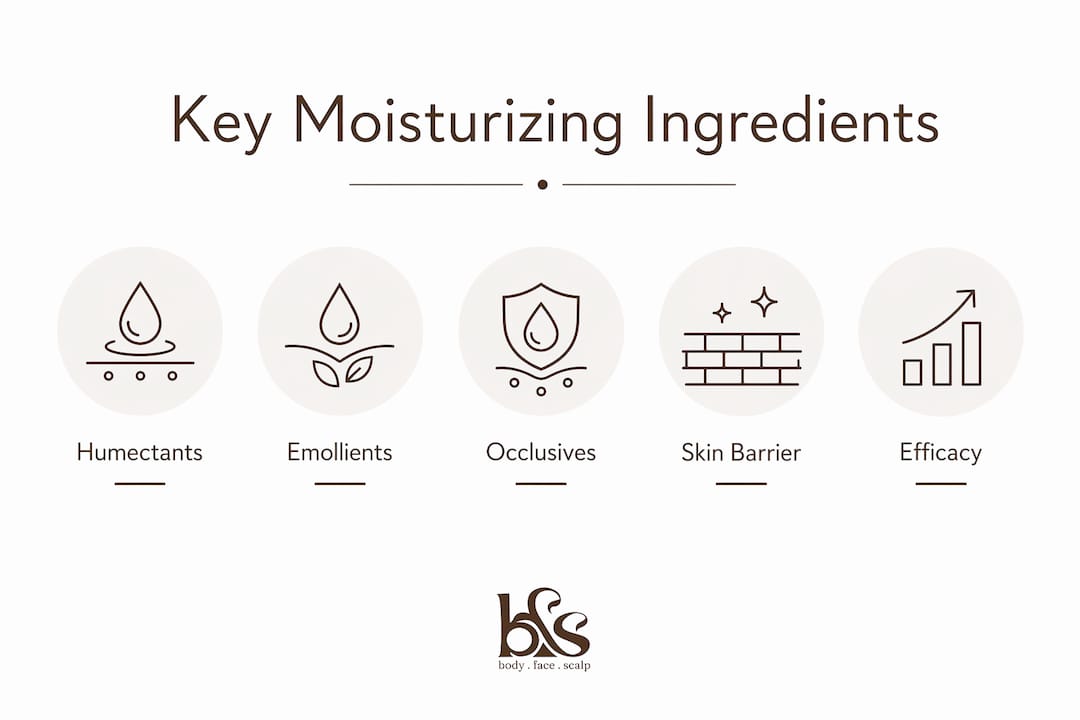
Understanding which ingredients belong to each category lets you read a product label with confidence rather than relying on marketing claims.
| Ingredient | Category | Best for |
|---|---|---|
| Hyaluronic acid, glycerin | Humectant | All skin types, especially dehydrated skin |
| Ceramides, squalane, fatty acids | Emollient | Dry, sensitive, and compromised barrier skin |
| Dimethicone, petrolatum | Occlusive | Dry skin, cold climates, overnight repair |
| Niacinamide | Brightening/oil control | Oily, acne-prone, hyperpigmented skin |
| Retinol, peptides | Anti-ageing | Mature or collagen-depleted skin |
Ceramides make up approximately 50% of the skin barrier’s lipid composition, which means they are not optional for anyone dealing with dryness or sensitivity. They are the structural foundation of a healthy barrier. Look for a concentration of at least 2% on the label for meaningful barrier restoration.
One insight that surprises many people: many luxury moisturizers load up on emollients for a silky, premium feel but lack sufficient occlusives to prevent water loss beyond the first hour. A product can feel luxurious and still fail at its core job.
Pro Tip: Ingredients are listed in descending order of concentration. If hyaluronic acid or ceramides appear near the bottom of a long list, their presence is largely cosmetic. Look for them in the top half of the ingredient list for genuine efficacy.
For a deeper look at how ceramides function at the barrier level, the science behind ceramide moisturisers is worth reading before your next purchase.
How does season and climate affect your moisturizer choice?
Moisturizer needs are not static. They shift with temperature, humidity, and air quality across the year. Using the same formula in January and July in Canada is one of the most common reasons people feel their skincare has stopped working.
Seasonal texture adjustments are not a luxury preference. They are a functional requirement. Winter air is cold and dry, which accelerates transepidermal water loss (TEWL), the process by which moisture escapes through the skin surface. Richer creams with occlusives like petrolatum or dimethicone are the correct response. For additional winter skin guidance, layering a humectant serum beneath your cream adds an extra line of defence against TEWL.
Summer calls for the opposite approach. High-quality lightweight summer moisturizers absorb in under 60 seconds and are formulated to stay comfortable in temperatures above 35°C. In high humidity, heavy silicones and thick occlusives trap sweat against the skin, which can cause miliaria (heat rash) and breakouts in humid climates. A non-comedogenic, breathable water-gel formula is the correct choice for warm, humid months.
| Season | Recommended texture | Key ingredients to prioritise |
|---|---|---|
| Winter | Rich cream or balm | Petrolatum, ceramides, shea butter |
| Summer | Water-gel or lightweight lotion | Hyaluronic acid, niacinamide, glycerin |
| Spring/Autumn | Medium lotion or gel-cream | Ceramides, squalane, light humectants |
| High humidity | Oil-free gel | Glycerin, niacinamide, non-comedogenic actives |
Does price determine moisturizer quality?
Price and effectiveness do not have a direct relationship in skincare. What price does signal is ingredient complexity and the presence of clinical-grade actives. Budget moisturizers under $6 typically contain aloe vera and niacinamide in gel formats. These are genuinely effective ingredients for oily and mildly dehydrated skin. Clinical-grade formulas above $14 tend to include dermatologist-tested concentrations of ceramides, peptides, and retinol, which address more complex concerns like barrier damage and collagen loss.
The myth worth dispelling is that a higher price guarantees a better formula. Many mid-range products from brands like CeraVe and La Roche-Posay contain ceramide concentrations that outperform products costing three times as much. What matters is the ingredient list, not the packaging.
For budget-conscious shoppers, here are the most reliable selection criteria:
- Look for the “non-comedogenic” and “dermatologist-tested” labels as baseline quality indicators.
- Prioritise products where ceramides, hyaluronic acid, or niacinamide appear in the top half of the ingredient list.
- Avoid formulas with coconut oil, cocoa butter, or isopropyl myristate if you have acne-prone or oily skin, as these ingredients are known to clog pores.
- Consider affordable alternatives to medical-grade skincare before assuming a prescription-level product is necessary.
- Fragrance is a cost-cutting addition that increases irritation risk. Fragrance-free formulas are the safer default, especially for sensitive skin.
How to apply moisturizer correctly for maximum results
Correct application technique matters as much as the formula itself. The most effective moisturizer will underperform if applied at the wrong time or in the wrong way.
Follow these steps for optimal hydration and barrier support:
- Cleanse gently. Use a mild, pH-balanced cleanser that does not strip the skin. Harsh cleansers compromise the barrier before your moisturizer even has a chance to work.
- Apply within 60 seconds. Damp skin traps surface moisture and allows humectants to bind water more effectively. The 60-second window after cleansing is when absorption is at its peak.
- Use the right amount. A pea-sized amount covers the face for gel formulas. Richer creams may need a slightly larger amount, roughly the size of an almond, for full coverage without over-application.
- Press, do not rub. Pressing the product into the skin activates absorption and avoids disrupting the barrier. Rubbing creates friction that can irritate sensitive or reactive skin.
- Layer correctly. Apply moisturizer before sunscreen in the morning. Allow 60 to 90 seconds for the moisturizer to settle before applying SPF. Relying on sunscreen alone without a moisturizer underneath accelerates TEWL and leaves the barrier unprotected.
- Adjust for morning versus evening. Morning routines call for lighter formulas that sit well under SPF. Evening is the right time for richer, more occlusive products that support overnight repair.
Pro Tip: If you find your skin is still dry after moisturising, the issue may not be the product. It may be application timing or an underlying barrier concern. The guide on why skin stays dry after moisturising covers the most common causes and how to address them.
Key takeaways
The right moisturizer is determined by skin type, ingredient function, and seasonal climate, not by price or brand recognition.
| Point | Details |
|---|---|
| Skin type drives formula choice | Dry skin needs rich occlusives; oily skin needs lightweight, non-comedogenic gels. |
| Ingredient categories matter | Humectants, emollients, and occlusives each play a distinct role and work best in combination. |
| Ceramides are non-negotiable | At 50% of barrier lipids, ceramides are the most critical ingredient for repair and resilience. |
| Seasonal adjustment is required | Switch to richer creams in winter and breathable water-gels in summer for consistent results. |
| Application technique affects results | Apply to damp skin within 60 seconds and press rather than rub for optimal absorption. |
Why I stopped chasing the “perfect” moisturizer
After years of working with skincare formulations and speaking with people who struggle with persistent dryness, sensitivity, and hyperpigmentation, the pattern I see most often is not a product problem. It is a knowledge problem. People cycle through moisturizers every few weeks, convinced the next one will finally work, when the real issue is that they have never matched the formula to their actual skin needs.
What I advocate for is what I call the “Golden Trio” approach: one humectant, one emollient, and one occlusive, either in a single well-formulated product or layered in sequence. This is not complicated. It is just ingredient literacy applied consistently. When you understand that glycerin draws water in, ceramides smooth and repair the surface, and dimethicone seals everything in place, you stop being confused by marketing language and start reading labels with purpose.
The other shift I encourage is seasonal patience. Switching your moisturizer with the seasons is not indulgence. It is maintenance. A formula that works perfectly in October will likely feel heavy and congesting by June. That is not the product failing. That is your environment changing. Adjust accordingly, give each formula at least four to six weeks before judging it, and your skin will respond with the consistency you have been looking for.
Barrier repair, in my experience, is the single highest-return investment in skincare. When the barrier is intact, everything else, hydration, tone, texture, and sensitivity, improves alongside it.
— Mohid
Barrier repair starts with the right formula
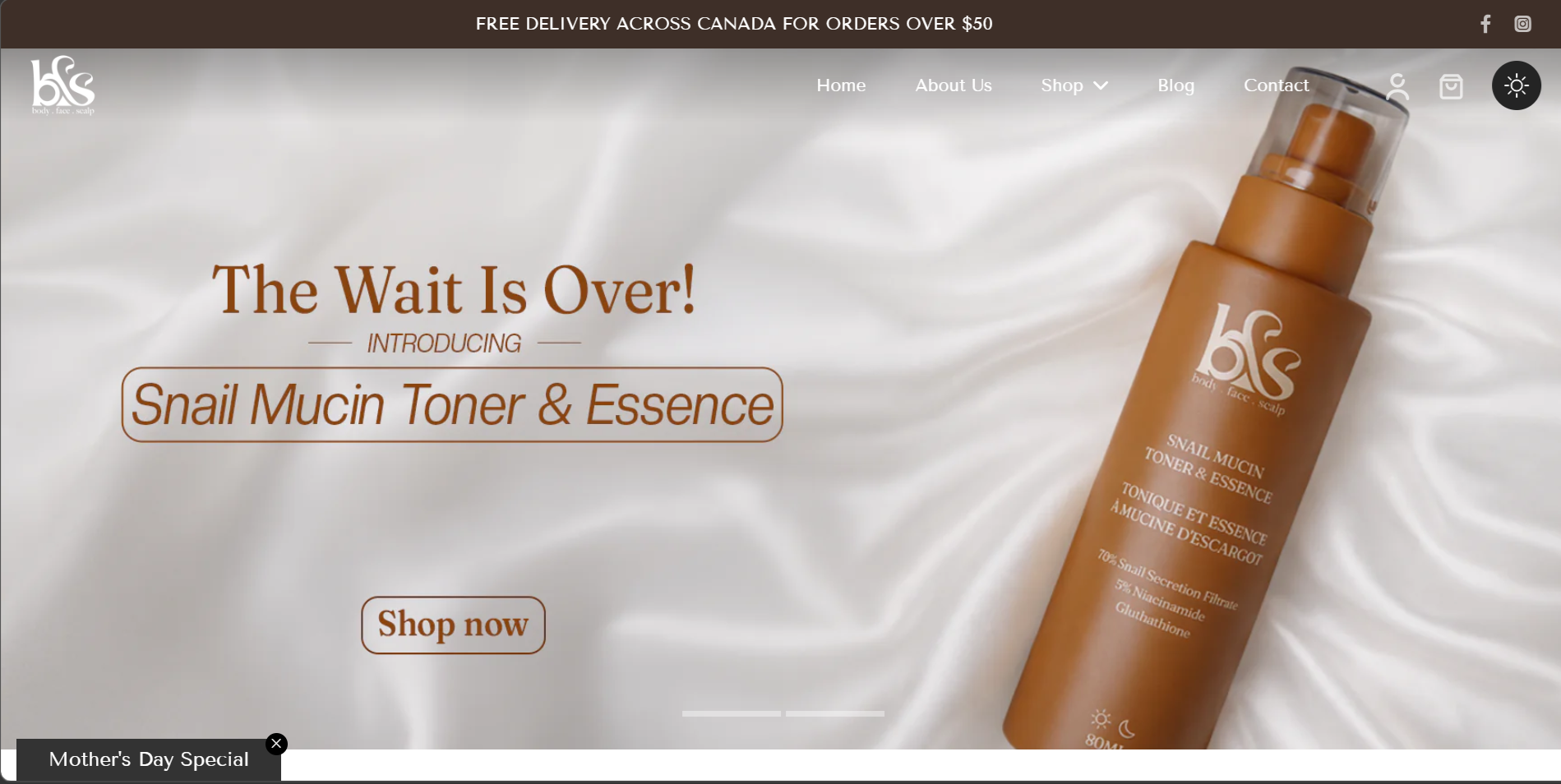
At Bodyfacescalp, we formulate specifically for skin that needs more than surface hydration. Our Barrier Restoring Moisturizer combines ceramides, peptides, and humectants in a dermatologist-tested formula designed for dry, sensitive, and combination skin. It addresses the three pillars of hydration in a single product, without fragrance, without unnecessary fillers, and without compromise. If you are ready to move beyond guesswork, explore the full skincare collection to find targeted solutions built around barrier health and lasting skin resilience.
FAQ
What is the best moisturizer for dry skin?
The best moisturizer for dry skin contains ceramides, glycerin, and an occlusive like petrolatum or dimethicone. Fragrance-free, rich cream formulas with ceramides are particularly effective for barrier repair and sustained hydration.
How do I know which moisturizer suits my skin type?
Wash your face, apply nothing, and wait 30 minutes. Tightness signals dry skin, shine indicates oily skin, and a combination of both points to combination skin. Match your moisturizer texture to what you observe: rich creams for dry, lightweight gels for oily.
Should I change my moisturizer in summer?
Yes. Summer calls for lightweight, fast-absorbing, non-comedogenic formulas. Heavy occlusives in warm or humid conditions trap sweat and can cause breakouts. A water-based gel with hyaluronic acid and niacinamide is the appropriate choice for warmer months.
Does an expensive moisturizer work better than a budget one?
Not necessarily. Effectiveness depends on ingredient concentration and formulation balance, not price. Budget gels with aloe and niacinamide work well for oily skin, while clinical-grade formulas above $14 offer more complex actives for concerns like barrier damage or hyperpigmentation.
How soon should I apply moisturizer after cleansing?
Apply moisturizer within 60 seconds of cleansing while skin is still slightly damp. Damp skin allows humectants to bind water more effectively, and pressing the product in rather than rubbing it improves absorption and protects the barrier.