


Niacinamide serum benefits for healthy, glowing skin
TL;DR:
- Niacinamide is a water-soluble vitamin B3 derivative that supports skin barrier health and hydration through internal interactions. Its benefits for dry, sensitive skin include reducing redness, improving moisture retention, and accelerating barrier repair over several weeks. Proper formulation, consistent application, and pairing with barrier-supporting moisturizers maximize its effectiveness for long-term skin resilience.
Niacinamide is one of the most discussed ingredients in modern skincare, yet most people use it without fully understanding what makes it work. The assumption is simple: apply a niacinamide serum, get results. But the reality is more nuanced. Niacinamide, a form of vitamin B3, behaves differently depending on your skin’s barrier status, the product’s formulation, and even the humidity in your environment. For Canadian women managing dryness, sensitivity, and uneven skin tone through harsh seasonal shifts, that distinction matters enormously. This guide breaks down the science, the real benefits, and how to actually get results from this ingredient.
Table of Contents
- What is niacinamide and how does it work in serums?
- Niacinamide serum benefits: the evidence for hydration, sensitivity, and barrier health
- Brightening effects: niacinamide versus classic hyperpigmentation treatments
- Choosing and using niacinamide serums: what actually matters
- Our perspective: why most people underestimate niacinamide’s potential
- Premium skincare routines: experience the difference with science-backed products
- Frequently asked questions
Key Takeaways
| Point | Details |
|---|---|
| Supports skin barrier | Niacinamide helps your skin retain moisture and defend against environmental stressors, reducing dryness and irritation. |
| Brightens safely | Comparable to hydroquinone for hyperpigmentation, niacinamide offers excellent tolerability and fewer side effects. |
| Real results take weeks | Most users see measurable improvements within three to four weeks of regular niacinamide serum use. |
| Product formulation matters | The pH and delivery system of your serum influence how effectively niacinamide penetrates and works. |
| Safe for sensitive skin | Niacinamide is generally non-irritating, but patch testing new products is recommended for very sensitive skin types. |
What is niacinamide and how does it work in serums?
With a preview of niacinamide’s promise, let’s explore what really sets it apart at a molecular level.
Niacinamide is a water-soluble derivative of vitamin B3 (niacin). Unlike oil-soluble actives that require lipid carriers to penetrate the skin, niacinamide readily dissolves in water-based serums and absorbs into the upper layers of the skin with relative ease. This makes it a versatile ingredient that pairs well with most other actives in a routine.
What makes niacinamide genuinely interesting is how it works once it is in the skin. It does not simply sit on the surface and add moisture. Instead, it interacts with proteins and lipids within the stratum corneum (the outermost layer of the skin, which acts as your skin’s primary shield). It influences the skin’s ability to hold water at a structural level, and research confirms that niacinamide influences barrier hydration and molecular structure in ways that actually vary depending on ambient humidity. This means your climate, including Canada’s cold, dry winters, directly affects how the ingredient performs.
Niacinamide is more than a surface hydrator. It works within the stratum corneum to modify how your skin handles water, which explains why some people feel immediate comfort while others notice cumulative changes over several weeks.
This also explains a common source of confusion. Some users report instant softness and calm after their first use, while others feel little difference until after several weeks of consistent application. Both responses are valid and point to niacinamide’s dual action: an immediate interaction with existing barrier proteins, and a slower, cumulative effect on lipid synthesis and cellular behaviour. Understanding this from the start helps you set realistic expectations and commit to the routine long enough to see full results.
Here is a quick overview of niacinamide’s key properties:
| Property | Detail |
|---|---|
| Solubility | Water-soluble |
| Skin target | Stratum corneum (uppermost layer) |
| Key actions | Barrier support, hydration, brightening |
| Typical effective range | 2–10% concentration |
| Onset of visible results | 3–8 weeks with consistent use |
For a deeper look at how barrier-focused skincare science shapes long-term skin resilience, we recommend exploring how the barrier functions as a whole system. Understanding vitamins for skin barrier health also provides essential context for why niacinamide performs so reliably across diverse skin types.
Niacinamide serum benefits: the evidence for hydration, sensitivity, and barrier health
Now that you know how niacinamide works, let’s focus on the real-life benefits for dry and sensitive skin.
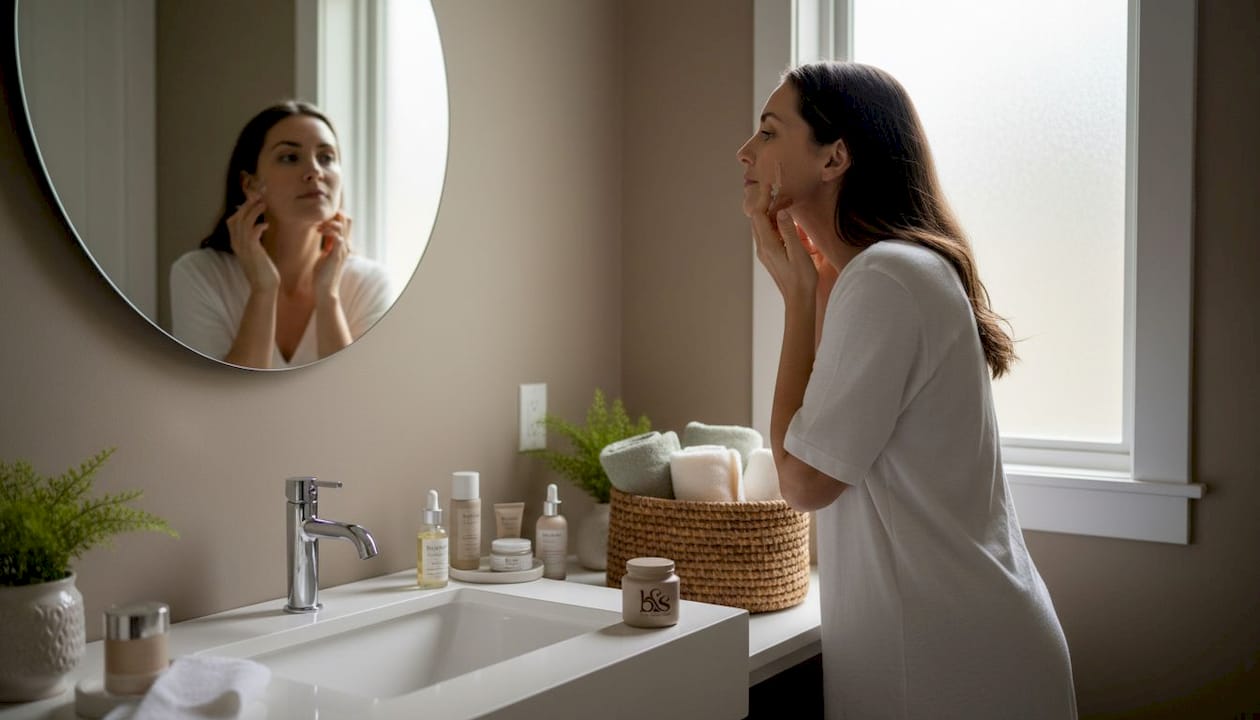
For those dealing with chronic dryness or skin that reacts easily to weather changes, product switching, or environmental stressors, niacinamide offers something genuinely useful. It is not simply a calming ingredient in a marketing sense. The evidence supports its ability to strengthen barrier function and reduce the skin reactivity that often comes with a compromised barrier.
Objective skin hydration measurements (using a tool called a corneometer, which measures how much water is in the outer skin layer) have confirmed real-world results. A 3-week home-use study using a commercial niacinamide-containing cream showed measurable hydration improvement in participants, providing solid evidence that this is not just a lab result.
Proven benefits of niacinamide for dry and sensitive skin:
- Improved water retention: Niacinamide supports the skin’s ability to hold moisture by reinforcing the lipid barrier and interacting with structural proteins in the stratum corneum.
- Reduced redness and reactivity: By calming the inflammatory signals that cause flushing and sensitivity, niacinamide helps skin look and feel more settled.
- Accelerated barrier repair: After disruption from harsh weather, over-exfoliation, or irritating products, niacinamide helps the skin rebuild its protective matrix more efficiently.
- Better tolerance for other actives: A stronger barrier means your skin is less likely to react negatively when you introduce other ingredients like retinol or exfoliating acids.
- Even skin texture: Ongoing use tends to smooth out rough patches and reduce the tight, uncomfortable feeling that follows cold-weather exposure.
Comparison: niacinamide versus other common sensitive skin actives
| Ingredient | Primary benefit | Sensitivity risk | Time to results |
|---|---|---|---|
| Niacinamide | Barrier repair, brightening | Very low | 3–6 weeks |
| Hyaluronic acid | Surface hydration | Very low | Days |
| Retinol | Cell turnover, anti-ageing | Moderate to high | 8–12 weeks |
| Alpha arbutin | Brightening | Low | 4–8 weeks |
| Azelaic acid | Brightening, anti-redness | Low to moderate | 6–10 weeks |
Pro Tip: If your skin is compromised (tight, flaky, or easily reactive), start with niacinamide as the only active in your routine for the first two weeks. This allows the barrier to stabilise before you layer in additional ingredients.
For practical guidance on how to restore healthy skin and reduce dryness, and to explore barrier repair ingredients in detail, we have developed resources specifically for Canadian skin concerns. You can also find a curated collection of expert-backed sensitive skin options to support your routine.
Brightening effects: niacinamide versus classic hyperpigmentation treatments
Beyond hydration and barrier strength, many seek niacinamide for its brightening effects — so how does it compare to more aggressive options?
Hyperpigmentation, including melasma, post-inflammatory dark spots, and uneven skin tone, is one of the most common concerns for women in their late 20s and 30s. Traditionally, hydroquinone has been the benchmark treatment, but its risks (including irritation, paradoxical darkening with long-term use, and regulatory restrictions in Canada) make it a problematic first choice for sensitive skin.
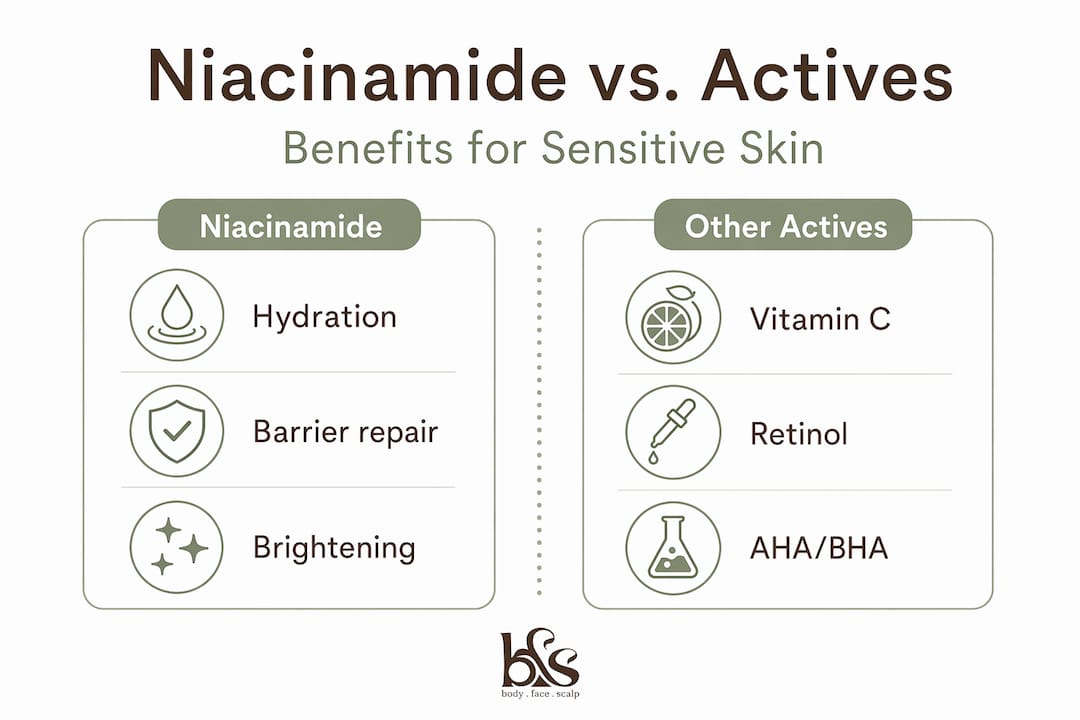
Niacinamide offers a meaningful alternative. Studies confirm that niacinamide reduces hyperpigmentation through several simultaneous mechanisms: it slows the transfer of melanosomes (the packets of pigment) from pigment-producing cells to surrounding skin cells, reduces the inflammation that triggers post-inflammatory pigmentation, and provides antioxidant protection that limits UV-triggered melanin overproduction.
Key brightening mechanisms at work:
- Melanosome transfer inhibition: Niacinamide interferes with the pathway that moves pigment from melanocytes into keratinocytes (the surface skin cells), reducing visible pigmentation over time.
- Anti-inflammatory action: Chronic low-grade inflammation is a major trigger for uneven pigmentation. By reducing this, niacinamide addresses pigmentation at its root.
- Antioxidant protection: Niacinamide helps neutralise free radicals that accelerate melanin production, making it particularly valuable for those with sun-exposed or pollution-stressed skin.
- Gentler profile: Unlike hydroquinone, niacinamide does not carry a risk of ochronosis (a paradoxical skin darkening with prolonged use) and is suitable for daily, long-term use.
Statistic to know: Clinical comparisons have shown that 4–5% niacinamide applied consistently can produce brightening results comparable to 4% hydroquinone, with a significantly lower rate of irritation and side effects.
Pro Tip: Pair your niacinamide serum with a mineral-based SPF 30 or higher every morning. Photoprotection is not optional when targeting hyperpigmentation — UV exposure can undo weeks of brightening progress in just a few unprotected days.
For a broader look at proven hyperpigmentation remedies and how niacinamide fits into a complete brightening routine, we’ve outlined practical protocols that account for sensitive and melanin-rich skin types equally.
Choosing and using niacinamide serums: what actually matters
With evidence for multiple benefits, the next question is how to choose and use a serum for the best results.
Not all niacinamide serums are equal, and this is where many people lose results before they even begin. The concentration of niacinamide matters, but it is not the only variable. Research confirms that formulation pH influences niacinamide permeation through the skin, meaning the acidity of the product directly affects how well the ingredient absorbs and performs. A niacinamide serum in an optimal pH range (generally between 5.0 and 7.0) will outperform a poorly formulated product with a higher concentration.
The most expensive or highest-percentage serum is not automatically the best choice. Formulation quality, pH balance, and ingredient compatibility determine real-world outcomes far more than a single number on the label.
How to introduce and use niacinamide effectively:
- Start with a patch test. Even though rare irritation or contact dermatitis is uncommon with niacinamide, very sensitive or allergy-prone skin benefits from a 24-hour patch test on the inner wrist or behind the ear before applying to the face.
- Apply to clean, slightly damp skin. Niacinamide absorbs most effectively when skin is clean and not fully dry. Apply it as your first serum step, before heavier actives or moisturisers.
- Use morning and evening. Twice-daily application produces the most consistent results, particularly for barrier repair and hydration goals. Once daily is a reasonable starting point for reactive skin.
- Layer strategically. Apply niacinamide before moisturiser and after any water-based toners. Avoid layering it directly with very low-pH vitamin C products (under pH 3.5) in the same step, as this combination can cause temporary flushing in sensitive users.
- Commit to at least four weeks. Barrier repair and brightening are cumulative processes. Tracking changes with photos every week is one of the most practical ways to observe progress that can otherwise feel invisible day-to-day.
- Always follow with SPF in the morning. Photoprotection amplifies every brightening and barrier benefit niacinamide provides.
For full guidance on building a skin nourishment routine that supports lasting results, and to understand how to pair niacinamide with a quality ceramide moisturiser, explore our formulation-focused resources. Ceramides and niacinamide work synergistically — ceramides rebuild the lipid layer structurally while niacinamide supports it functionally.
Our perspective: why most people underestimate niacinamide’s potential
We see this pattern consistently: someone picks up a niacinamide serum, uses it for ten days, notices nothing dramatic, and quietly drops it from their routine. The ingredient gets labelled as ineffective, when the real issue was expectation management and routine integration.
Niacinamide is not a fast-acting corrective. It is a systemic supporter. Its value compounds over time, and the skin environment you create around it — through consistent hydration, sun protection, and avoiding harsh actives — determines how much of its potential you actually access. Used in isolation or against a backdrop of daily irritation, it cannot do its best work.
We also see the opposite problem: people chasing higher percentages without considering formulation quality. A 10% niacinamide serum in a poorly balanced formula will underperform compared to a well-crafted 5% version. Percentage anxiety is one of the most common reasons people cycle through products without getting results.
What we know from understanding skin barrier health with vitamins is that the barrier is a dynamic, responsive system. Niacinamide’s role within it is not to override the barrier but to support its natural function. When you pair it with complementary ingredients, apply it consistently, and protect your skin from UV daily, you are creating the conditions for the ingredient to genuinely perform.
Track your skin over two to four weeks with weekly photos in consistent lighting. Note texture, tone, and how your skin responds to weather or other products. This removes the guesswork and reveals the cumulative shift that niacinamide is quietly making — one that most people miss simply because they stopped looking.
Premium skincare routines: experience the difference with science-backed products
If you’re ready to put the science into action, here are options for a truly supportive routine.
Knowing the evidence is one thing. Building a routine that actually reflects it is where the difference becomes visible. One of the most overlooked steps in achieving niacinamide results is pairing it with a barrier-supportive moisturiser that reinforces what the serum initiates. Without that second layer, the hydration and repair signals niacinamide starts can be interrupted by transepidermal water loss (moisture evaporating from the skin surface).
At Body Face Scalp, we formulate with exactly this principle in mind. Our products are designed to work together as a system, not in isolation. Whether you are building a routine around niacinamide for the first time or refining an existing protocol, our shop premium skincare collection gives you targeted, ingredient-led options built for Canadian skin. Our barrier restoring moisturizer is designed to lock in what your serum delivers, creating the layered barrier support that drives visible, lasting results.
Frequently asked questions
How long does it take to see results from niacinamide serum?
Visible improvements in skin hydration and texture are often seen within three to four weeks of consistent twice-daily use, with measurable hydration improvement confirmed using objective corneometry at the three-week mark in real-world conditions.
Is niacinamide safe for sensitive skin?
Niacinamide is generally very well-tolerated across skin types, but because rare irritation can occur, a patch test before full facial use is a simple and sensible precaution for highly reactive skin.
Can niacinamide serums be combined with other actives like vitamin C or retinol?
Niacinamide layers safely with most actives, including retinol and vitamin C. Introduce combinations gradually and avoid applying niacinamide directly alongside very low-pH acid formulas in the same step to minimise the chance of temporary redness or flushing.
Does the percentage of niacinamide make a big difference?
Concentration matters, but it is not the only factor. Because formulation pH affects permeation, a well-formulated 4–5% product can outperform a higher-concentration serum in a poorly balanced base.
Is it normal for niacinamide to sting at first?
A brief, mild tingling upon first application is possible, especially if your barrier is already compromised. Persistent stinging or visible redness, however, suggests the formula may be too strong or the skin needs additional barrier support before the active is introduced.
Recommended
- Build a skin nourishment routine for lasting glow – Body Face Scalp®
- Holistic skincare for glowing skin: steps for Canadian women – Body Face Scalp®
- Revive dull skin: An expert guide to radiant skincare – Body Face Scalp®
- Top hyperpigmentation remedies: proven examples for clear skin – Body Face Scalp®