


Acne safe skincare routine: build it right
TL;DR:
- A proper acne-safe skincare routine involves gentle cleansing, targeted treatment, non-comedogenic moisturizer, and broad-spectrum SPF 30 or higher using simple, evidence-backed products. Consistency, correct ingredient selection, and seasonal adjustments are essential for improving skin over approximately 12 weeks. Overuse or misapplication of products damages the skin barrier and can worsen acne, so simplicity and patience remain the most effective strategies.
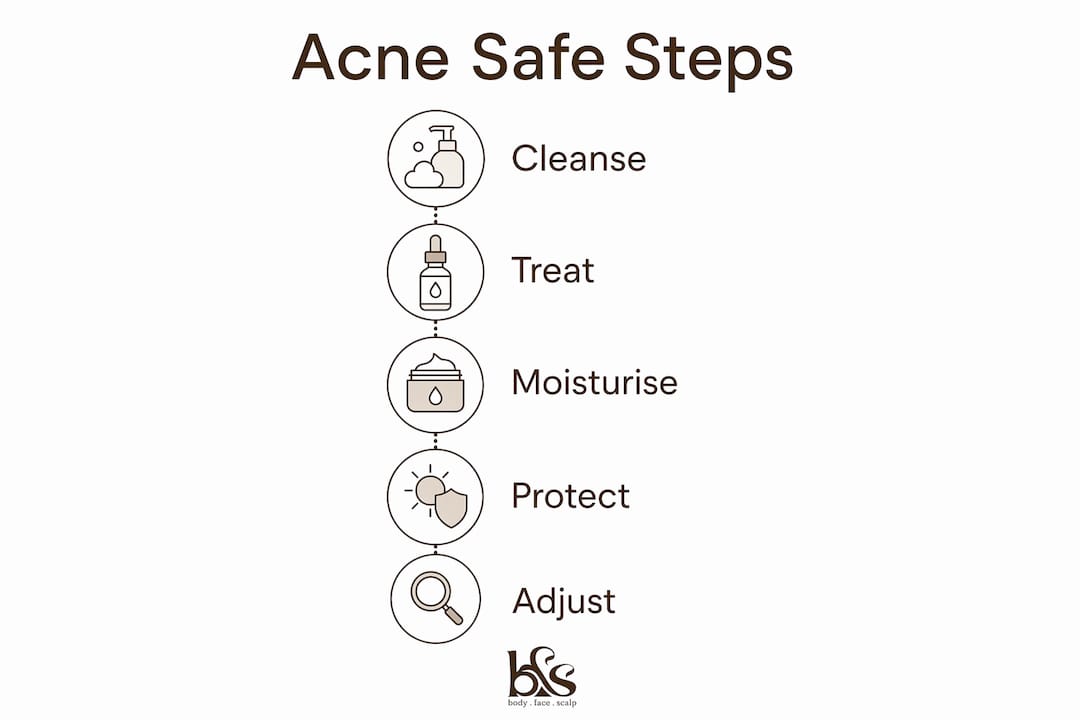
An acne safe skincare routine is defined as a four-step daily regimen — gentle cleansing, targeted treatment, moisturising, and broad-spectrum sun protection — using mild, non-comedogenic products that avoid pore-clogging and irritation. The term “acne-safe” is an informal, consumer-facing phrase; dermatologists refer to this as an acne-prone skin care protocol, and both terms describe the same evidence-backed approach. What separates a routine that clears skin from one that worsens it comes down to ingredient selection, product order, and consistency. At Bodyfacescalp, we work with the principle that your skin barrier is the foundation of healthy skin, and every product choice either supports or undermines it.
What ingredients should you choose for an acne safe skincare routine?
The first decision in any acne treatment routine is ingredient selection. Non-comedogenic and fragrance-free products reduce the two most common triggers of acne flares: pore blockage and chemical irritation. Non-comedogenic means a product is formulated to avoid blocking follicles. Fragrance-free means no added scents, which are a leading cause of contact dermatitis in acne-prone skin.
The following ingredients are well-supported for acne-prone skin:
- Salicylic acid (0.5–2%): A beta-hydroxy acid that penetrates oil-filled pores and exfoliates from within. Ideal in a gentle cleanser for acne or a leave-on toner.
- Benzoyl peroxide (2.5–5%): Kills acne-causing bacteria and reduces inflammation. Start at the lowest concentration to minimise dryness.
- Adapalene (0.1%): A retinoid that normalises skin cell turnover and prevents comedone formation. Available over the counter in Canada.
- Niacinamide (4–10%): Reduces redness, regulates sebum, and strengthens the skin barrier without irritation. One of the most versatile acne-friendly ingredients.
- Azelaic acid (10–20%): Targets both active breakouts and post-acne discolouration. Particularly useful for those with darker skin tones.
Ingredients to avoid include alcohol-based toners, physical scrubs with large abrasive particles, and synthetic fragrance. These strip the skin barrier, trigger reactive oil production, and create a cycle that worsens breakouts rather than resolving them.
Non-comedogenic moisturisers are not optional for oily or acne-prone skin. Lightweight moisturisers prevent the dryness that causes sebaceous glands to overproduce oil, which directly contributes to new breakouts. Look for gel-cream or water-based formulas containing hyaluronic acid, glycerin, or ceramides.
Pro Tip: Introduce one new product at a time and wait two weeks before adding another. This is the only reliable way to identify which ingredient is causing a reaction if your skin flares up.
How to build a daily morning and evening acne routine
A minimalist routine with four consistent products — cleanser, active, moisturiser, and SPF — produces better results than complex layering. HadaBuddy’s 2026 evidence-based guide recommends a 12-week evaluation period before judging whether a routine is working. That timeframe matters because acne treatments work at the cellular level, and skin cell turnover takes approximately four to six weeks.
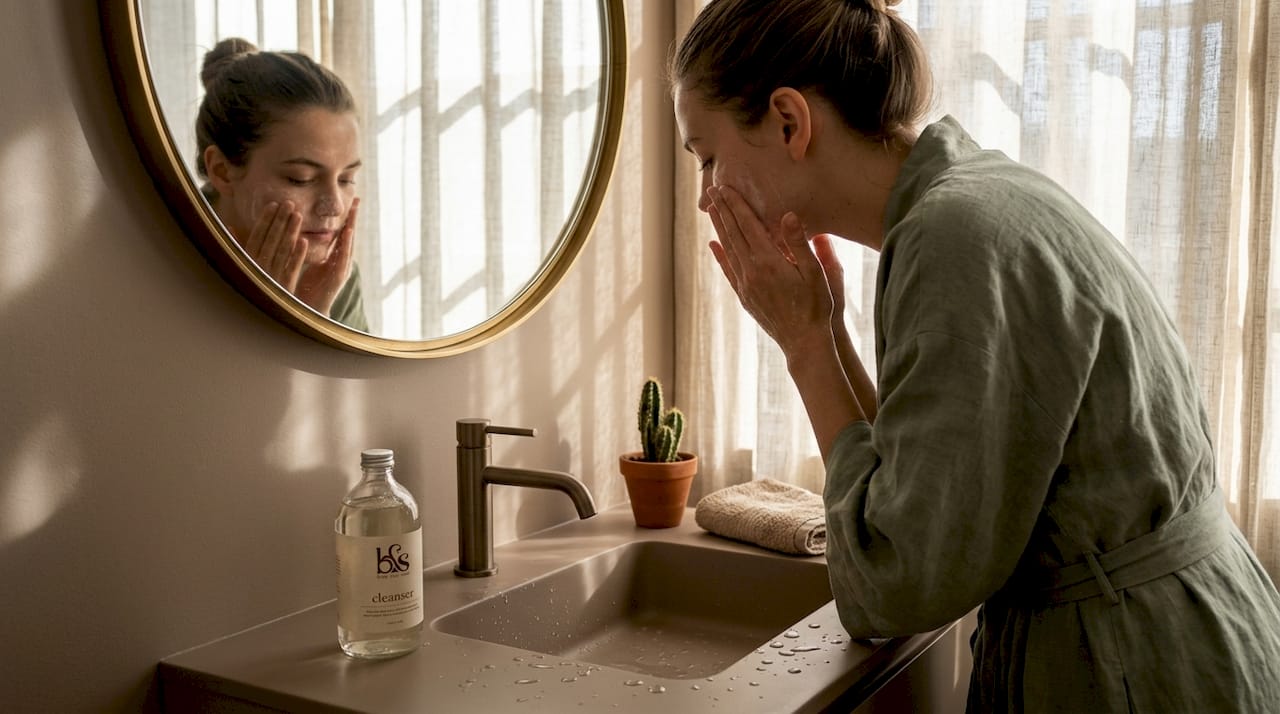
Here is how to structure your morning and evening regimen:
| Step | Morning | Evening |
|---|---|---|
| 1. Cleanse | Gentle, fragrance-free cleanser. Lukewarm water, 30–60 seconds. | Double cleanse if you wore SPF or makeup: oil cleanser first, then gentle cleanser. |
| 2. Treat | Optional lightweight serum (niacinamide or azelaic acid). Skip if skin is reactive. | Apply acne active (adapalene or benzoyl peroxide) as a thin layer to clean, dry skin. |
| 3. Moisturise | Non-comedogenic gel or lotion. Wait 60 seconds after treatment before applying. | Same moisturiser or a slightly richer barrier-repair formula if skin feels tight. |
| 4. Protect | Broad-spectrum SPF 30 or higher. Mineral formulas (zinc oxide, titanium dioxide) suit sensitive skin best. | No SPF needed. Focus on repair and hydration overnight. |
Daily SPF 30 or higher is not negotiable when using photosensitising acne treatments like adapalene or benzoyl peroxide. Sun exposure on treated skin accelerates post-acne pigmentation and prolongs recovery time. Mineral sunscreens are preferable for acne-prone skin because they sit on the skin’s surface rather than absorbing into pores.
For application amounts, a pea-sized amount of acne treatment covers the entire face. More product does not increase efficacy and significantly increases irritation risk. Apply to clean, dry skin and allow it to absorb fully before layering moisturiser on top.
Pro Tip: If you are new to retinoids like adapalene, start with application every third night for the first two weeks, then increase to every other night. This “low and slow” approach dramatically reduces the peeling and redness that causes most people to abandon the product prematurely.
You can find a detailed step-by-step face care breakdown on the Bodyfacescalp blog if you want to go deeper on layering order and timing.
What mistakes should you avoid to protect your acne routine?
The most common reason an acne-safe routine fails is not the products chosen. It is how they are used. These are the pitfalls we see most often:
- Over-cleansing: Washing more than twice daily strips the skin barrier and triggers compensatory oil production. A gentle cleanser used morning and evening is sufficient.
- Stacking multiple actives: Using several strong actives simultaneously causes chronic irritation and barrier damage. Do not combine adapalene with benzoyl peroxide and an AHA in the same routine without dermatologist guidance.
- Applying too much treatment: A thin, even layer is all that is needed. Excess product sits on the skin surface, increases dryness, and does not penetrate more effectively.
- Quitting too soon: Improvement takes weeks to months, and initial worsening (called purging) is a normal response to retinoids and exfoliating acids as they accelerate cell turnover.
- Skipping moisturiser: Particularly common among those with oily skin who fear adding more product. Skipping it worsens dryness and oil rebound.
“Acne-prone skin differs from sensitive skin. Treatment routines need to balance pore unclogging with minimal irritation.” — Advanced Dermatology PC
Seasonal changes also affect how your routine performs. In winter, cold air and indoor heating deplete moisture, so you may need a slightly richer moisturiser. In summer, heat and sweat increase oil production and reactivity, which calls for a different set of adjustments covered in the next section.
If your skin becomes persistently red, flaky, or painful rather than just mildly reactive, that is irritation, not purging. Reduce the frequency of your active, reinforce your moisturiser, and consult a dermatologist or aesthetic nurse if symptoms persist beyond two weeks.
How to adapt your acne routine for summer
An acne safe skincare routine for summer requires texture and frequency adjustments, not a complete overhaul. Heat increases sweat production, which mixes with sebum and sunscreen residue to block pores. UV exposure also intensifies the photosensitivity caused by retinoids and AHAs, making protection and formulation choices more critical.
Nurse Caroline Hall, quoted in British Vogue, recommends milder actives and gel moisturisers in summer for acne-prone skin, along with oil-free SPF to avoid adding occlusive texture on top of already-active sebaceous glands. These adjustments prevent reactive flare-ups without abandoning your progress.
Here is how a summer routine compares to a standard year-round approach:
| Category | Year-round routine | Summer adjustment |
|---|---|---|
| Cleanser | Gentle, fragrance-free | Same, but cleanse after sweating |
| Active frequency | Nightly (adapalene or AHA) | Reduce to every other night; pause AHAs if burning |
| Moisturiser texture | Gel-cream or lotion | Lightweight gel or water-gel only |
| Sunscreen | Mineral SPF 30+ | Oil-free mineral SPF 50; reapply every two hours outdoors |
| Key ingredients | Salicylic acid, niacinamide | Niacinamide, azelaic acid, salicylic acid (lower concentration) |
Reapplying sunscreen properly is one of the most overlooked skincare tips for oily skin in summer. A setting spray with SPF or a mineral powder SPF allows reapplication without disrupting makeup or adding heaviness. Cleansing after exercise or prolonged sweating removes the pore-blocking residue that accumulates during outdoor activity.
For Canadians, summer UV intensity is highest between June and August, and even overcast days deliver significant UV exposure. Seasonal routine adjustments with gentle hydration and reduced actives prevent the reactive flare-ups that often appear in July and August when people over-apply treatments in an attempt to control summer breakouts.
Key takeaways
A consistent four-step acne-safe routine using non-comedogenic, fragrance-free products with targeted actives like salicylic acid, niacinamide, or adapalene produces measurable skin improvement within 12 weeks.
| Point | Details |
|---|---|
| Four core steps | Cleanse, treat, moisturise, and protect with SPF 30+ every morning without exception. |
| Ingredient selection | Choose non-comedogenic, fragrance-free products and introduce one active at a time to isolate reactions. |
| Application discipline | Apply acne treatments as a thin layer to dry skin; more product increases irritation, not results. |
| Summer adjustments | Reduce active frequency, switch to gel textures, and use oil-free SPF 50 during peak UV months. |
| Patience is the protocol | Allow 12 weeks before evaluating whether a routine is working; early purging is normal with retinoids. |
Why simplicity is the most underrated acne strategy
I have seen a pattern repeat itself constantly: someone with acne-prone skin discovers a new ingredient, adds it to an already-loaded routine, and then cannot understand why their skin is getting worse. The answer is almost always barrier damage from overuse, not a failure of any single product.
The routines that actually work are boring by most skincare standards. One gentle cleanser. One active. One moisturiser. One SPF. That is it. The barrier-focused approach is not a compromise. It is the strategy. When your barrier is intact, your skin tolerates actives better, heals faster, and stays clearer between breakouts.
What I find most people resist is the moisturiser step. There is a deeply ingrained belief that oily skin does not need hydration. That belief is wrong and expensive. Skipping moisturiser causes the skin to compensate with more sebum, which feeds the exact cycle you are trying to break.
The seasonal adjustment piece is also non-negotiable, particularly in Canada where temperature swings are dramatic. What works in February will likely over-strip your skin in July. Reducing your active frequency in summer is not giving up. It is protecting the progress you have already made.
If your skin is not responding after 12 consistent weeks, that is the moment to consult a professional, not the moment to add more products. A dermatologist or aesthetic nurse can assess whether your breakouts are hormonal, bacterial, or barrier-related, and that distinction changes everything about treatment.
— Mohid
Bodyfacescalp products built for acne-prone skin
At Bodyfacescalp, we formulate specifically for the Canadian climate, where barrier repair is not a bonus feature but a baseline requirement.
Our barrier restoring moisturiser is designed for acne-prone and sensitive skin. It is non-comedogenic, fragrance-free, and built to support the skin barrier without adding occlusive weight that clogs pores. It works as the moisturising step in both your morning and evening routine, and it pairs directly with the acne actives you are already using. Browse our full acne-safe skincare collection to find cleansers, treatments, and targeted formulas that fit every step of the four-step protocol. Every product is ingredient-led, Canadian-formulated, and designed to work as a system rather than in isolation.
FAQ
What is an acne safe skincare routine?
An acne safe skincare routine is a four-step daily protocol: gentle cleansing, targeted acne treatment, non-comedogenic moisturising, and broad-spectrum SPF 30 or higher. All products are fragrance-free and formulated to avoid blocking pores.
Which ingredients are best for acne-prone skin?
Salicylic acid, benzoyl peroxide, adapalene, niacinamide, and azelaic acid are the most evidence-supported ingredients for acne-prone skin. Each targets a different part of the acne cycle, from pore congestion to bacteria to post-acne pigmentation.
Should I moisturise if I have oily or acne-prone skin?
Yes. Lightweight moisturisers prevent dryness-driven oil overproduction and support the skin barrier, which reduces breakout frequency. Choose a gel or water-based formula labelled non-comedogenic.
How long does it take to see results from an acne routine?
Most acne treatments require 8 to 12 weeks of consistent use before visible improvement appears. Early purging, particularly with retinoids like adapalene, is a normal part of the process and not a sign the product is wrong for your skin.
How should I adjust my routine for summer?
Reduce the frequency of strong actives like retinoids and AHAs, switch to gel-texture moisturisers, and use an oil-free mineral SPF 50. Cleanse after sweating to remove pore-blocking residue and reapply sunscreen every two hours when outdoors.