


Barrier-focused skincare: The science of resilient skin
TL;DR:
- Barrier-focused skincare strengthens the skin’s protective lipid layer to improve hydration and reduce sensitivity.
- Effective products contain key ingredients like ceramides, cholesterol, fatty acids, and supportive components such as panthenol.
- Consistent use of barrier repair routines leads to measurable improvements in skin health within weeks.
Most Canadians dealing with dry, sensitive skin assume the answer is more products. More serums, more creams, more layers. But the real issue often comes down to one overlooked factor: a compromised skin barrier. When your barrier is weak, even the most expensive moisturiser struggles to do its job. The good news is that barrier-focused skincare, grounded in clinical research, delivers measurable results. We’re talking real improvements in hydration, reduced sensitivity, and skin that actually holds moisture through a Canadian winter. In this article, we’ll walk you through what barrier-focused skincare means, which ingredients matter most, what the science says, and how to apply this knowledge to your routine.
Table of Contents
- What is barrier-focused skincare?
- Key ingredients and optimal ratios for barrier repair
- Evidence-based benefits: Clinical results of barrier repair
- Addressing nuance: Edge cases and potential pitfalls
- Why barrier-focused skincare is foundational, not just a trend
- Discover Canadian barrier-focused skincare solutions
- Frequently asked questions
Key Takeaways
| Point | Details |
|---|---|
| Barrier is your foundation | Healthy, resilient skin starts with a strong, well-nourished barrier layer. |
| Choose proven ingredients | Ceramides, cholesterol, fatty acids, and panthenol support optimal barrier repair and hydration. |
| Evidence backs results | Clinical data shows barrier repair routines can dramatically improve sensitivity and dryness. |
| Personalise your approach | Tailor routines to your skin type and beware of overusing actives that can lead to ‘barrier burnout.’ |
What is barrier-focused skincare?
Now that you know the importance of the skin barrier, let’s break down what barrier-focused skincare actually means.
Your skin’s outermost layer is called the stratum corneum. Think of it as your body’s first line of defence against the environment. It keeps moisture in and irritants, allergens, and bacteria out. When it functions well, your skin looks calm, feels comfortable, and responds well to the products you use. When it’s compromised, you feel it immediately: tightness, flakiness, redness, and a frustrating cycle of sensitivity.
Barrier-focused skincare is built around one core idea: skin barrier repair prioritises strengthening the stratum corneum, modelled on what scientists call the “brick-and-mortar” structure. The corneocytes (skin cells) are the bricks, and the lipids surrounding them are the mortar. When the mortar is depleted, the wall crumbles.
Your skin barrier is the foundation of healthy skin. Without it, no serum or treatment can perform at its best.
Barrier-focused products work by replenishing those lipids, restoring the structure, and giving your skin what it needs to function as a protective system. This approach is especially relevant for Canadian skin, which faces extreme seasonal shifts, low indoor humidity in winter, and UV exposure in summer.
Understanding your skin barrier types matters here, because not every barrier responds the same way. Some people have a lipid-depleted barrier, while others have a structurally intact barrier that is still reactive. Knowing the difference shapes which products will actually help you.
Here is what barrier-focused skincare addresses:
- Dryness and dehydration by sealing in moisture and reducing water loss
- Redness and irritation by calming inflammation linked to a leaky barrier
- Sensitivity and reactivity by reducing the skin’s exposure to environmental triggers
- Uneven texture by supporting healthy cell turnover within a stable structure
For a deeper look at how the barrier connects to your hydration levels, the moisture barrier guide is a helpful resource. The key takeaway is this: barrier-focused skincare is not about adding complexity. It’s about building a stable foundation so everything else in your routine can work properly.
Key ingredients and optimal ratios for barrier repair
Understanding what the skin barrier is, let’s look at the specific ingredients and ratios that make barrier-focused products effective.
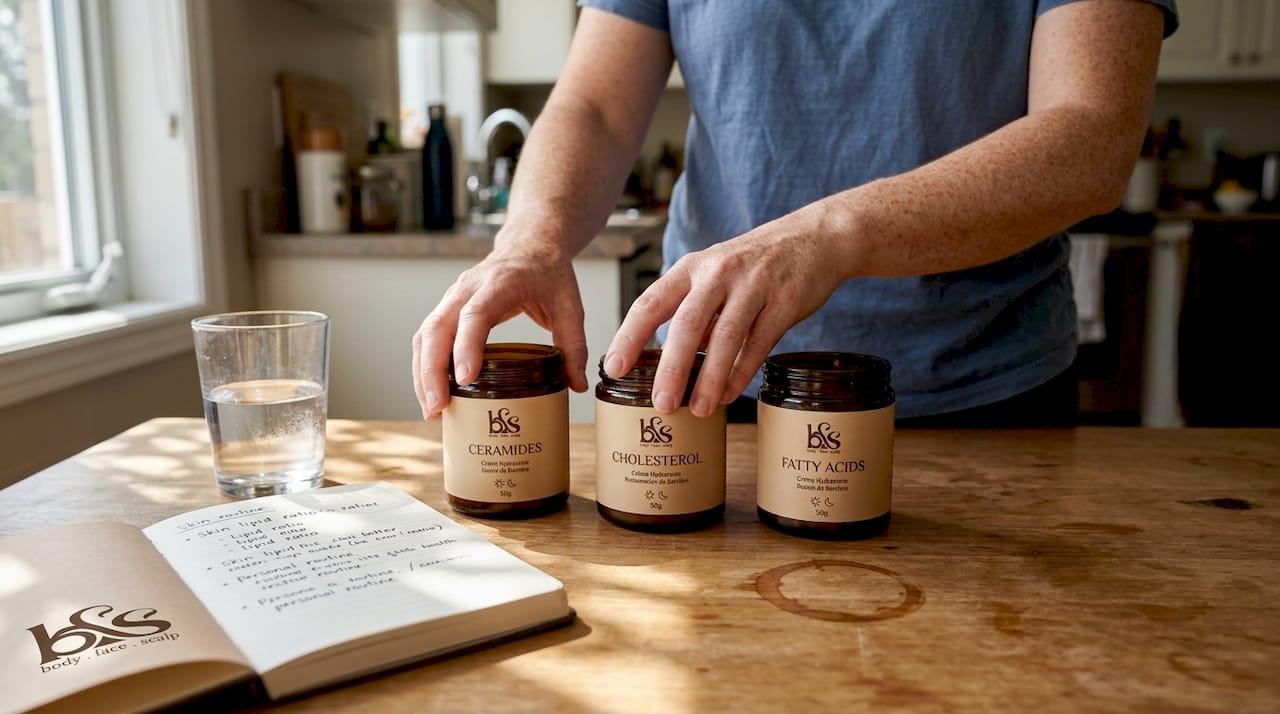
Not all moisturisers are created equal. The ones that genuinely repair your barrier contain a specific set of ingredients, and the ratio between them matters just as much as their presence. Key ingredients for barrier repair include ceramides, cholesterol, fatty acids, panthenol, and ectoin, with optimal ratios designed to mimic the skin’s own lipid composition.
| Ingredient | Role in barrier repair | Notes |
|---|---|---|
| Ceramides | Primary structural lipid in the mortar | Long acyl chain ceramides are most effective |
| Cholesterol | Regulates lipid fluidity and barrier permeability | Works synergistically with ceramides |
| Fatty acids | Fill gaps in the lipid matrix | Essential for moisture retention |
| Panthenol | Humectant and anti-inflammatory support | Soothes while hydrating |
| Ectoin | Protects cells from environmental stress | Particularly useful in harsh climates |
| Niacinamide | Stimulates natural ceramide production | Supports long-term barrier resilience |
The classic ratio for barrier-mimicking formulas is 3:1:1 (ceramides, cholesterol, fatty acids). Newer research points to a 2:4:2 ratio in premium formulations for enhanced recovery, particularly for sensitive or compromised skin. The distinction matters because an imbalanced ratio, even with the right ingredients, can still leave your barrier under-supported.
Here is how to prioritise these ingredients in your routine:
- Ceramides first. Look for ceramide NP, AP, or EOP on the label. These are the most studied and clinically validated.
- Pair with cholesterol. It’s often listed as cholesterol or phytosterols. Without it, ceramides don’t integrate into the lipid matrix as effectively.
- Add fatty acids. Linoleic acid and palmitic acid are common and well-tolerated.
- Support with niacinamide. It encourages your skin to produce its own ceramides over time, making it a strong long-term investment.
Pro Tip: If you’re exploring top barrier repair ingredients, pay attention to where ceramides appear on the ingredient list. They should be within the first ten ingredients to be present at a meaningful concentration.
For those with skin repair for sensitivity, ectoin and panthenol are particularly valuable additions. They calm reactivity while the ceramide complex does the structural work.
Evidence-based benefits: Clinical results of barrier repair
But does barrier-focused skincare really work? Let’s look at the evidence.
The clinical data is compelling. Ceramide moisturisers increase filaggrin by 77%, hyaluronic acid by 157%, and skin lipids by 30%, while reducing transepidermal water loss (TEWL) by 28 to 40% and improving hydration by 42 to 72.5%. These are not small improvements. They represent a meaningful shift in how your skin functions day to day.
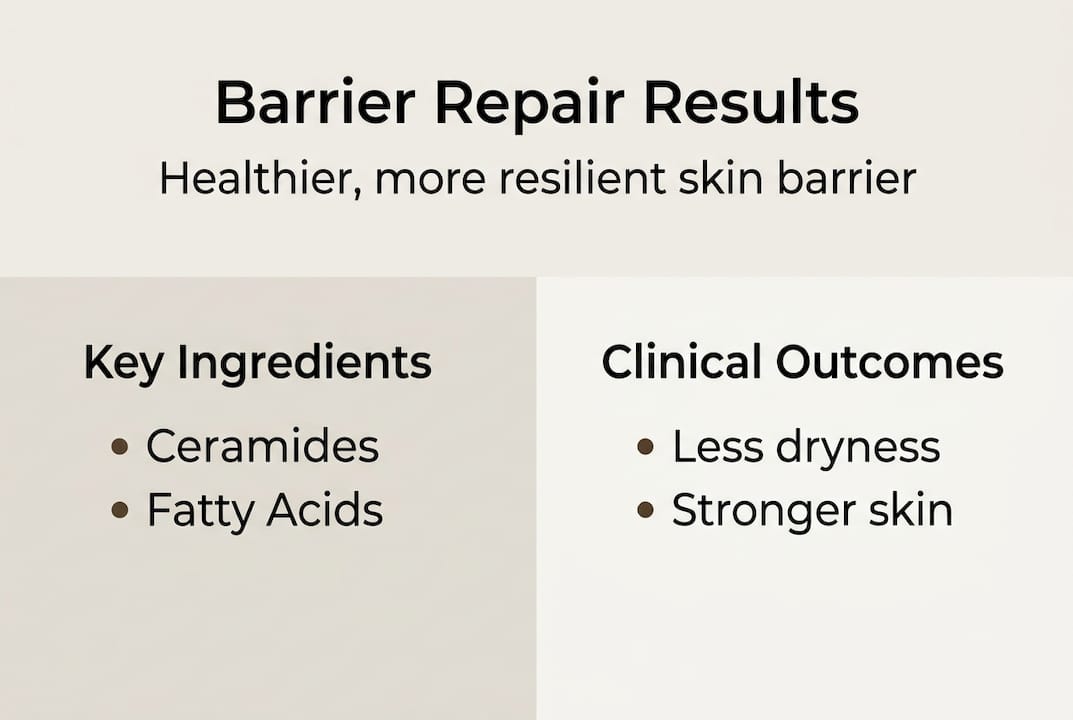
TEWL is the key metric here. It measures how much water evaporates through your skin. A high TEWL reading means your barrier is leaking moisture, which leads to that persistent dry, tight feeling no amount of water intake seems to fix. Reducing TEWL by even 28% changes how your skin feels and behaves.
| Metric | Improvement with barrier-focused care |
|---|---|
| Filaggrin (structural protein) | +77% |
| Hyaluronic acid (natural hydrator) | +157% |
| Skin lipids | +30% |
| TEWL reduction | 28 to 40% |
| Hydration improvement | 42 to 72.5% |
Beyond the numbers, the lived experience matters too. People using consistent barrier face care steps report:
- Less flakiness and rough texture within the first two weeks
- Reduced redness and visible irritation
- Fewer reactions to other skincare products
- A more even, comfortable complexion over time
This last point is worth emphasising. When your barrier is healthy, your skin becomes more tolerant. Actives like retinol or vitamin C, which might have caused stinging or peeling before, become easier to incorporate. The barrier acts as a regulator, not just a shield.
For a practical framework on protecting and repairing your barrier, consistency is the most important variable. Clinical results in these studies were achieved with daily, sustained use, not occasional application.
Addressing nuance: Edge cases and potential pitfalls
With the proven benefits in mind, it’s important to consider the nuances behind barrier-focused routines.
Barrier-focused skincare is not a one-size-fits-all solution. Oily-sensitive skin subtypes require tailored care, and the chronic overuse of actives can cause what clinicians call “barrier burnout,” where the skin becomes increasingly reactive despite ongoing treatment.
Sensitive skin is not a single category. Recognising your specific subtype is the first step toward a routine that actually helps.
Here are the most common pitfalls to avoid:
- Over-exfoliating. Acids and physical scrubs remove the lipid layer when used too frequently. If you’re using an exfoliant more than twice a week, you may be undermining your barrier work.
- Layering too many actives. Retinoids, AHAs, BHAs, and vitamin C are all effective individually. Combined without a proper barrier foundation, they can trigger chronic irritation.
- Ignoring pH balance. The skin’s natural pH sits around 4.5 to 5.5. Cleansers and toners that disrupt this range weaken the barrier before your moisturiser even has a chance to help.
- Assuming barrier care fixes everything. Conditions like rosacea, cystic acne, or perioral dermatitis often need targeted clinical treatment alongside barrier support, not instead of it.
Pro Tip: If your skin feels more reactive after starting a new barrier-focused routine, scale back to the basics: a gentle cleanser, a ceramide moisturiser, and SPF. Let your skin stabilise before reintroducing actives.
For a broader view of holistic repair for Canadian skin, consider how lifestyle factors like indoor heating, diet, and stress interact with your barrier. These variables often explain why a clinically sound routine still underperforms for some people.
Why barrier-focused skincare is foundational, not just a trend
All these insights point to one truth: this isn’t about chasing trends. It’s about making barrier support the core of any premium routine.
We’ve seen countless skincare trends come and go. Barrier repair is not one of them. It is foundational to skin health, and barrier repair enables tolerance to actives, which means it is the prerequisite for almost every other skincare goal you might have.
That said, we’d push back on the idea that “barrier-first” should be the only lens. For skin dealing with active acne, rosacea, or significant hyperpigmentation, a barrier-only approach can actually delay the targeted treatment those conditions need. The most sophisticated routines we see working for Canadian women blend robust barrier support with carefully chosen specialty actives, introduced gradually and with intention.
Canada’s climate makes this especially relevant. Cold, dry winters and heated indoor air create a chronic low-humidity environment that taxes the barrier constantly. A barrier-focused routine is not optional here. It’s the baseline. But layering in emollient solutions for barrier repair alongside targeted treatments is where real, lasting results happen. Think of barrier care as the infrastructure, and your actives as the upgrades built on top of it.
Discover Canadian barrier-focused skincare solutions
Ready to put these insights into practice?
At Body Face Scalp™, we formulate every product with the Canadian environment in mind. Our barrier restoring moisturizer is built around clinically validated ceramide ratios, panthenol, and ectoin to deliver real, measurable improvements in hydration and barrier integrity. It’s designed for skin that has been through a lot, whether that’s a harsh winter, an aggressive routine, or simply years of unaddressed sensitivity.

Explore our full skin care collection to find barrier-supporting formulas for your face, body, and scalp. Every product in our Canadian skincare solutions range is ingredient-led and results-focused, so you can build a routine with confidence.
Frequently asked questions
How do I know if my skin barrier is damaged?
Increased dryness, flakiness, redness, or sensitivity are classic signs your skin barrier needs repair. If your skin stings when you apply products that never bothered you before, that’s a strong indicator as well.
Can oily or acne-prone skin benefit from barrier-focused routines?
Yes, but oily-sensitive subtypes require tailored formulas and careful monitoring to avoid worsening congestion. Lightweight, non-comedogenic ceramide formulas are the right starting point.
What ingredients should I look for in a barrier-focused moisturiser?
Prioritise ceramides, cholesterol, fatty acids in optimal ratios, alongside supportive ingredients like panthenol or ectoin for added calming and protection.
How quickly will I see results with barrier repair products?
Most people notice improvement in hydration and sensitivity within two to four weeks of consistent use. Clinical studies show hydration improved 42 to 72.5% and TEWL reduced by up to 40% with sustained barrier-focused care.
Recommended
- Barrier-focused face care workflow for healthier skin – Body Face Scalp
- Holistic barrier repair for resilient Canadian skin in 2026 – Body Face Scalp
- Skin repair: 5 key ingredients for sensitive Canadian skin – Body Face Scalp
- The Ultimate Guide to Barrier Restoring Moisturizer: What It Is, Why Y – Body Face Scalp