


Dull skin treatment routine: restore your natural glow
TL;DR:
- A proper dull skin routine focuses on repairing your skin barrier rather than layering more products. Canadian weather conditions exacerbate barrier damage, causing persistent dullness and sensitivity that require a barrier-first approach. Consistent use of gentle cleansers, ceramide-rich moisturizers, antioxidants, and daily sun protection supports long-term radiance and skin health.
You have tried the serums. The masks. The “miracle” creams. Yet your skin still looks flat, grey, and tired. A proper dull skin treatment routine is not about layering more products; it is about understanding why your skin lost its radiance in the first place. For Canadian women aged 25 to 45, climate stress, seasonal dryness, and a compromised skin barrier are the real culprits behind persistent dullness. This guide walks you through a barrier-first, results-driven approach to daily skincare for radiant skin, so you can stop guessing and start seeing genuine, lasting change.
Table of Contents
- Understanding dull skin and the importance of the skin barrier
- Preparing your skin: steps to assess and support your barrier before treatment
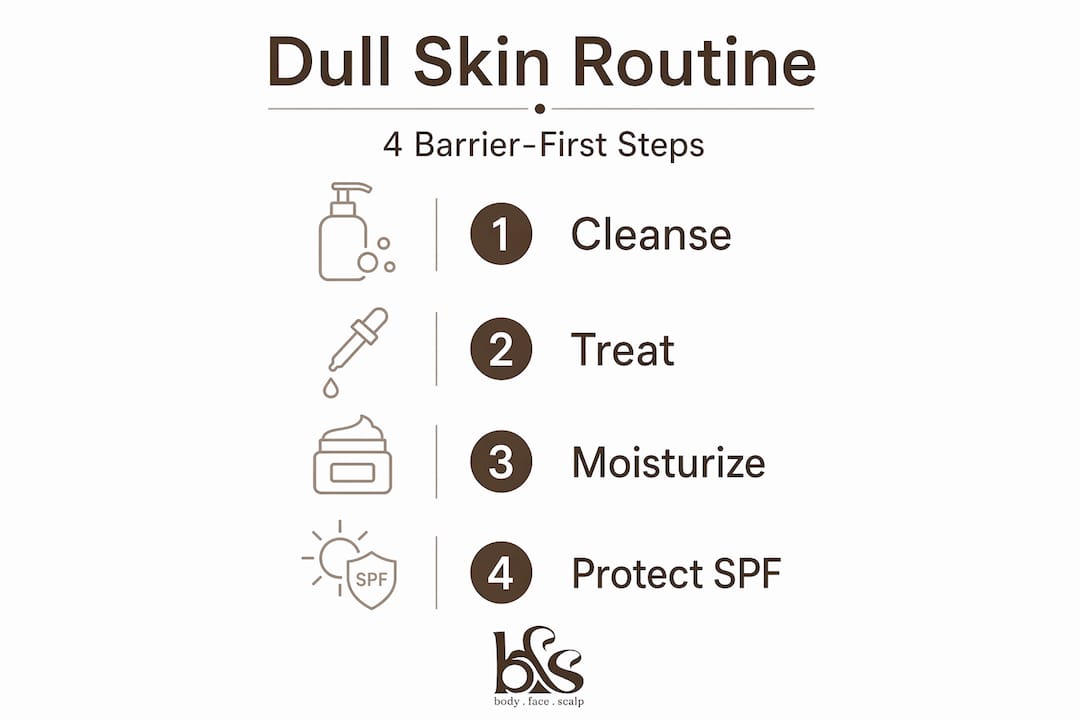
- Building your daily dull skin treatment routine: cleanse, treat, moisturize, protect
- Common mistakes and troubleshooting your dull skin routine
- What to expect: timeline and results from your dull skin treatment routine
- Rethinking dull skin treatment: why barrier repair should be your first priority
- Explore premium barrier-restoring skincare essentials at Body Face Scalp
- Frequently asked questions
Key Takeaways
| Point | Details |
|---|---|
| Barrier health is key | A strong skin barrier retains moisture and reduces dullness for a radiant complexion. |
| Simplify before actives | Start with gentle cleansing and moisturizing before adding exfoliants or retinoids. |
| Consistent daily routine | Cleanse, treat, moisturize, and protect every day for best results. |
| Sun protection is essential | Use broad-spectrum SPF 30+ and reapply to prevent ongoing damage. |
| Results take time | Expect visible improvements in 2–4 weeks with patient, regular care. |
Understanding dull skin and the importance of the skin barrier
To effectively treat dull skin, it is essential to understand the vital role your skin’s barrier plays in keeping your complexion healthy and radiant.
Your skin barrier is the outermost layer of skin, made up of lipids (fats), ceramides, and proteins that act like mortar between your skin cells. When this layer is intact, it locks in moisture and keeps irritants out. When it is damaged, moisture escapes, inflammation creeps in, and your skin loses the reflectivity that makes it look alive. As research confirms, the skin barrier prevents water loss and keeps irritants out; damage worsens dullness and irritation.
Understanding what a moisture barrier actually does changes how you approach your entire routine. It is not a passive layer; it is an active defence system.
Common signs that your barrier is under stress include:
- Flaking or rough texture even after moisturising
- Tightness after cleansing that lingers longer than a few minutes
- Increased sensitivity to products you previously tolerated well
- A dull, ashy, or grey tone particularly along the cheeks and forehead
- Redness or stinging with gentle, fragrance-free products
Canada’s cold winters, low indoor humidity, and hard water compound barrier damage faster than in more temperate climates. Recognising these signs early means you can intervene before dullness becomes entrenched.
Preparing your skin: steps to assess and support your barrier before treatment
Before adding active treatments, ensuring your skin barrier is stable helps maximise benefits and reduce irritation risk.
Think of barrier assessment as a non-negotiable first step, not an optional extra. If you apply brightening actives to a compromised barrier, you are essentially pouring water through a cracked container. A practical self-check involves cleansing with a mild, fragrance-free gel and observing skin comfort after 20 minutes. Tightness, stinging, or visible redness means your barrier needs repair before actives are introduced.
Follow these steps to prepare your skin safely:
- Strip your routine back. Remove all active ingredients, including exfoliating acids and retinoids, for at least one to two weeks. The barrier repair steps that rebuild your skin’s foundation are gentle, not aggressive.
- Simplify to three products. A mild cleanser, a barrier restoring moisturizer rich in ceramides, and a broad-spectrum SPF. Nothing more.
- Cleanse once daily. Morning and evening double-cleansing can be excessive when your barrier is weak. A single evening cleanse with plain water in the morning can reduce stripping.
- Observe your skin for one week. Note how it feels after cleansing, mid-day, and in the evening. Is tightness decreasing? Is sensitivity reducing? These are signs your barrier is stabilising.
- Reintroduce actives one at a time. Once your skin feels comfortable and settled, begin adding one active ingredient per week, starting with the gentlest option.
As guidance from skin barrier recovery research confirms, stopping all actives initially and using a simplified cleanser, ceramide moisturizer, and SPF routine is the most effective way to repair the barrier.
Pro Tip: If you are unsure whether your barrier is compromised, apply your usual moisturiser on cleansed skin with no other products. If it stings or causes redness within five minutes, treat that as a clear signal to strip your routine back completely.
Building your daily dull skin treatment routine: cleanse, treat, moisturize, protect
With your barrier supported, it is time to implement daily steps that actively revive radiance while protecting your skin.

A barrier-first dull skin routine rests on four daily steps: cleanse, treat with actives, moisturise, and protect with broad-spectrum SPF. The sequence matters as much as the ingredients.
Choosing the right products for each step
| Step | Morning | Evening |
|---|---|---|
| Cleanse | Rinse with cool water or mild gel cleanser | Double cleanse if wearing SPF or makeup |
| Treat | Vitamin C serum (brightening, antioxidant) | Retinoid or AHA/BHA (cell turnover, exfoliation) |
| Moisturise | Lightweight ceramide and niacinamide formula | Richer ceramide or barrier-repair cream |
| Protect | Broad-spectrum SPF 30 or higher | No SPF needed; focus on repair |
Key ingredient notes:
- Vitamin C brightens existing pigmentation and defends against free radical damage during the day. Use a stable, buffered form (like ascorbyl glucoside) if your skin is reactive.
- Niacinamide (a form of vitamin B3) reduces redness, supports the barrier, and evens skin tone. It works in both AM and PM.
- Ceramides are the lipid molecules that make up a healthy barrier. A moisturiser rich in ceramides is the single most important product for dullness driven by dehydration.
- AHAs (like glycolic or lactic acid) dissolve the bonds between dead skin cells, revealing the fresher, more reflective skin beneath.
When starting exfoliating actives, begin with one session per week for sensitive skin, then increase to two or three times per week as tolerated. Daily scrubbing or layering multiple exfoliants is one of the fastest ways to undo the barrier repair work you have done. Our expert dull skin guide covers ingredient layering in more detail if you want to go deeper on formulation.
Sun protection is non-negotiable in any glowing skin routine. Broad-spectrum SPF 30+ is essential and should be reapplied every two hours when outdoors. UV exposure degrades collagen, worsens hyperpigmentation, and causes oxidative damage that directly contributes to dullness.
Pro Tip: Apply your vitamin C serum and let it absorb for two full minutes before applying SPF. This gives the antioxidant time to bind to skin cells and enhances your sun protection’s effectiveness.
For a deeper look at why moisturiser selection matters more than most people realise, the barrier restoring moisturizer guide explains exactly how these formulas interact with your skin’s lipid structure.
Common mistakes and troubleshooting your dull skin routine
Despite best efforts, some common errors can stall glow progress. Knowing how to spot and fix them ensures steady improvement.
The most frequent mistake we see is product overload. More actives do not equal faster results. Combining multiple irritant actives simultaneously before barrier recovery can prolong dullness due to inflammation and water loss. When skin is inflamed, it cannot reflect light cleanly, no matter how many brightening ingredients you apply.
Watch for these warning signs that your routine needs adjusting:
- Burning or stinging after applying any product (even your moisturiser)
- Persistent redness that does not resolve within an hour of application
- New breakouts or small bumps appearing after introducing an active
- Increased oiliness in a skin type that is usually balanced or dry (this can signal dehydration, not oiliness)
- Skin that feels tight and shiny at the same time, a sign of dehydrated but over-stimulated skin
“When your skin starts sending distress signals, the answer is almost always to use less, not more.”
If you notice these signs, pause all actives for a week and return to the simplified three-step routine. Then reintroduce only one product at a time, every five to seven days, watching your skin’s response carefully. This approach to building a skin nourishment routine is slower, but it is the approach that actually works long term.
One more overlooked mistake: skipping SPF reapplication. Applying SPF in the morning and then spending four hours outdoors without reapplying is not sun protection. It is habit without function. For a dull skin treatment routine summer glow strategy, daily and consistent SPF use is as important as any brightening serum.
What to expect: timeline and results from your dull skin treatment routine
Knowing what results to anticipate helps you stay motivated and informed as you invest in your skin’s radiant future.
Realistic expectations prevent discouragement. At-home dullness-to-radiance routines typically take two to four weeks to show visible improvement. Professional treatments like chemical peels or laser therapies may show benefit after one session, but they also carry greater risk and require recovery time. For most Canadian women in their 30s and 40s with barrier concerns, a consistent at-home routine is the safest and most sustainable path.
| Treatment type | Visible results | Maintenance required |
|---|---|---|
| At-home barrier routine | 2 to 4 weeks | Daily, ongoing |
| In-clinic chemical peel | 1 to 2 sessions | Every 4 to 6 weeks |
| Laser treatment | 1 to 3 sessions | Every 3 to 6 months |
| Natural remedies for dull skin (e.g., oat, honey masks) | 4 to 6 weeks | Two to three times per week |
Maintaining the results you achieve requires ongoing commitment to holistic skincare practices that support not just your face, but your body and scalp as well. Skin functions as one interconnected system. Neglecting body or scalp skin health can affect the overall radiance and barrier integrity of your face over time.
Rethinking dull skin treatment: why barrier repair should be your first priority
Most skincare content rushes past the preparation phase and lands directly on the “best serums for glow.” We understand the appeal. Actives are exciting. Results feel tangible. But from our experience formulating for Canadian skin conditions, the single most common reason a dull skin routine fails is not the wrong active; it is that the barrier was never ready to receive it.
We see this pattern repeatedly: someone starts a glowing skin routine, adds a vitamin C serum, then a retinoid, then an exfoliating toner because results are slow. Their skin becomes red, flaky, and dull. They blame the products. But the real issue is that pushing multiple actives before your barrier can handle them often worsens dullness through inflammation and dehydration. You are not treating dullness at that point. You are creating more of it.
The reframe we encourage is this: your skin barrier is not a prerequisite you check off once. It is a living system you maintain continuously. This means that even when your skin looks and feels healthy, a simplified hydration check every few months keeps your barrier primed and your results consistent.
Patient, consistent use of ceramides, niacinamide, and a good SPF will outperform aggressive exfoliation routines every time, especially when you factor in the inflammatory stress of Canadian winters. Our expert guide to radiant skin explores this framework in detail for those who want to go beyond surface-level steps.
The most radiant skin is not the most treated skin. It is the most supported skin.
Explore premium barrier-restoring skincare essentials at Body Face Scalp
At Body Face Scalp™, we have built our entire product line around the barrier-first philosophy described in this guide. Every formula is designed to repair, protect, and restore radiance for Canadian skin.

Explore our premium skincare collection to find gentle cleansers, ceramide-rich moisturisers, and brightening serums formulated specifically for dull, sensitive, or barrier-compromised skin. Our barrier restoring moisturizer is a cornerstone product for anyone rebuilding their routine from the ground up. For those ready to add a targeted brightening step, our Luster Booster Multi-Peptide Serum delivers visible glow support while respecting your skin’s natural balance. Every product reflects our commitment to ingredient-led, results-driven skincare designed for real Canadian conditions.
Frequently asked questions
How often should I exfoliate if I have sensitive dull skin?
Start with once per week and increase to two or three times per week only if your skin tolerates it without redness, stinging, or tightness. Consistency matters more than frequency.
Can I use vitamin C and retinol together in my routine?
Avoid using them on the same day if your skin is reactive. As skincare guidance confirms, retinoids and acids should not be used on the same night if skin is sensitive. Introduce each one gradually and on alternating days until your skin adjusts.
When will I start seeing improvements in my skin glow?
At-home routines typically take two to four weeks of consistent use before visible improvement appears. Skipping days or frequently changing products resets this timeline.
Is sunscreen really necessary in a dull skin routine?
Yes. Daily SPF is the single most impactful habit for preserving tone and texture, particularly when you are using actives that increase sun sensitivity. Broad-spectrum SPF 30 or higher is the minimum.
How can I repair a damaged skin barrier that makes my skin look dull?
Stop all actives immediately and follow a simplified routine. Research supports stopping all actives and using a gentle cleanser, ceramide moisturizer, niacinamide serum, and SPF consistently for two to four weeks to allow your barrier to recover before reintroducing treatments.