


Glutathione for skin brightening: what actually works
TL;DR:
- Glutathione functions as the body’s primary antioxidant, supporting skin brightening through melanin inhibition, pigment shifting, and oxidative protection. Consistent use over 8 to 12 weeks with proper formulation and sun protection yields gradual, measurable improvements, especially in darker skin types. Neither topical nor oral glutathione is definitively superior; pairing supplements and formulations enhances safety and effectiveness.
Glutathione is defined as the body’s primary intracellular antioxidant, and its role in skin brightening is grounded in measurable biology, not marketing. Clinically referred to as L-glutathione, this tripeptide compound modulates melanin production and reduces oxidative damage, supporting clearer, more even skin over time. The skin benefits are gradual and cumulative, reflecting improved skin clarity rather than dramatic lightening. If you are exploring skin brightening ingredients and want to understand where glutathione fits, this guide covers the science, the evidence, and the practical steps to use it safely.
How does glutathione work to brighten skin?
Glutathione supports skin brightening through three distinct biological pathways, each contributing to a clearer, more even complexion over weeks of consistent use.
The first pathway is tyrosinase inhibition. Tyrosinase is the enzyme that triggers melanin production in skin cells called melanocytes. Glutathione binds to copper ions within tyrosinase, reducing its activity and slowing the rate at which melanin is synthesised. Less active tyrosinase means less pigment deposited in the skin.
The second pathway involves a pigment shift. Glutathione shifts melanin synthesis from darker eumelanin toward lighter pheomelanin. This shift does not erase existing pigment but changes the ratio of pigment types being produced, resulting in a gradual lightening of new skin cells as they surface.
The third pathway is antioxidant and anti-inflammatory protection. Oxidative stress from UV exposure, pollution, and metabolic processes triggers excess melanin production and worsens post-inflammatory hyperpigmentation. Glutathione neutralises free radicals before they can activate these pigmentation cascades. This is particularly relevant for conditions like melasma and acne-related dark spots, where inflammation drives discolouration.
- Inhibits tyrosinase activity to reduce melanin output
- Shifts pigment production from eumelanin to pheomelanin
- Neutralises free radicals that trigger excess pigmentation
- Reduces post-inflammatory hyperpigmentation by calming oxidative stress
Pro Tip: Pairing glutathione with vitamin C amplifies tyrosinase inhibition because both compounds target the same enzyme through complementary mechanisms. Together, they deliver more consistent results than either ingredient alone.
What does the research say about glutathione’s effectiveness?
The clinical evidence for glutathione as a skin brightening agent is promising but measured. Results are real, though they require patience and realistic expectations.
Visible skin tone improvement typically appears after 8 to 12 weeks of consistent daily use, with subtle shifts beginning as early as four weeks. A randomised trial using 500 mg L-cystine plus 250 mg L-glutathione daily showed statistically significant skin lightening at 12 weeks, measured by melanin index reduction. This confirms that the effect is real, but it is modest and cumulative, not a rapid transformation.
“Glutathione improves skin clarity and luminosity mainly by supporting liver detox and antioxidant pathways rather than dramatic lightening. Skin reflects healthier hepatic clearance with less oxidative burden, resulting in clearer, more even skin.” — Wellness Radar
The effectiveness also varies by individual. Darker Fitzpatrick skin types (types IV through VI) with higher baseline melanin tend to show greater measurable melanin index reduction in studies. This means people with deeper skin tones and more pronounced hyperpigmentation may notice more visible results, while those with lighter skin tones may see subtler changes.
| Form | Evidence level | Key consideration |
|---|---|---|
| Oral (L-glutathione) | Moderate; clinical trials support modest brightening | Poor gut bioavailability; systemic antioxidant benefits still present |
| Topical | Emerging; formulation-dependent | Stability and delivery system matter more than concentration |
| Intravenous (IV) | Weak; not supported by large-scale evidence | Safety risks; not recommended for cosmetic use |
The FDA has not approved glutathione as a skin-lightening agent. IV glutathione in particular carries increased risk of side effects and lacks long-term safety data. Systematic reviews recommend against IV glutathione for cosmetic skin lightening, and the cost of up to $300 per session in North America makes it an expensive and unsupported option.
Topical versus oral glutathione: which is better?
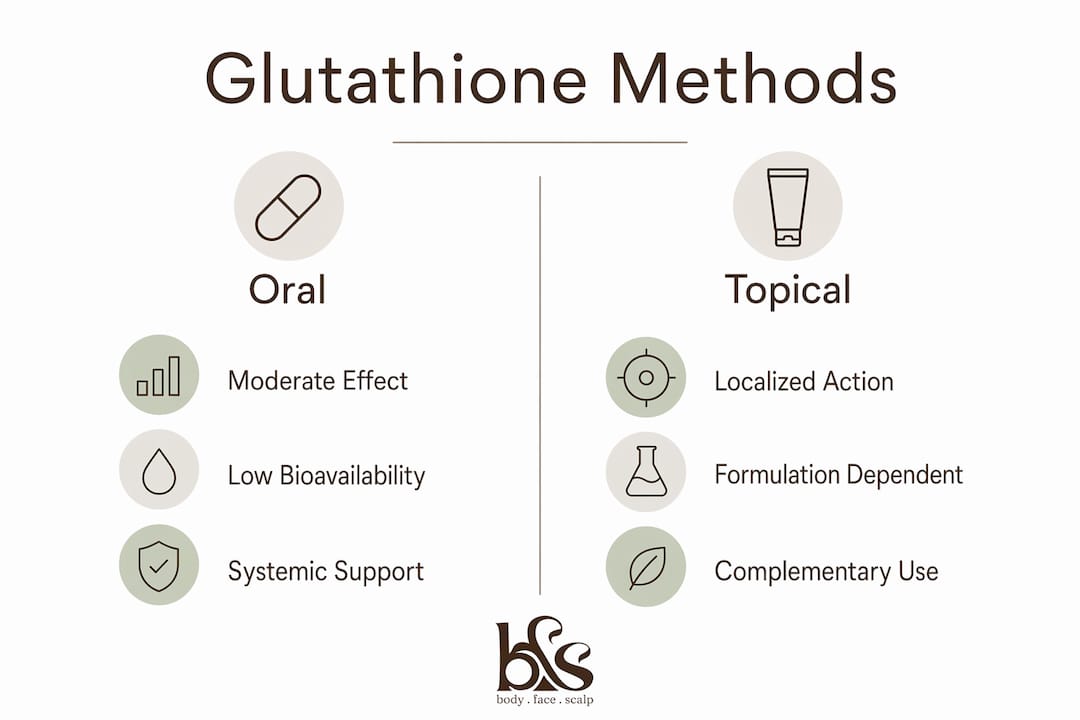
The honest answer is that neither form is definitively superior. Each has trade-offs, and the best choice depends on your skin concern and how you prefer to supplement.
Oral glutathione has poor bioavailability because the gut breaks down the tripeptide before it reaches systemic circulation in meaningful quantities. However, oral supplementation still delivers systemic antioxidant benefits by supporting the liver’s detoxification pathways, which indirectly reduces the oxidative burden on skin. The effect is body-wide rather than targeted.
Topical glutathione offers localised application, but its effectiveness depends almost entirely on formulation. Glutathione is a fragile molecule that degrades quickly when exposed to air, light, or heat. Topical efficacy depends heavily on delivery system stability, not concentration percentage. A well-formulated 2% glutathione serum in a stabilised, encapsulated system will outperform a poorly formulated 5% product. This is why formulation quality matters more than the number on the label.
A third option worth knowing: GlyNAC supplementation (glycine combined with N-Acetyl Cysteine) provides the rate-limiting amino acid precursors that the body uses to synthesise glutathione intracellularly. GlyNAC restores intracellular glutathione to more youthful levels better than pre-formed glutathione supplements, because it bypasses the gut degradation problem entirely.
| Consideration | Oral glutathione | Topical glutathione |
|---|---|---|
| Bioavailability | Low; gut degrades most of it | Variable; formulation-dependent |
| Target area | Systemic, body-wide | Localised to application site |
| Best for | General antioxidant support, overall skin clarity | Targeted dark spots, uneven tone |
| Stability concern | Moderate | High; requires encapsulation or stabilisation |
| Complementary option | GlyNAC precursors | Vitamin C, niacinamide, SPF |
For those managing hyperpigmentation across larger areas of the face or body, combining a well-formulated topical with oral supplementation or GlyNAC is the most thorough approach.
How to safely use glutathione for skin brightening
Safe and effective use of glutathione comes down to dose, duration, formulation quality, and what you pair it with. Here is a practical protocol based on the available evidence.
-
Start with oral dosing in the 250 to 500 mg per day range. This dose is well tolerated, with only minor and transient gastrointestinal discomfort reported in some users. Glutathione is not photosensitising, making it safe for summer use at recommended oral doses.
-
Commit to at least 8 to 12 weeks. Skin brightening from glutathione is cumulative. Stopping after four weeks because you do not see dramatic results is the most common reason people conclude it does not work. Consistent moderate dosing over 90 days yields better sustained benefits than high-dose, short-term regimes.
-
Avoid intravenous glutathione for cosmetic purposes. The evidence does not support it, and the safety risks are not worth taking for a cosmetic outcome that oral and topical options can achieve more safely.
-
Choose topical products based on formulation, not concentration. Look for encapsulated or stabilised glutathione in opaque, airtight packaging. A peptide serum or barrier moisturiser paired with your glutathione product supports the skin’s ability to retain and respond to active ingredients.
-
Apply broad-spectrum SPF 30 or higher every morning. UV exposure is the primary driver of melanin overproduction. Without daily sun protection, glutathione cannot outpace the pigmentation being triggered by UV damage. SPF is not optional when brightening is the goal.
-
Consider GlyNAC if oral glutathione feels insufficient. Supplementing with glycine and N-Acetyl Cysteine provides the building blocks your cells need to produce glutathione internally, which is often more effective than consuming pre-formed glutathione.
Pro Tip: If you are using a niacinamide serum alongside glutathione, you are covering two complementary mechanisms. Niacinamide reduces melanin transfer from melanocytes to skin cells, while glutathione reduces melanin production at the source. Together, they address the full pigmentation cycle.
Key takeaways
Glutathione supports skin brightening through antioxidant activity and melanin regulation, with consistent moderate-dose supplementation over 8 to 12 weeks delivering the most reliable results.
| Point | Details |
|---|---|
| Mechanism is biological, not cosmetic | Glutathione reduces melanin production and oxidative stress rather than bleaching skin. |
| Timeline requires patience | Expect 8 to 12 weeks of daily use before noticeable improvement in skin clarity. |
| Formulation determines topical results | Stability and delivery system matter more than glutathione concentration in topical products. |
| GlyNAC outperforms oral glutathione | Precursor supplementation raises intracellular glutathione more effectively than pre-formed supplements. |
| SPF is non-negotiable | Daily sun protection is required to prevent UV from undoing glutathione’s brightening effects. |
Glutathione in practice: what I have actually observed
Mohid here. After working with skin brightening concerns across a wide range of skin types, my honest view is that glutathione is one of the more misunderstood ingredients in the category. People either expect it to work like a prescription-strength treatment or dismiss it entirely because they tried it for a month and saw nothing.
The reality sits in the middle. Glutathione’s skin brightening effects come from restoring biological balance, not from chemical intervention. That distinction matters because it changes how you approach it. You are supporting a system, not forcing a result. When I see the best outcomes, it is always in people who treat glutathione as one layer of a broader routine that includes SPF, barrier support, and a stable topical with complementary actives like niacinamide or vitamin C.
The summer question comes up often. Glutathione is not photosensitising, so using it during summer months is fine at standard oral doses. What changes in summer is the UV load, which means your SPF discipline needs to be tighter, not looser. Glutathione for skin brightening in summer works best when it is backed by consistent sun protection.
My practical recommendation: start with oral supplementation at 250 to 500 mg daily, pair it with a well-formulated topical, and give it a full 12 weeks before evaluating. If you want to go deeper, look at GlyNAC as a precursor strategy. And build your hyperpigmentation management routine around glutathione rather than expecting glutathione to carry the whole load.
— Mohid
Explore brightening solutions from Bodyfacescalp
At Bodyfacescalp, we formulate for real skin conditions in real Canadian climates. Our skincare collection includes products designed to complement antioxidant-based brightening routines, from our Luster Booster Multi Peptide Serum to our Barrier Restoring Moisturiser, which supports the skin foundation that makes every active ingredient work better. We prioritise formulation stability and ingredient synergy so your brightening routine delivers consistent results.
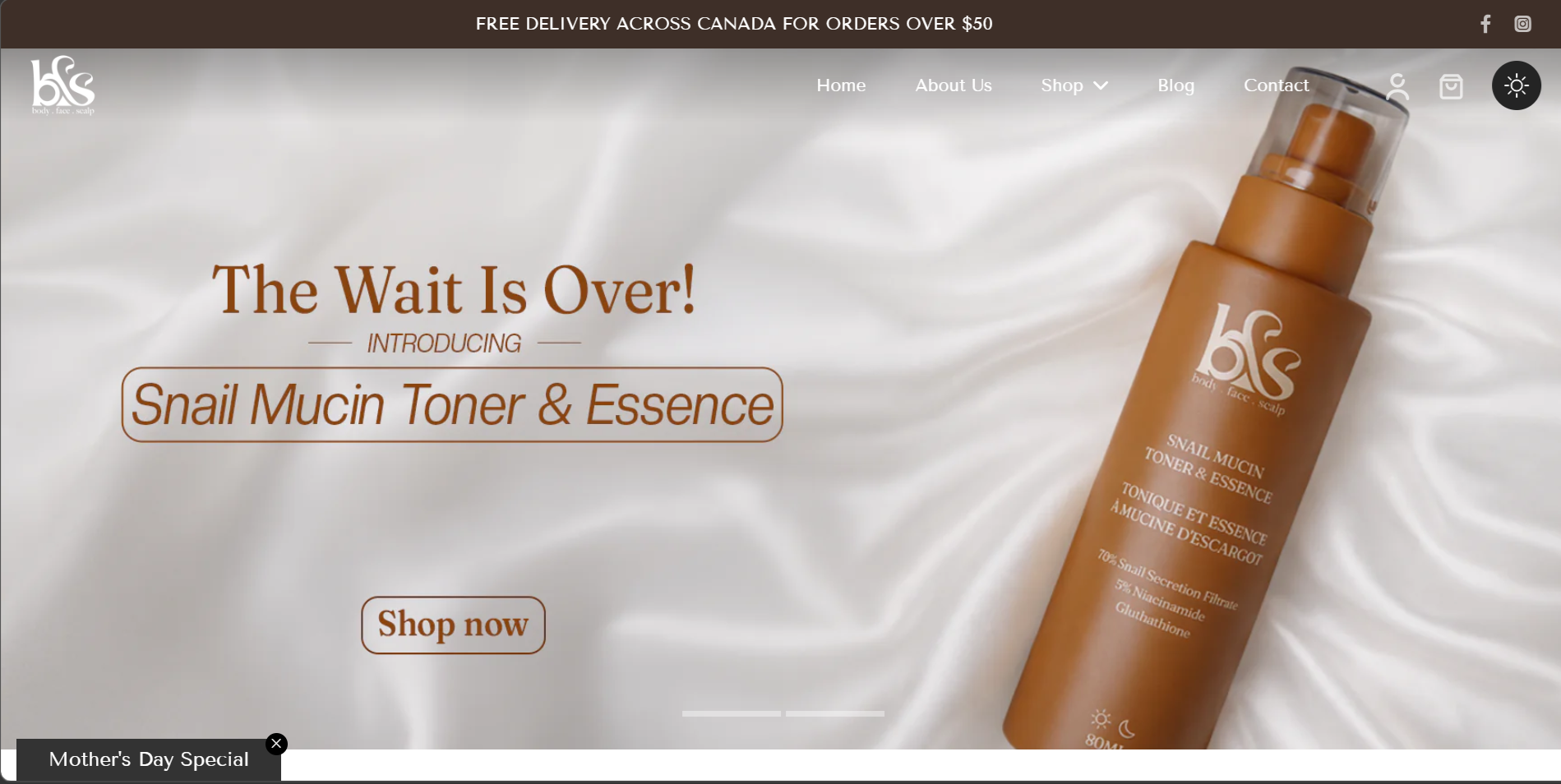
If you are building a routine around glutathione or other skin brightening ingredients, our skin correcting serum targets uneven tone and discolouration as a compatible adjunct to antioxidant supplementation. Explore the full range and find what fits your skin.
FAQ
What is glutathione and how does it brighten skin?
Glutathione is a tripeptide antioxidant produced naturally in the body that brightens skin by inhibiting tyrosinase activity, reducing melanin production, and shifting pigment synthesis from darker eumelanin to lighter pheomelanin. Results are gradual and reflect improved skin clarity rather than dramatic lightening.
How long does glutathione take to show results on skin?
Visible improvement in skin tone typically appears after 8 to 12 weeks of consistent daily use, with subtle changes beginning as early as four weeks. Consistency at moderate doses is more effective than high-dose, short-term supplementation.
Is topical or oral glutathione better for brightening?
Neither is definitively superior. Oral glutathione provides systemic antioxidant support but has low bioavailability, while topical glutathione offers localised effects but depends entirely on formulation stability and delivery system quality. GlyNAC supplementation is often the most effective oral strategy for raising intracellular glutathione levels.
Is glutathione safe to use in summer?
Yes. Glutathione is not photosensitising and is safe for summer use at recommended oral doses of 250 to 500 mg per day. Daily broad-spectrum SPF remains non-negotiable during summer to prevent UV from triggering the very melanin production glutathione is working to reduce.
Can glutathione help with hyperpigmentation and dark spots?
Glutathione reduces post-inflammatory hyperpigmentation and dark spots by lowering oxidative stress and slowing melanin production at the enzymatic level. Results are most visible in individuals with Fitzpatrick skin types IV through VI, where baseline melanin levels are higher and measurable reduction is more pronounced.