


How to manage hyperpigmentation: 5 expert steps
You follow your routine carefully, yet those stubborn dark spots remain. Hyperpigmentation affects a significant number of Canadian women, and the sheer volume of products and advice available can make the path forward feel overwhelming rather than clear. We built this guide to cut through the noise. From understanding what drives pigmentation to choosing the right actives and tracking real progress, you will find a practical, evidence-backed roadmap here. The goal is simple: help you treat smarter, protect your barrier, and see lasting results.
Table of Contents
-
What you need before starting: Tools, treatments, and mindset
-
Taking the next step: Holistic solutions for brighter, healthier skin
Key Takeaways
| Point | Details |
|---|---|
| Barrier-first approach | Prioritising barrier health prevents irritation and supports lasting pigment removal. |
| Gentle, proven actives | Niacinamide, tranexamic acid, azelaic acid, and vitamin C offer results equal to HQ with better safety. |
| Consistent protection | Daily broad-spectrum sunscreen and patient, steady routines are essential to prevent relapse. |
| Track and adapt | Use weekly photos or shade charts to measure progress and adjust your plan as needed. |
Understanding hyperpigmentation and your skin’s needs
Hyperpigmentation is an umbrella term for areas of skin that appear darker than your natural tone. It happens when melanocytes, the cells responsible for skin colour, produce excess melanin. Three main types affect Canadian women most often:
-
Post-inflammatory hyperpigmentation (PIH): Triggered by acne, eczema, or any skin injury. Darker skin tones are especially prone to this.
-
Sun-induced pigmentation: Caused by cumulative UV exposure, often appearing as flat brown spots on the cheeks, forehead, and hands.
-
Hormonal pigmentation (melasma): Linked to pregnancy, oral contraceptives, or hormonal shifts. It typically forms symmetrical patches across the face.
What many people miss is the connection between pigmentation and the skin barrier. Your barrier is the outermost layer of skin that keeps moisture in and irritants out. When it is compromised, inflammation increases, and inflammation is one of the primary triggers for excess melanin production. This is why holistic barrier repair is not optional when treating pigmentation. It is foundational.
Signs your barrier may be compromised include:
-
Tightness or stinging after cleansing
-
Redness or increased sensitivity to products you previously tolerated
-
Flaking or rough texture alongside dark spots
-
Pigmentation that keeps returning despite treatment
Recurrence is one of the most frustrating aspects of this condition. You fade a spot, then it comes back. This cycle often points to an unaddressed barrier issue or continued UV exposure. On the treatment side, alternatives to hydroquinone match HQ efficacy with significantly better tolerance and fewer risks like irritation, relapse, or ochronosis (a bluish-grey discolouration from long-term HQ use).
Key insight: Treating pigmentation without repairing your barrier is like painting over a cracked wall. The results will not hold.
What you need before starting: Tools, treatments, and mindset
Once you understand your skin’s needs, it is time to gather what you will need for safe, evidence-driven treatment. Starting without the right foundation leads to irritation and wasted effort.
Your essential product checklist:
-
A gentle, non-stripping cleanser suited to your skin type
-
A barrier-repair moisturiser with ceramides or fatty acids
-
A broad-spectrum SPF 30 or higher sunscreen
-
A targeted serum with proven brightening actives
Choosing the right active ingredient matters enormously. Here is a straightforward comparison to guide your decision:
| Ingredient | Efficacy | Tolerability | Key consideration |
|---|---|---|---|
| Hydroquinone (HQ) 4% | High | Moderate to low | Risk of irritation, relapse, ochronosis with prolonged use |
| Azelaic acid | Moderate to high | High | Anti-inflammatory, good for sensitive skin |
| Niacinamide + TXA + Vitamin C | High | High | Comparable to HQ with fewer side effects |
Niacinamide (vitamin B3) reduces melanin transfer to skin cells. Tranexamic acid (TXA) blocks the signals that trigger excess melanin production. Vitamin C inhibits the enzyme tyrosinase, which drives melanin synthesis. Together, these actives work on multiple pathways simultaneously.
For those with reactive skin, expert-backed sensitive skin solutions offer a helpful starting point for building a routine that will not cause flares.
Mindset matters too. Realistic timelines are essential. Most actives require 8 to 12 weeks of consistent use before visible fading occurs. Commit to the process, protect your skin from the sun daily, and prioritise sleep and stress management alongside your topical routine.
Pro Tip: Always patch test new actives on a small area of skin for 48 hours before applying them to your full face. This is especially important if your barrier is already compromised.
Step-by-step guide to managing hyperpigmentation
With essentials ready, here is your clear step-by-step protocol for treating and preventing hyperpigmentation at home.
-
Cleanse gently and assess your skin. Use a mild, pH-balanced cleanser morning and evening. Avoid physical scrubs, harsh acids, or anything that leaves your skin feeling tight. After cleansing, take a moment to assess: is your skin calm, or does it show signs of irritation? Your routine should adapt to what your skin tells you. Following daily face care steps consistently builds the foundation for everything else.
-
Apply your barrier-repairing moisturiser. After cleansing, apply a moisturiser formulated with ceramides, niacinamide, or fatty acids. This step locks in hydration and reduces the low-grade inflammation that drives pigmentation. Do not skip this even if your skin feels oily.
-
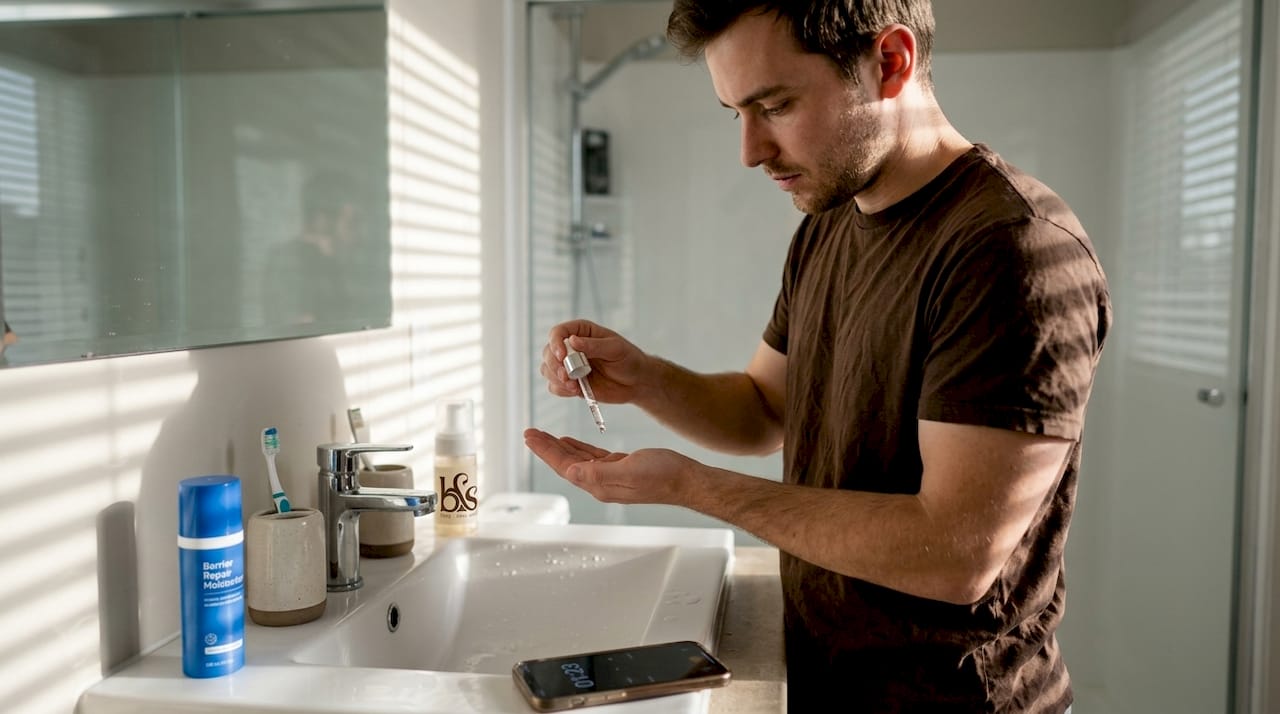
Use your targeted brightening serum. Apply your serum after moisturising or as directed by the product. Look for a combination of niacinamide, TXA, and vitamin C. Serum blends with these actives match hydroquinone for efficacy while producing less redness and higher quality-of-life scores in clinical settings. The BFS skin correcting serum is formulated with this evidence-based approach in mind.
-
Apply broad-spectrum sunscreen every morning. This is non-negotiable. UV exposure is the single biggest driver of pigmentation recurrence. Use SPF 30 or higher, every day, regardless of cloud cover or season. Canada’s winter light still carries UVA rays that penetrate glass and cloud.
-
Support your skin from the inside. Consistent sleep, a diet rich in antioxidants, and managed stress levels all reduce systemic inflammation. This matters because inflammation and pigmentation are directly linked.
Remember: Layering too many actives at once does not speed up results. It usually causes irritation and sets your progress back.
Pro Tip: Less is more when it comes to actives. Start with one targeted serum and a solid barrier moisturiser. Add additional ingredients only once your skin has adjusted, typically after four to six weeks.
Common mistakes and how to avoid relapse
While following the right steps is essential, avoiding these common pitfalls can make all the difference in your results.
The most frequent mistakes we see:
-
Over-exfoliating: Chemical exfoliants like AHAs and BHAs are useful, but using them too frequently strips the barrier and triggers more inflammation. Limit exfoliation to once or twice per week at most.
-
Skipping sunscreen: Even one unprotected day in the sun can undo weeks of fading. This is the most common reason pigmentation returns.
-
Product hopping: Switching serums every few weeks prevents you from ever seeing real results. Commit to a routine for at least 8 to 12 weeks before evaluating.
-
Ignoring the barrier: Using actives on a compromised barrier causes irritation, which causes more pigmentation. Repair first, treat second.
Relapse is a real risk, particularly with approaches that carry higher irritation potential. Prolonged HQ use is associated with irritation, rebound pigmentation, and ochronosis, which is why gentler alternatives with equivalent efficacy are worth considering for long-term management.
If you notice increased redness, stinging, or new dark spots appearing, pause your actives for one week. Focus entirely on barrier repair using a gentle barrier restoring moisturiser and a calming sunscreen serum before reintroducing treatments.
Watch for early relapse signs: New spots forming in previously clear areas, increased sensitivity, or a return of dullness and uneven tone are signals to reassess your routine.
Tracking progress: How to verify results and adjust
With your routine in place, let us focus on how to measure your progress and ensure you are on track for real results.
Tracking pigmentation fading is more reliable when you use consistent methods:
-
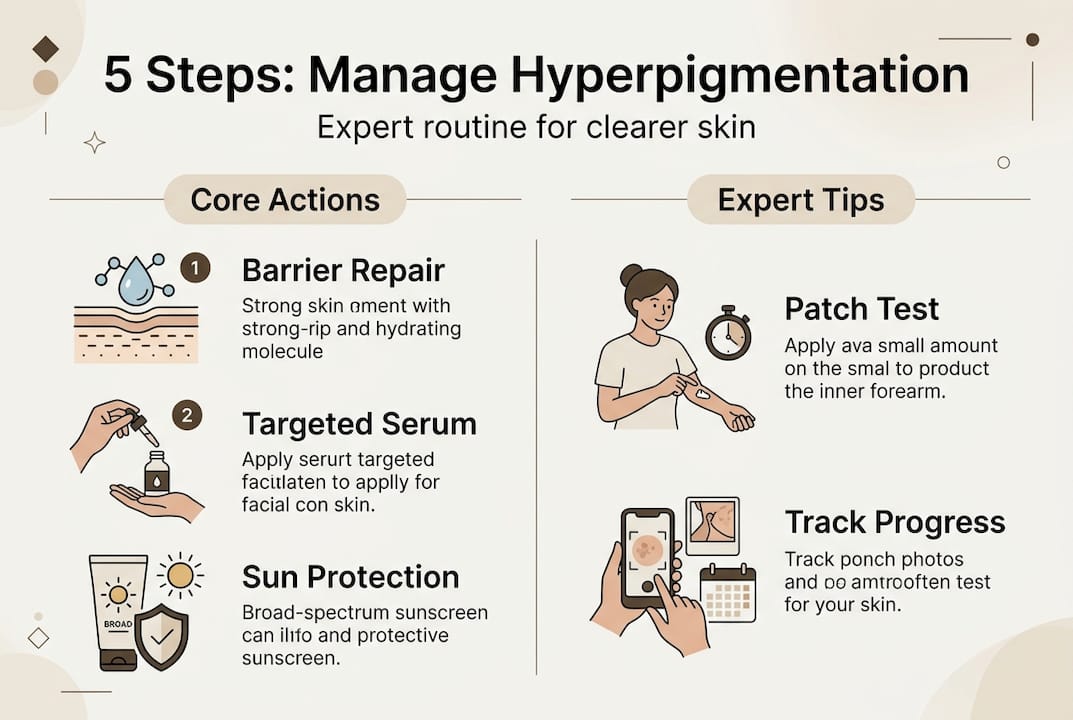
Weekly photos: Take photos in the same lighting, at the same angle, every week. Natural daylight is best. This removes the subjectivity of daily mirror checks.
-
Shade comparison: Some dermatologists use a Fitzpatrick scale or melanin index tools. At home, comparing photos side by side over four-week intervals is practical and effective.
-
Symptom journalling: Note any irritation, new spots, or changes in texture alongside your photos.
Clinical timeline expectations by ingredient:
| Treatment approach | Average visible improvement | Notes |
|---|---|---|
| Hydroquinone 4% | 8 to 12 weeks | Higher relapse risk after stopping |
| Azelaic acid 15 to 20% | 10 to 16 weeks | Gentler, suits sensitive skin |
| Niacinamide + TXA + Vitamin C | 8 to 12 weeks | Clinically validated MASI reductions, safer long-term |
MASI stands for Melasma Area and Severity Index, a clinical scoring tool used to measure pigmentation improvement in studies.
Know when to see a dermatologist. If you see no improvement after 12 weeks of consistent use, if irritation is severe, or if you suspect melasma rather than standard PIH or sun damage, a professional assessment is the right next step. For those managing sensitive skin routine guidance alongside pigmentation, professional input can help you sequence treatments safely.
Canada’s seasons also affect your skin’s behaviour. Cold, dry winters weaken the barrier, while summer UV intensity spikes. Adjusting your routine with seasonal skincare in Canada in mind helps you maintain progress year-round rather than losing ground each season.
Taking the next step: Holistic solutions for brighter, healthier skin
If you are ready to build or upgrade your routine, exploring evidence-aligned products can make the process easier and more effective.

At Body Face Scalp™, every formulation is built around barrier repair and ingredient-led science. We know that managing hyperpigmentation requires more than a single product. It requires a cohesive routine that protects, repairs, and brightens without compromising your skin’s resilience. Our premium skincare collection includes targeted solutions formulated for pigmentation, sensitivity, and barrier support. Start with our barrier-restoring moisturiser as your foundation, then layer in brightening actives designed to work with your skin, not against it. Real results come from routines built to last.
Frequently asked questions
How long does it take to see results from hyperpigmentation treatments?
Noticeable fading typically occurs within 8 to 12 weeks, though your timeline depends on the type of pigmentation and how consistently you apply your routine. Clinical data confirms that both HQ and gentler alternatives like niacinamide and TXA serums reach meaningful results within this window.
Are there safe alternatives to hydroquinone for managing dark spots?
Yes. Niacinamide, tranexamic acid, and azelaic acid are all clinically supported options. Niosomal TXA formulations have shown results comparable to hydroquinone with significantly fewer side effects, making them a strong choice for long-term use.
Can I treat hyperpigmentation if I have sensitive skin?
Absolutely. The key is to prioritise barrier repair first and introduce actives gradually. Gentler serum blends with niacinamide and TXA are specifically well-tolerated by reactive skin types and carry a lower risk of irritation than traditional HQ-based treatments.
Why is sun protection critical during treatment?
UV exposure directly stimulates melanin production and can reverse weeks of fading progress. Daily SPF use is the single most important step you can take to protect your results and prevent new pigmentation from forming.
Recommended
-
Master your face care step by step for radiant skin – Body Face Scalp
-
Types of premium skincare products: 5 expert picks for 2026 – Body Face Scalp
-
Sensitive skin solutions: Top expert-backed options for Canadians – Body Face Scalp
-
Sensitive skin routine guide: Soothe, strengthen, protect – Body Face Scalp