


How to remove acne scars fast: your 2026 guide
TL;DR:
- Effective acne scar improvement requires a thorough understanding of scar types and appropriate treatment timing.
- Combining in-office procedures like microneedling or laser with topical actives and proper skin prep accelerates results over several months.
Acne scars can feel like a permanent reminder of breakouts you’ve already moved past. If you’re searching for how to remove acne scars fast, you’re not alone — and the good news is that real, visible improvement is achievable. The honest truth is that true scar removal takes weeks to months, not days. But with the right approach, you can speed up the process significantly. This guide walks you through scar types, preparation, treatment options, and realistic timelines so you can act quickly and safely.
Table of Contents
- Key takeaways
- How to remove acne scars fast: know your scar first
- Preparation steps that make treatments work faster
- Treatment options: in-office procedures and home care
- A step-by-step plan for safe, fast scar improvement
- What results to expect and how to maintain them
- My honest take on quick acne scar removal
- Support your skin during scar treatment with Bodyfacescalp
- FAQ
Key takeaways
| Point | Details |
|---|---|
| Scar type determines treatment | Identifying whether you have pigment marks or textural scars shapes which treatment works fastest for you. |
| Preparation accelerates results | Sun protection and a healthy skin barrier are prerequisites that directly speed up visible improvement. |
| Combination therapy wins | Pairing modalities like microneedling with chemical peels produces faster results than any single treatment alone. |
| Darker skin tones need tailored care | Aggressive treatments can worsen pigmentation; conservative, tailored protocols get safer, quicker results. |
| Patience is part of the plan | Even the fastest treatments require consistent follow-through over four to six months for meaningful improvement. |
How to remove acne scars fast: know your scar first
Before you choose any treatment, you need to know exactly what you’re treating. This is the step most people skip, and it’s why they waste money and time on the wrong products.
There are two broad categories that often get confused:
- Post-inflammatory hyperpigmentation (PIH): These are flat, discoloured marks left after a pimple heals. They are brown, red, or purple and sit on the skin’s surface. They are not true scars. They respond well to topical treatments and can fade noticeably within weeks.
- Atrophic scars: These are textural depressions in the skin, including ice pick, boxcar, and rolling scars. They result from collagen loss during healing and require procedures that stimulate new collagen to improve.
- Hypertrophic or keloid scars: These are raised scars caused by excess collagen. They are less common on the face and require different management entirely.
The distinction matters enormously for speed. Treating pigment marks with topical retinoids and sunscreen can yield faster visible improvements than addressing depressed textural scars, which need collagen remodelling at a deeper level.
Skin tone also plays a major role. If you have a deeper complexion, certain aggressive treatments carry a higher risk of triggering more pigmentation. Energy-based devices in skin of colour require conservative protocols because post-inflammatory hyperpigmentation is a frequent side effect when settings are not carefully tailored.
Pro Tip: Wait until your acne is fully healed before starting any scar treatment. Beginning too early can inflame active breakouts and worsen both scars and pigmentation.
Preparation steps that make treatments work faster
Preparation is not optional. The condition of your skin before you begin treatment directly affects how quickly you see results.
- Cleanse gently. Harsh cleansers strip the skin barrier and make it harder for actives to absorb properly. Use a mild, fragrance-free cleanser morning and night.
- Moisturise consistently. A well-hydrated skin barrier heals faster and tolerates treatments better. Look for moisturisers containing ceramides or peptides to actively support barrier function.
- Apply SPF 30 or higher every single day. Sun protection during scar treatment is non-negotiable. UV exposure darkens pigment marks and slows collagen repair, undoing the progress you’re working hard to achieve.
- Introduce topical retinoids. Retinoids accelerate cell turnover and have strong evidence for fading post-inflammatory hyperpigmentation. Significant pigmentation improvement is measurable at 12 and 24 weeks with consistent retinoid use. Start with a low concentration to avoid irritation, since initial irritation peaks at one to three weeks before tolerability improves.
- See a dermatologist before committing to procedures. A professional assessment tells you which scar types you have, which treatments suit your skin tone, and which combination of approaches will get you results fastest.
For a deeper look at actives that target pigmentation, the hyperpigmentation treatment guide at Bodyfacescalp covers holistic routines and ingredient-led approaches in detail.
Treatment options: in-office procedures and home care
This is where speed really comes from. Understanding your options, their timelines, and their trade-offs lets you make an informed choice rather than guessing.
In-office procedures
| Treatment | Best for | Expected timeline | Downtime |
|---|---|---|---|
| Fractional CO2 laser | Atrophic textural scars | ~67% improvement by 6 months | Redness and swelling up to 5 days |
| Microneedling with PRP | Atrophic scars, all skin tones | 65.2% improvement over 4 months | Redness for 1 to 2 days |
| Chemical peels | Pigment marks, mild texture | Visible fading from 4 to 8 weeks | Redness up to 7 days |
| Fillers or subcision | Rolling and boxcar scars | Immediate lifting effect | Minimal to moderate bruising |
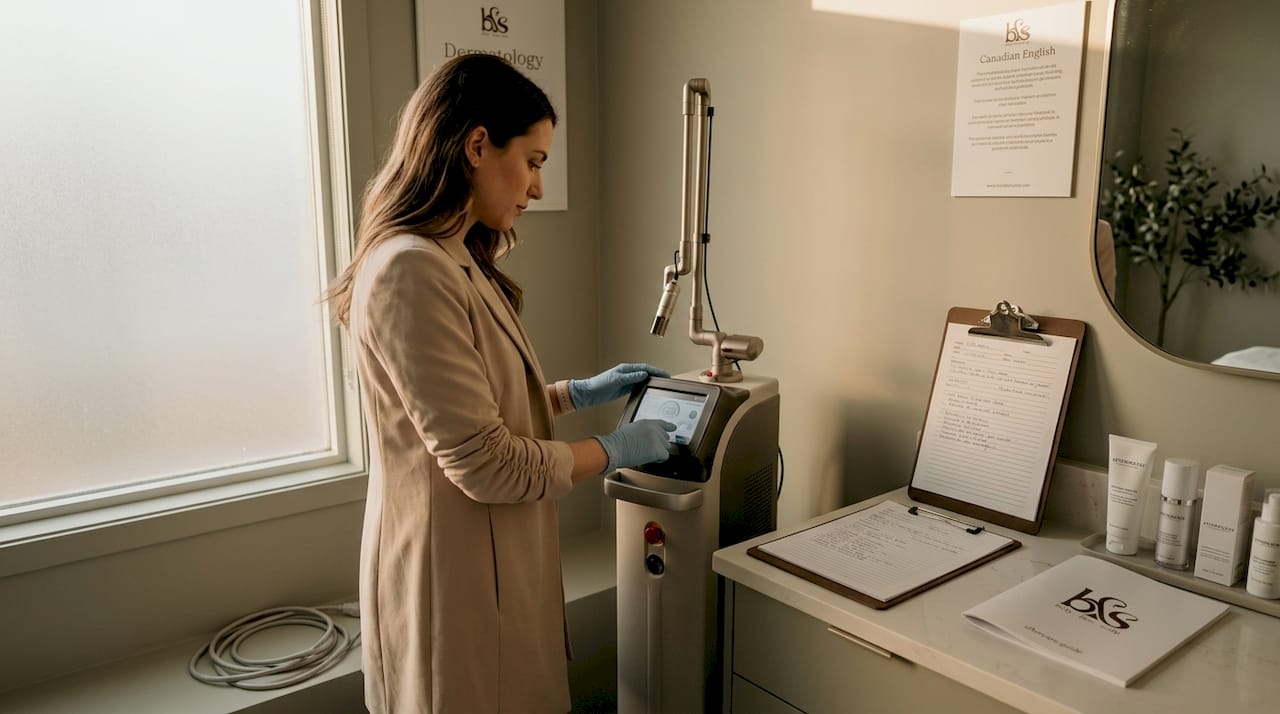
Fractional lasers work by creating thousands of microscopic injury channels in the skin, triggering the body’s collagen remodelling response. Results build over months, not days. Microneedling with platelet-rich plasma (PRP) achieves comparable results with a gentler recovery profile. It is a cost-effective alternative to fractional CO2 laser with fewer side effects, making it a strong choice for those with limited downtime or deeper skin tones.
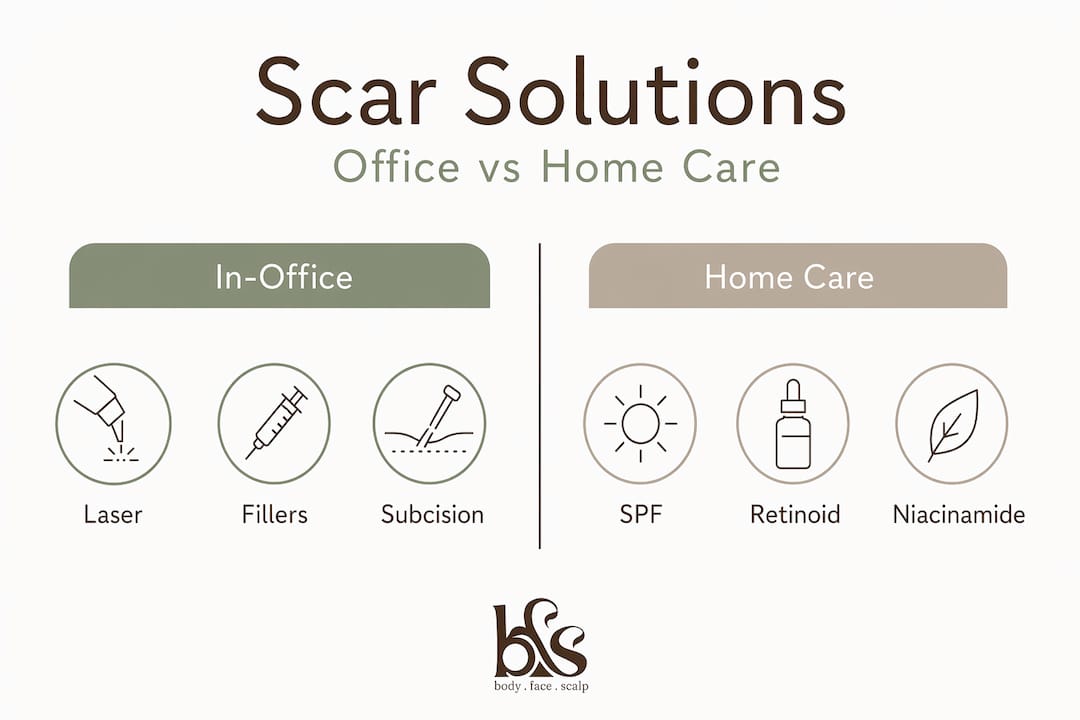
Fillers and subcision work differently. Subcision uses a needle to break the fibrous bands tethering depressed scars to underlying tissue. Fillers then add volume beneath the scar. Both can produce visible lifting almost immediately, though maintenance treatments are typically needed.
Home care actives
For pigment marks specifically, over-the-counter options can produce meaningful results. Niacinamide reduces melanin transfer and calms inflammation. Alpha hydroxy acids (AHAs) like glycolic and lactic acid exfoliate the surface and speed up pigment fading. Vitamin C brightens and protects against UV-induced darkening. For guidance on niacinamide for hyperpigmentation, Bodyfacescalp has a focused resource worth reading.
Pro Tip: Downtime management is a real strategy. Recovery time varies by procedure and scheduling your treatments around key events or commitments prevents you from stacking downtime-heavy procedures at the wrong time.
A step-by-step plan for safe, fast scar improvement
Having the right information is only useful if you act on it in the right order. Here is a practical roadmap.
- Identify your scar types. Use the categories above or book a dermatologist consultation. Knowing whether you have PIH, atrophic scars, or both shapes every decision that follows.
- Build your baseline routine. Start with a gentle cleanser, a barrier-supportive moisturiser, and daily SPF. This takes one week to establish and creates the foundation for everything else.
- Introduce a topical active. Add a retinoid or an AHA product every second or third night. Give your skin two weeks to adjust before increasing frequency.
- Schedule your first professional treatment. If you have textural scars, book a consultation for microneedling or laser. Most protocols involve monthly sessions over four months, so starting sooner matters.
- Consider combination approaches. Combination therapies for texture and pigment scars outperform single-modality treatments. A dermatologist might pair microneedling with a chemical peel series for faster, more complete results.
- Avoid common mistakes. Do not rush to increase treatment intensity if you’re not seeing fast enough results. Skin needs time between sessions to complete the collagen remodelling cycle. Pushing too hard leads to irritation, PIH, or scarring.
- Follow up and adjust. Reassess your skin every four weeks. Photograph your skin in consistent lighting to track genuine progress. Adjust your routine based on what you observe, ideally with professional guidance.
Pro Tip: If you have a darker skin tone, look specifically for practitioners experienced with skin of colour treatments. RF microneedling and longer-wavelength lasers are generally safer options, and conservative settings protect you from triggering new pigmentation.
What results to expect and how to maintain them
Setting realistic expectations is not pessimism. It is how you stay consistent long enough to see real change.
- Pigment marks respond fastest. With retinoids, SPF, and brightening actives, you can expect meaningful fading within 8 to 12 weeks. Full clearance often takes 24 weeks.
- Textural scars take longer. Collagen remodelling procedures like laser or microneedling show measurable improvement at the four-month mark, with continued improvement through six months.
- Track progress with photos. Take weekly photos in the same lighting. Skin improvement is gradual and easy to miss day to day, but side-by-side comparisons over a month reveal real change.
- Maintain sun protection year-round. This is the single most important maintenance step. UV exposure can reverse months of progress by darkening treated areas.
- Plan for repeat treatments. Most textural scar protocols require three to four sessions. Some patients benefit from annual maintenance treatments to sustain collagen levels.
- Keep your barrier healthy. Skin that is well-moisturised and protected heals faster between sessions and holds results longer. Combination therapy results are best preserved with a consistent supportive skincare routine.
My honest take on quick acne scar removal
I’ve seen a lot of people come to this topic with the same frustration: they want results fast, and they’re willing to try almost anything. What I’ve learned is that the desire for speed is completely understandable, but it often leads people to skip the steps that actually accelerate results.
The biggest mistake I see is jumping straight to aggressive treatments without first identifying the scar type. Someone with PIH who books a fractional laser is not just wasting money. They may be triggering more pigmentation than they started with, especially if their practitioner doesn’t have experience with their skin tone.
What actually works fast, in my experience, is a layered approach. Start with the barrier and sun protection immediately. Add a retinoid within the first two weeks. Then book your first professional consultation. By the time you’ve had your first microneedling or peel session, your skin is already primed to respond better and heal faster.
I’ve also seen surprising results from combination therapies. Pairing a chemical peel series with microneedling, for example, tends to produce results that neither treatment achieves alone. The evidence supports this too. The key is having a practitioner who plans the sequence thoughtfully rather than applying everything at once.
The uncomfortable truth is that the fastest path to clear skin is not the most aggressive one. It’s the most consistent one.
— Mohid
Support your skin during scar treatment with Bodyfacescalp
Treatments work best when your skin is healthy, hydrated, and protected between sessions. At Bodyfacescalp, we formulate products specifically for skin that’s going through repair. Our barrier-restoring moisturiser is designed to support skin recovery after procedures like microneedling and chemical peels, helping your skin hold moisture and heal more efficiently. Explore the full skincare collection for products that complement every stage of your scar treatment plan, from daily maintenance to post-procedure recovery. When your barrier is strong, every treatment you invest in performs better.
FAQ
What is the fastest way to fade acne scars?
Post-inflammatory hyperpigmentation fades fastest with daily SPF, a topical retinoid, and brightening actives like niacinamide or vitamin C, with visible improvement possible within 8 to 12 weeks.
How long does acne scar removal actually take?
True scar removal takes weeks to months depending on scar type. Pigment marks can improve significantly by 12 weeks, while textural scars treated with laser or microneedling show meaningful results at four to six months.
Is microneedling or laser better for acne scars?
Both deliver similar results. Fractional CO2 laser achieves approximately 67% improvement by six months, while microneedling with PRP achieves 65.2% with less downtime and lower pigmentation risk, making it a strong option for most skin tones.
Can I treat acne scars at home without professional procedures?
Yes, for pigment marks specifically. A consistent routine with retinoids, AHAs, niacinamide, and SPF can produce significant fading. Textural atrophic scars, however, generally require in-office collagen-stimulating procedures for meaningful improvement.
When should I start treating acne scars?
Start only after acne is fully healed to avoid worsening inflammation or triggering new pigmentation. Beginning treatment on active breakouts can deepen scarring rather than reduce it.