


Revive dull skin: An expert guide to radiant skincare
TL;DR:
- Dull skin signals an imbalance in the skin’s biology, primarily due to a compromised barrier and environmental stressors.
- Effective restoration requires incorporating barrier-supportive ingredients like ceramides, niacinamide, and antioxidants into a layered routine, applied in the correct order consistently.
You put effort into your skincare routine. You cleanse, moisturise, and reach for products that promise a healthy glow — and yet your skin still looks flat, tired, and uneven. If that sounds familiar, you are not alone. For many Canadian women, dull skin is a persistent frustration shaped by cold winters, dry indoor heating, UV exposure, and formulas that simply do not go deep enough. The missing link is rarely more products. It is the right ingredients, applied in the right order, with a deliberate focus on your skin barrier. This guide gives you exactly that: the science, the steps, and the strategies to restore genuine, lasting radiance.
Table of Contents
- Why does skin become dull? Understanding the root causes
- The vital ingredients: What your skin really needs to regain glow
- How to build your barrier-first routine: Step-by-step for radiance
- Common mistakes and troubleshooting for persistent dullness
- How to measure progress and maintain your radiance
- Why most guides fail — and what ingredient-led routines actually deliver
- Discover radiant skin solutions with expert-driven formulas
- Frequently asked questions
Key Takeaways
| Point | Details |
|---|---|
| Barrier first for glow | Healthy skin starts with a protected barrier and proven hydrating ingredients. |
| Choose the right actives | Niacinamide, vitamin C, hyaluronic acid, and ceramides target dullness and dryness effectively. |
| Consistency wins | Maintaining a science-backed routine is key to achieving and keeping glowing skin. |
| Avoid harsh exfoliation | Gentle exfoliation boosts radiance but overdoing it can mimic or worsen dullness. |
Why does skin become dull? Understanding the root causes
Dull skin is not just a cosmetic inconvenience. It is a signal that something in your skin’s biology is off balance. Before you can address it effectively, it helps to understand what is actually happening beneath the surface.
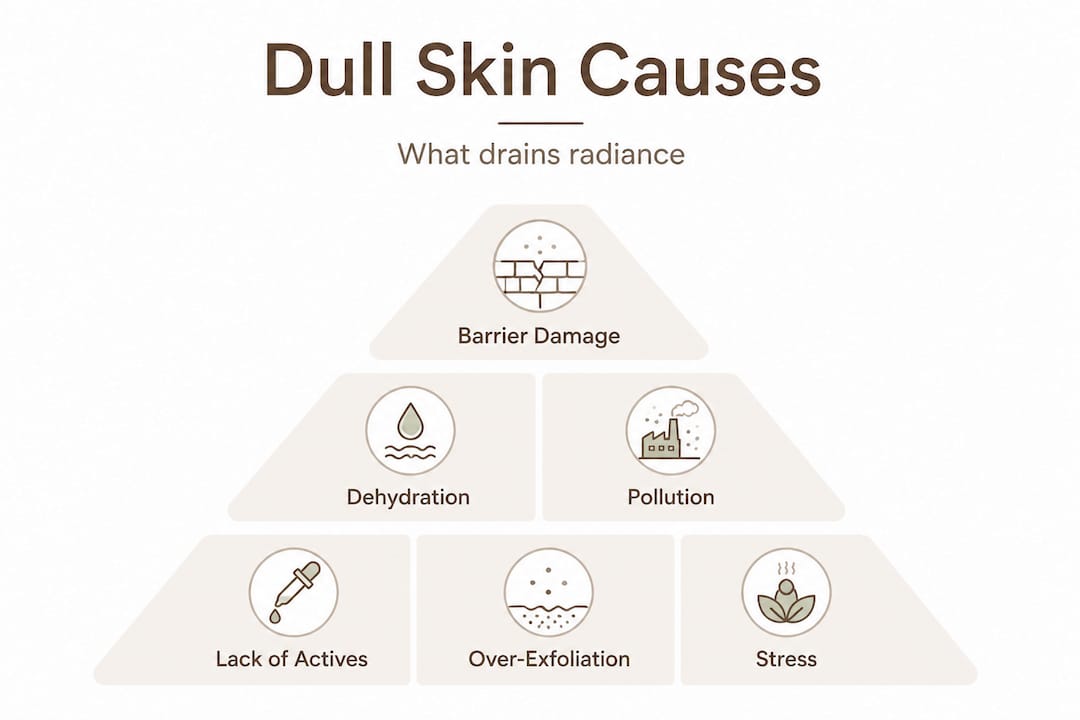
Your skin barrier is the foundation of healthy skin. When it is functioning well, it reflects light evenly, retains moisture, and fends off environmental damage. When it is compromised, light scatters unevenly, hydration leaks out, and your complexion looks grey and lifeless. Understanding your moisture barrier guide is the single most useful thing you can do for radiance.
Several factors contribute to dullness:
- Intrinsic ageing: Cell turnover slows with age, meaning dead skin cells accumulate on the surface and scatter light unevenly.
- Climate and cold: Canadian winters strip moisture rapidly. Forced indoor heating compounds this, lowering humidity and accelerating transepidermal water loss (TEWL), which is the rate at which water evaporates through your skin.
- Pollution and UV exposure: Research shows that subclinical inflammation and environmental stressors like pollution and UV exposure compound dullness significantly. These triggers create oxidative damage that degrades collagen and melanin regulation.
- Poor skincare habits: Skipping SPF, using harsh cleansers, and neglecting barrier-supportive ingredients all erode the skin’s natural defences over time.
- Over-exfoliation: This is a surprisingly common culprit. When you exfoliate too aggressively or too often, you remove not just dead cells but also the lipids that hold your barrier together, increasing TEWL and actually mimicking the very dullness you are trying to solve. Research on the role of antioxidants in skincare confirms that antioxidants paired with lipids outperform exfoliation alone for long-term radiance.
“Targeting dullness effectively means treating both the surface and the structure beneath it. Antioxidants and barrier lipids work together in ways that no scrub can replicate.”
Pro Tip: If your skin feels tight or raw after exfoliating, reduce frequency immediately. Limit physical exfoliation to once a week maximum and consider switching to a mild enzymatic option, which works more gently.
The vital ingredients: What your skin really needs to regain glow
Once you understand the root causes, ingredient selection becomes far less overwhelming. There are a handful of actives with strong clinical evidence behind them, and they form the core of any effective radiance routine.
The best barrier repair ingredients are not trendy. They are well-studied and highly effective when used correctly. Here is what the evidence actually says:
- Vitamin C: A potent antioxidant that neutralises free radical damage from UV and pollution. It also inhibits excess melanin production, which reduces the appearance of dark spots and uneven tone.
- Niacinamide: A form of vitamin B3 that reduces inflammation, minimises the appearance of pores, and strengthens the skin barrier. A 4-week clinical study demonstrated a 93.7% reduction in dryness and a 72.5% increase in hydration using a peptide-niacinamide formula. Niacinamide at 5% concentration also reduced wrinkles by 18% and improved elasticity by 16% over 12 weeks.
- Hyaluronic acid: A humectant, meaning it draws moisture into the skin from the environment and deeper skin layers. Gentle exfoliation accelerates desquamation (the natural shedding of dead cells) for even light reflection, while humectants like hyaluronic acid plump the skin to reduce micro-shadows that make it look dull.
- Ceramides: Lipids that are naturally present in a healthy skin barrier. They seal the spaces between skin cells, prevent moisture loss, and protect against irritants. When ceramide levels drop, the barrier becomes porous and reactive.
| Ingredient | What it targets | Proven benefit |
|---|---|---|
| Vitamin C | UV damage, dark spots, oxidative stress | Brightens tone, neutralises free radicals |
| Niacinamide | Inflammation, texture, barrier weakness | Reduces dryness by 93.7%, boosts elasticity |
| Hyaluronic acid | Dehydration, micro-shadows | Plumps skin, increases surface smoothness |
| Ceramides | Barrier gaps, TEWL, sensitivity | Locks in moisture, restores lipid balance |
The real power comes from combining these ingredients. Antioxidants (vitamin C and niacinamide) protect the skin from damage while ceramides and hyaluronic acid rebuild and hydrate from within. This is what the science of resilient skin consistently demonstrates: synergy between protective and structural actives produces better results than any one ingredient alone.
How to build your barrier-first routine: Step-by-step for radiance
Having the right ingredients is only half the equation. The order and consistency of application matter just as much. A well-structured AM and PM routine ensures each active performs optimally and that your barrier receives cumulative support.

Research confirms that layering actives such as humectants, vitamins, and ceramides multiplied hydration by 72.5% and improved barrier integrity when applied systematically.
| Step | Morning (AM) | Evening (PM) |
|---|---|---|
| 1. Cleanse | Gentle, non-stripping cleanser | Same gentle cleanser or balm/oil cleanser |
| 2. Tone (optional) | Hydrating toner or essence | Hydrating toner or essence |
| 3. Treatment serum | Vitamin C serum | Niacinamide or retinol serum |
| 4. Eye care | Eye cream with peptides | Same or richer eye cream |
| 5. Moisturise | Lightweight barrier moisturiser with ceramides | Richer barrier moisturiser |
| 6. SPF | Broad-spectrum SPF 30 or higher | Not required |
| Exfoliate | Not daily | 1 to 2 times per week (PM only) |
Follow this numbered sequence for maximum effect:
- Cleanse gently. Avoid foaming cleansers with sulphates. They strip your barrier oils and set back your progress.
- Apply your serum to damp skin. Hyaluronic acid especially works better when skin is slightly moist, as it has surrounding moisture to draw from.
- Layer from thinnest to thickest. Serum first, then moisturiser, then SPF in the morning. This allows actives to penetrate without being blocked by heavier formulas.
- Use your barrier moisturizer guide as a reference when selecting a moisturiser. Look for ceramides, fatty acids, and cholesterol together, as these three mirror the natural lipid composition of the skin barrier.
- Introduce new actives gradually. Add one new product every 2 weeks so you can identify what works and what causes reaction.
Pro Tip: Signs of over-exfoliation include tightness immediately after cleansing, persistent redness, stinging when applying actives, and a shiny but rough texture. If you notice any of these, stop exfoliating for at least 10 to 14 days and focus on barrier repair with ceramide-rich moisturisers.
This routine for lasting glow works best when you commit to it consistently rather than chasing results with frequent product changes.
Common mistakes and troubleshooting for persistent dullness
Even with the best intentions, certain habits can undermine your progress. Here are the most frequent mistakes we see and how to correct them.
Pitfalls to avoid:
- Over-exfoliating: As noted earlier, over-exfoliation increases TEWL, mimicking dullness and worsening symptoms rather than correcting them. More is not better with exfoliation.
- Skipping sunscreen: UV exposure is one of the most significant drivers of long-term dullness and hyperpigmentation. Skipping SPF, even on cloudy Canadian days, undoes weeks of progress with actives.
- Ignoring barrier health: Many routines focus entirely on brightening actives but neglect the ceramides and fatty acids needed to hold everything together. Without a healthy barrier, your actives cannot perform and hydration cannot be retained.
- Using incompatible actives together: Vitamin C and retinol, for example, can destabilise each other and increase irritation. Vitamin C is best used in the morning, retinol at night, on separate days when you are starting out.
- Expecting overnight results: Skin cell turnover takes approximately 28 days. Give any new routine at least four full weeks before evaluating its impact.
“Persistent dullness despite a consistent routine is often a sign of unaddressed barrier damage, not a sign that you need stronger actives.”
Pro Tip: Keep a simple skincare journal. Take a photo in the same lighting every week and note any changes in texture, tone, or sensitivity. This helps you identify patterns and make smarter adjustments rather than reacting emotionally to day-to-day fluctuations.
If dullness persists despite a well-structured routine, and especially if it is accompanied by persistent redness, flaking, or irritation, consider consulting a dermatologist. Conditions such as seborrhoeic dermatitis, rosacea, or hormonal changes can mimic or exacerbate barrier damage. These are best managed with professional guidance rather than more layering of over-the-counter actives.
For Canadian women specifically, check in on your glowing skin steps seasonally. Your skin needs change significantly between summer and winter, and what works in July may need adjusting by November.
How to measure progress and maintain your radiance
Knowing when your routine is working is just as important as knowing what to put on your skin. Progress is not always immediately visible, but there are clear signs that your barrier is healing and your radiance is returning.
Visible and sensory signs of improvement:
- Skin feels plumper and softer to the touch, particularly in the morning
- Tone appears more even, with fewer grey or yellow undertones
- Dark spots appear lighter over time
- Skin no longer feels tight or uncomfortable after cleansing
- Makeup sits more smoothly and lasts longer throughout the day
Clinical data confirms that these changes are measurable and reproducible. A 4-week targeted routine produced a 93.7% reduction in dryness and a 72.5% increase in hydration, demonstrating just how quickly the right actives can shift skin condition when applied consistently.
To sustain results over the long term, follow these numbered maintenance steps:
- Replenish your actives regularly. Don’t let your vitamin C or ceramide moisturiser run out. Gaps in your routine break continuity and allow barrier regression.
- Adapt seasonally. In Canadian winters, increase the richness of your moisturiser and consider adding a facial oil over your moisturiser at night to reduce overnight moisture loss.
- Protect year-round. Daily SPF is non-negotiable if you want to maintain your barrier repair for Canadian skin and preserve the gains made by your brightening actives.
- Refresh your serum every 3 months. Vitamin C oxidises over time, especially once opened. An oxidised vitamin C serum (typically turns orange or brown) does not provide the same antioxidant protection.
- Support from within. Hydration, omega-3 fatty acids from diet, and adequate sleep all contribute to skin barrier integrity and luminosity.
Pro Tip: Take a “before” photo in natural light on day one of your new routine and compare it at weeks 2, 4, and 8. Skin changes are gradual and easy to miss in the mirror daily, but photos make improvement undeniable and keep motivation high.
Why most guides fail — and what ingredient-led routines actually deliver
Here is what we have learned from working deeply in barrier-focused skincare: most mainstream glow guides are built backwards. They lead with exfoliation, layer on brightening actives, and treat the skin like a surface to be polished rather than a living system to be supported.
The result? Short bursts of improvement followed by increased sensitivity, reactivity, and a return to dullness. It becomes a cycle. And it is a frustrating one.
The real shift happens when you restore healthy skin by focusing first on barrier integrity. A skin barrier that retains moisture, resists environmental assault, and supports even cell turnover will naturally produce radiance. The brightening actives then amplify what is already working, rather than compensating for what is broken.
This is not a conservative or cautious approach. It is a smarter one. Clinical results back it up, and so does the lived experience of women who have cycled through product after product without seeing lasting change until they addressed the barrier first.
Ingredient-led routines succeed because they respect the skin’s own biology. They do not fight against the skin’s natural processes. They work with them. That distinction matters enormously, and it is why we build every formulation at Body Face Scalp with barrier science at the core.
Discover radiant skin solutions with expert-driven formulas
Everything covered in this guide points to one clear priority: your skin needs barrier-first, ingredient-led care that is designed for the realities of Canadian skin and climate.

At Body Face Scalp, we formulate with exactly that standard. Our premium skincare solutions are built on clinical actives including niacinamide, ceramides, and hyaluronic acid, working together to repair, protect, and restore radiance. Our barrier restoring moisturizer delivers the lipid and hydration support your skin needs after each step of your routine. If you are starting fresh or rebuilding your entire approach, our bare skin essentials kit offers a curated starting point with everything your barrier needs in one place.
Frequently asked questions
How long does it take to see results from a barrier-focused routine?
Most women notice measurable improvement in brightness and hydration within 4 weeks, with 93.7% dryness reduction documented in clinical studies using targeted actives like niacinamide and peptides.
Is exfoliation safe for dull, dry, or sensitive skin?
Gentle exfoliation is beneficial when used 1 to 2 times per week, but over-exfoliation worsens TEWL and damages the barrier, making dullness and sensitivity worse rather than better.
Which single ingredient is most effective for reviving dull skin?
Niacinamide and vitamin C are consistently top performers for dullness and dark spots, with maximum benefit when paired with ceramides to support the skin barrier simultaneously.
How can I protect my skin from environmental factors that cause dullness?
Daily antioxidant use (vitamin C in the AM), broad-spectrum sunscreen, and a ceramide-rich moisturiser are your most effective defences against pollution and UV damage that compound dullness over time.
Recommended
- Holistic skincare for glowing skin: steps for Canadian women – Body Face Scalp®
- Master your face care step by step for radiant skin – Body Face Scalp
- Build a skin nourishment routine for lasting glow – Body Face Scalp®
- What is a moisture barrier? Your guide to healthy skin – Body Face Scalp
- How to enhance skin radiance naturally for women 40+
- Learn how Monthly Facials Drive the Best Results