


Understand your skin barrier: how to protect and repair it
You’ve tried every moisturiser, switched cleansers, and still wake up to dry, irritated skin. The real culprit isn’t your products or the weather, it’s likely your skin barrier struggling to do its job. This protective shield determines whether your skin stays hydrated and calm or becomes a magnet for sensitivity and inflammation. Understanding how your barrier works and what damages it transforms skincare from guesswork into a strategic, results-driven routine that actually delivers.
Table of Contents
- Key takeaways
- What is the skin barrier and why it matters
- How skin barrier damage causes dryness and sensitivity
- Effective skin barrier repair strategies and products
- Special considerations for sensitive and aging skin
- Explore barrier-focused skincare products designed for Canadian skin
- What is skin barrier faq
Key Takeaways
| Point | Details |
|---|---|
| Skin barrier basics | The skin barrier is the outermost layer that keeps moisture in and shields against irritants. |
| Damage causes dryness | When the barrier is damaged, transepidermal water loss rises and the skin becomes drier and more sensitive. |
| Repair with barrier friendly ingredients | Repair involves gentle care and using products that help restore essential barrier lipids. |
| Ceramides and niacinamide | Ceramides, niacinamide and panthenol support barrier repair and help maintain a stable, hydrated skin surface. |
What is the skin barrier and why it matters
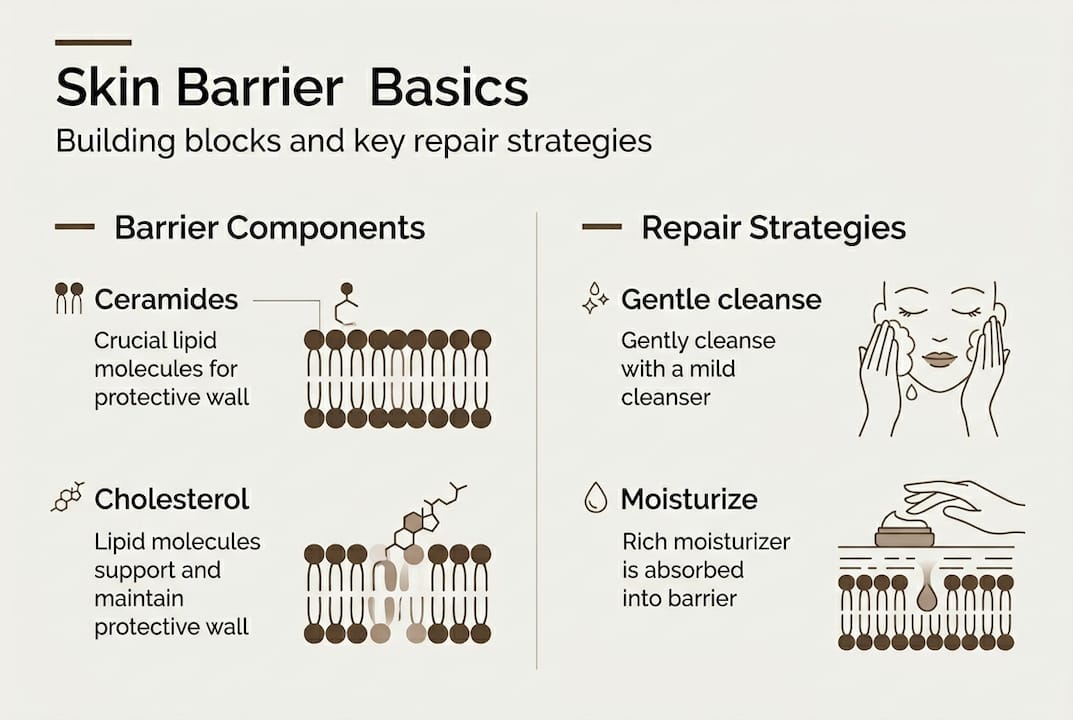
The skin barrier is the outermost layer of the epidermis, a ‘brick and mortar’ structure of corneocytes within a lipid matrix of ceramides, cholesterol, and fatty acids. Think of it as your skin’s security system, a microscopic fortress that decides what gets in and what stays out. The corneocytes act as bricks, flattened dead skin cells packed tightly together. The lipid matrix serves as mortar, a precise blend of ceramides, cholesterol, and free fatty acids that seal the gaps and create an impermeable shield.
This structure isn’t just protective, it’s metabolically active and constantly renewing. The acid mantle, a slightly acidic film sitting atop the barrier, maintains an optimal pH of 4.5 to 5.5. This acidity isn’t accidental. It supports beneficial bacteria while discouraging harmful microbes, creating an environment where your skin’s microbiome thrives. When pH shifts too alkaline, the entire ecosystem destabilises, triggering inflammation and sensitivity.
Your barrier performs three critical functions simultaneously:
- Prevents transepidermal water loss to maintain hydration levels
- Blocks environmental aggressors like pollution, UV radiation, and allergens from penetrating deeper layers
- Regulates immune responses to prevent overreaction to harmless substances
The lipid composition matters enormously. Ceramides alone comprise roughly 50% of the barrier’s lipid content, with cholesterol and fatty acids making up the remainder in specific ratios. Disrupting this balance, even slightly, compromises the entire structure. Products formulated with barrier-focused skincare principles recognise this delicate chemistry and work to restore rather than strip these essential components.
Canadian winters pose unique challenges. Cold outdoor air combined with indoor heating creates extreme humidity fluctuations that stress the barrier relentlessly. Your skin must adapt constantly, and when the barrier can’t keep pace, dryness and irritation follow. Understanding this foundational biology shifts how you approach every product choice and skincare decision.
How skin barrier damage causes dryness and sensitivity
When your barrier becomes compromised, transepidermal water loss increases dramatically as the lipid matrix develops gaps that allow moisture to escape freely. Different types of damage create distinct patterns of dysfunction. Harsh surfactants dissolve lipids, physical exfoliation removes corneocytes prematurely, and environmental stress depletes the skin’s natural moisturising factors. Each insult compounds the others, creating a cascade of barrier breakdown.
The damage progression follows a predictable sequence:
- Initial lipid disruption creates microscopic gaps in the barrier structure
- Water escapes through these gaps, causing surface dehydration and tightness
- Irritants and allergens penetrate more easily, triggering localised inflammation
- Inflammation further damages lipid production and cell turnover processes
- Chronic inflammation establishes a self-perpetuating cycle of sensitivity and reactivity
Common culprits accelerate this breakdown faster than most people realise. Foaming cleansers containing sodium lauryl sulphate strip essential lipids with every wash. Over-exfoliation, whether chemical or physical, removes the protective corneocyte layer before new cells are ready to replace it. Even well-intentioned actives like retinoids or acids can overwhelm a vulnerable barrier when introduced too aggressively.
Internal factors play equally significant roles. Ageing naturally reduces ceramide and cholesterol synthesis, thinning the lipid matrix over time. Genetic variations in filaggrin production, a protein crucial for barrier formation, predispose some individuals to chronic barrier dysfunction. Hormonal fluctuations alter sebum composition and pH balance, creating windows of vulnerability throughout monthly cycles.
The inflammation-damage cycle becomes particularly vicious. When irritants breach the barrier, immune cells release inflammatory mediators that signal distress. These mediators disrupt the orderly production of new lipids and proteins needed for repair. The barrier weakens further, allowing more irritants through, which triggers more inflammation. Breaking this cycle requires strategic intervention, not just symptom management.
Pro Tip: Avoid foaming cleansers and physical scrubs entirely if you experience persistent tightness or redness. Switch to cream or oil-based cleansers that remove impurities without dissolving protective lipids, giving your barrier the breathing room it needs to begin natural repair processes.
Recognising early warning signs prevents minor damage from becoming chronic dysfunction. Tightness after cleansing, increased sensitivity to previously tolerated products, and rough texture all signal barrier compromise before visible inflammation appears. The barrier restoring moisturiser guide explores these symptoms in greater detail and offers targeted solutions for each stage of damage.
Effective skin barrier repair strategies and products
Repairing a compromised barrier requires strategic ingredient selection backed by clinical evidence. Ceramide creams reduce TEWL by 12.7% and improve hydration by up to 93%, while panthenol masks reduce erythema and TEWL after laser treatments. These aren’t marginal improvements, they represent clinically significant restoration of barrier function that translates to visible symptom relief.
Key repair ingredients work through complementary mechanisms:
- Ceramides replenish the lipid matrix directly, filling gaps and restoring impermeability
- Niacinamide stimulates natural ceramide and fatty acid synthesis while reducing inflammation
- Panthenol penetrates deeply to enhance moisture retention and accelerate healing
- Hyaluronic acid binds water in upper skin layers, creating a hydration reservoir that supports barrier repair
Product format matters as much as ingredient selection. Serums deliver concentrated actives that penetrate efficiently, while creams provide occlusive protection that seals in both applied ingredients and natural moisture. Repair methodologies include gentle cleansing and moisturisers rich in ceramides, niacinamide, panthenol and hyaluronic acid, with recovery time typically spanning 2 to 8 weeks depending on damage severity.
| Product type | Primary function | Best for | Application timing |
|---|---|---|---|
| Barrier serums | Deliver concentrated actives deep into skin | Targeted repair of specific damage | Before moisturiser, on damp skin |
| Ceramide creams | Replenish lipid matrix and seal moisture | Overall barrier restoration | Final step, morning and evening |
| Hydrating essences | Boost water content and prep skin | Dehydrated, compromised barriers | After cleansing, before serums |
| Occlusive balms | Create protective seal over damaged areas | Severe dryness or post-procedure care | Evening only, over moisturiser |
Daily habits compound product efficacy. Cleanse with lukewarm water and gentle, non-foaming formulas that respect pH balance. Avoid over-exfoliation, limiting chemical exfoliants to once weekly maximum during repair phases. Apply sun protection daily, as UV exposure disrupts lipid synthesis and delays healing significantly. Pat products into skin rather than rubbing, minimising mechanical stress on fragile barrier structures.
The barrier restoring moisturiser combines ceramides with niacinamide and panthenol in ratios optimised for Canadian climate challenges. Layering the skin correcting serum underneath adds targeted peptides that support collagen synthesis and barrier protein production. For enhanced hydration, the luster booster serum delivers multi-peptide complexes in a water-based formula that absorbs instantly without overwhelming compromised skin.
Timeline expectations prevent discouragement. Initial improvements in comfort and reduced tightness appear within days as surface hydration increases. Visible reduction in redness and flaking emerges around week two as inflammation subsides. Full barrier restoration, measured by normalised TEWL and restored lipid ratios, requires six to eight weeks of consistent care. Patience during this window determines long-term success.
Pro Tip: Layer barrier-supportive serums under moisturisers for enhanced effect. Apply serums to damp skin immediately after cleansing, then seal with cream while skin is still slightly moist. This layering traps both product ingredients and residual water, maximising hydration and active penetration.
Special considerations for sensitive and aging skin
Ageing reduces skin lipid levels whilst filaggrin mutations raise risk of dermatitis, creating compounded vulnerability in mature or genetically predisposed individuals. Oestrogen decline during perimenopause and menopause decreases ceramide synthesis by up to 40%, thinning the barrier and increasing baseline TEWL. This physiological shift explains why previously resilient skin suddenly becomes reactive and dry without obvious environmental triggers.
Sensitive skin phenotypes require modified approaches. Rosacea-prone individuals must avoid vasodilators like niacinamide in high concentrations, opting instead for panthenol and ceramide-focused formulas. Eczema-prone skin benefits from colloidal oatmeal and targeted actives like peptides that calm inflammation without triggering immune responses. Post-procedure skin, whether from laser treatments or chemical peels, needs intensive barrier support to prevent complications and accelerate healing.
Specialised ingredients address these unique needs:
- Peptides signal increased production of barrier proteins and lipids without irritation
- Centella asiatica extract reduces inflammation and supports wound healing in reactive skin
- Beta-glucan provides immune modulation, calming overactive responses in sensitive phenotypes
- Squalane mimics skin’s natural sebum, providing lightweight occlusion without triggering acne or sensitivity
Avoiding common irritants becomes non-negotiable. Fragrance, whether synthetic or natural, ranks among the top allergens in skincare. Essential oils, despite natural origins, contain volatile compounds that disrupt barrier function and trigger contact dermatitis. Alcohol denat in toners and astringents dissolves lipids aggressively, creating immediate barrier compromise that outweighs any perceived benefits.
Sun protection deserves special emphasis for aging and sensitive skin. UV exposure generates free radicals that damage lipid membranes and proteins essential for barrier integrity. The sunscreen serum provides broad-spectrum protection in a formula designed for compromised barriers, avoiding chemical filters that commonly trigger sensitivity whilst delivering reliable UVA and UVB defence.
Consistent routines matter more than product quantity. Sensitive and aging skin responds better to simplified regimens with fewer products applied consistently than complex rotations that introduce variables. Stick with proven formulas for at least eight weeks before evaluating efficacy or introducing new actives. This stability allows accurate assessment of what works versus what creates additional stress.
Professional consultation becomes essential when persistent issues resist home care. Dermatologists can identify underlying conditions like seborrheic dermatitis or contact allergies that masquerade as simple barrier damage. Prescription treatments, including topical corticosteroids or immunomodulators, may be necessary for severe cases where over-the-counter options prove insufficient. The barrier restoring moisturiser complements medical treatments effectively, supporting barrier repair without interfering with prescription protocols.
Explore barrier-focused skincare products designed for Canadian skin
Canadian climate demands specialised formulations that address extreme temperature swings and low humidity exposure. Barrier-focused skincare designed specifically for these conditions prioritises lipid replenishment and moisture retention over trendy actives that compromise already stressed skin. The curated skincare collection features products formulated with ceramide complexes, multi-peptide blends, and hydration boosters that work synergistically to restore and maintain barrier integrity.

Each formula addresses specific barrier needs whilst maintaining compatibility across the entire range. The barrier restoring moisturiser serves as the cornerstone, delivering essential lipids and humectants in ratios optimised for damaged barriers. Layering complementary serums underneath amplifies results without overwhelming skin, creating customisable routines that adapt to seasonal changes and individual needs. Take the confident step towards healthier, more resilient skin with proven barrier repair solutions designed for real Canadian conditions.
What is skin barrier faq
What exactly does the skin barrier do?
The skin barrier prevents water loss from deeper layers whilst blocking environmental irritants, allergens, and pathogens from penetrating into living tissue. It maintains optimal pH and supports the skin microbiome, creating conditions where beneficial bacteria thrive and harmful organisms cannot establish colonies.
How can I tell if my skin barrier is damaged?
Damaged barriers typically feel tight after cleansing, show increased sensitivity to previously tolerated products, and develop rough or flaky texture. You might notice redness, stinging with product application, or increased breakouts as the compromised barrier allows bacteria deeper penetration. Persistent dryness despite regular moisturising signals barrier dysfunction rather than simple dehydration.
How long does it take to repair a damaged skin barrier?
Most barriers show initial improvement within one to two weeks of consistent gentle care and barrier-supportive products. Complete restoration of lipid ratios and normalised TEWL typically requires six to eight weeks of disciplined routine adherence. Severe damage from aggressive treatments or chronic conditions may need three months or longer for full recovery.
Which ingredients should I look for to heal my skin barrier?
Prioritise ceramides to replenish the lipid matrix, niacinamide to stimulate natural lipid synthesis, and panthenol for deep moisture retention and healing acceleration. Hyaluronic acid provides surface hydration whilst cholesterol and fatty acids support complete lipid profile restoration. The barrier restoring moisturiser guide details optimal ingredient combinations and concentrations.
Can over-exfoliation harm my skin barrier?
Over-exfoliation removes protective corneocytes faster than your skin can replace them, creating immediate barrier compromise and triggering inflammation. Chemical exfoliants like AHAs and BHAs dissolve the intercellular lipids holding cells together, whilst physical scrubs cause mechanical damage through abrasion. Limit exfoliation to once weekly maximum during barrier repair, and avoid entirely if experiencing active sensitivity or inflammation.
Recommended
- The Ultimate Guide to Barrier Restoring Moisturizer: What It Is, Why Y – Body Face Scalp
- Barrier Restoring Moisturizer – Body Face Scalp
- Barrier-Focused Skincare | Canadian Barrier Repair Skincare Brand – Body Face Scalp
- Skin Care – Body Face Scalp
- Tutorial for flawless skin: simple steps for men – NORML