


What is a moisture barrier? Your guide to healthy skin
If you’ve been blaming your dry, reactive, or uneven skin on genetics or Canada’s harsh winters, you may be missing the real culprit. Persistent dryness, redness, and stubborn dark spots often trace back to one overlooked factor: the health of your moisture barrier. This isn’t just a skincare buzzword. It’s the biological foundation that determines how your skin looks, feels, and responds to everything you put on it. Understanding your moisture barrier and knowing how to protect it can genuinely change your skin’s trajectory, especially if you’ve been stuck in a cycle of products that never seem to work.
Table of Contents
-
What is the moisture barrier? Defining your skin’s frontline
-
Why does your moisture barrier matter? Dryness, sensitivity, and pigmentation explained
-
How does the moisture barrier get damaged? Everyday risks and common myths
-
Repairing and strengthening your moisture barrier: Evidence-based solutions
-
Preventing moisture barrier damage: Ongoing care for radiant, resilient skin
-
The hard truth: Why fixing your moisture barrier changes everything
-
Ready to restore your skin’s glow? Discover barrier-focused skincare
Key Takeaways
| Point | Details |
|---|---|
| Moisture barrier basics | Your moisture barrier is your skin’s protective shield, keeping hydration in and irritants out. |
| Repair before actives | Always restore your barrier with ceramides and gentle care before adding strong actives like brightening or anti-ageing products. |
| Symptoms to watch for | Dryness, sensitivity, or recurring dark spots often signal barrier issues—not just skin type. |
| Ingredient matters | Look for products rich in ceramides, fatty acids, and cholesterol for true barrier repair. |
| Consistency wins | Daily, gentle routines and premium moisturizers are key to lasting radiance and resilience. |
What is the moisture barrier? Defining your skin’s frontline
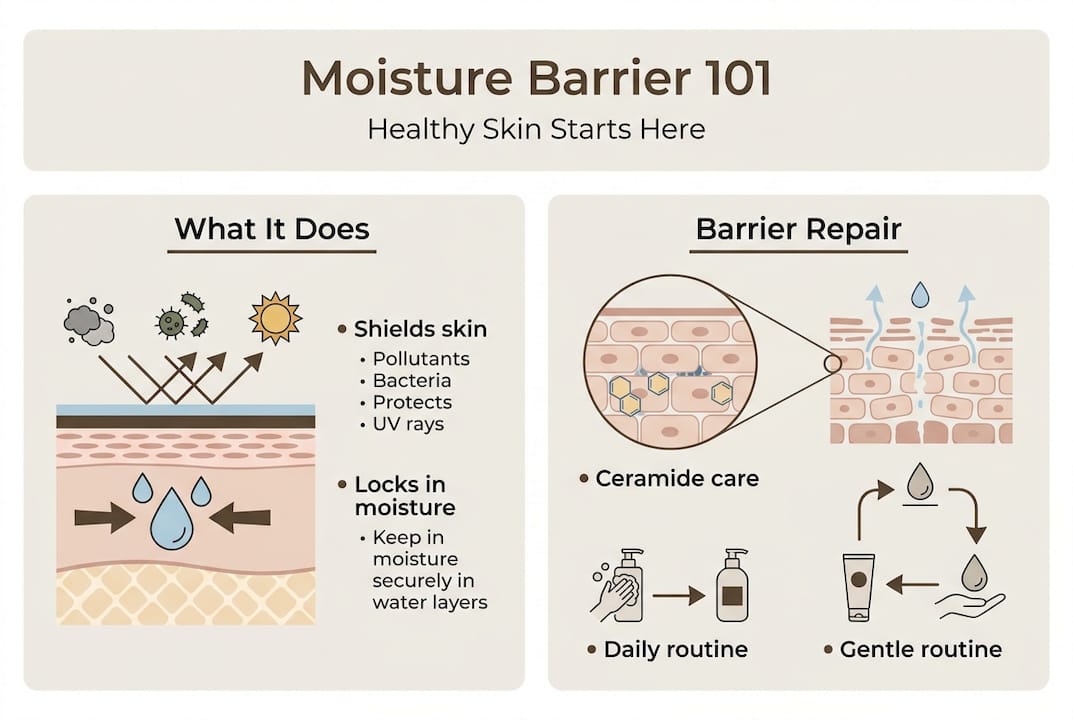
Your moisture barrier, also called the skin barrier, is the outermost layer of your skin known as the stratum corneum. Think of it as your skin’s shield. It’s made up of flattened skin cells (called corneocytes) held together by a lipid matrix, a structured mix of ceramides, cholesterol, and fatty acids. This architecture is what keeps water in and harmful things out.
The moisture barrier acts as the body’s frontline defence, preventing water loss and blocking irritants. When it’s working well, your skin stays hydrated, calm, and resilient. When it’s not, everything falls apart.
Here’s what a healthy moisture barrier does for you:
-
Locks in hydration so your skin stays plump and comfortable
-
Blocks out irritants, pollutants, and bacteria
-
Regulates sensitivity by preventing inflammatory triggers from penetrating
-
Supports an even skin tone by reducing chronic inflammation
When the barrier is compromised, you’ll often notice:
-
Tightness or a feeling of dehydration even after moisturising
-
Redness, flaking, or rough texture
-
Increased sensitivity to products you’ve used before
-
Dark spots or uneven tone that won’t budge
“A damaged moisture barrier doesn’t just cause dryness. It creates a cascade of skin issues that no single serum can fix on its own.”
For a deeper look at understanding your skin barrier and the different types of skin barriers, it helps to start with the biology before reaching for products. Research on barrier benefits confirms that a well-functioning barrier is the foundation of long-term skin health.
Why does your moisture barrier matter? Dryness, sensitivity, and pigmentation explained
Understanding what the moisture barrier does brings us to why it’s foundational for stress-free, healthy skin. When the barrier is weakened, your skin can’t hold onto water effectively. This is called transepidermal water loss (TEWL), and it’s the reason your skin feels dry and tight no matter how much moisturiser you apply.
But dryness is just the beginning. A compromised barrier allows irritants and allergens to slip through, triggering inflammation. That inflammation is what causes redness, stinging, and heightened sensitivity. It also activates melanocytes, the cells responsible for producing pigment, which leads to post-inflammatory hyperpigmentation (PIH).
Barrier damage triggers PIH via inflammation activating melanocytes, and repairing the barrier reduces recurrence while supporting brightening actives. This is especially relevant for women of colour, where PIH tends to be more pronounced and longer-lasting. In Canada’s climate, cold dry air and indoor heating compound the problem significantly.
Here’s a summary of how barrier issues show up on your skin:
| Symptom | What’s happening with the barrier | How it looks or feels |
|---|---|---|
| Dryness and flaking | High TEWL, lipid depletion | Rough, tight, dull skin |
| Redness and stinging | Irritants penetrating the skin | Reactive, inflamed patches |
| Hyperpigmentation | Inflammation activating melanin | Dark spots, uneven tone |
| Breakouts | Bacteria entering damaged skin | Congestion, sensitivity |
One important insight: if you’re using brightening treatments for hyperpigmentation but skipping barrier repair, you may actually be making things worse. Actives like acids and retinol can further disrupt a fragile barrier, worsening inflammation and, in turn, the very dark spots you’re trying to fade. Explore hyperpigmentation expert steps to understand why barrier repair must come first.
How does the moisture barrier get damaged? Everyday risks and common myths
Knowing the effects of a compromised barrier, let’s look at what causes the damage in the first place. Many of the culprits are surprisingly common, and some are hiding in your current skincare routine.
Here are the most frequent causes of barrier damage:
-
High pH cleansers that strip the skin’s natural acid mantle, leaving it vulnerable
-
Over-exfoliation using physical scrubs or chemical acids too frequently
-
Harsh weather including cold Canadian winters and dry summer air
-
Indoor heating and air conditioning which dramatically reduce ambient humidity
-
Hot showers that dissolve the lipid layer protecting your skin
-
Incorrectly layered actives such as using retinol and acids together without barrier support
Over-exfoliation and inappropriate actives can compromise the barrier, increasing sensitivity. This is one of the most common mistakes we see, and it often happens with the best intentions.
There are also persistent myths worth addressing. The idea that “if it tingles, it’s working” is one of the most damaging. Tingling is often a sign of irritation, not efficacy. Similarly, the belief that oily skin doesn’t need moisturiser leads many people to skip barrier-supportive products entirely, which only weakens the skin further over time.
A well-intentioned face care routine can backfire if it layers too many actives without prioritising repair. Skincare trends like “skin cycling” or aggressive exfoliation protocols can be effective for some, but not when the barrier is already compromised.
Pro Tip: When your skin is reactive or damaged, simplify your routine to a gentle cleanser, a ceramide-rich moisturiser, and SPF. Patch test any new product on your inner arm for 48 hours before applying it to your face.
Repairing and strengthening your moisture barrier: Evidence-based solutions
Recognising and preventing damage is essential. Here’s what you can do to restore your skin’s strength and resilience.
The most important rule: repair your barrier before introducing actives. Using brightening serums, retinol, or exfoliating acids on a damaged barrier is like painting a wall with cracks. The results won’t hold, and you risk making things worse.
The gold standard ingredients for barrier repair are ceramides, cholesterol, and fatty acids, ideally in a ratio that mirrors your skin’s natural lipid composition. Clinical data shows that ceramide moisturisers reduce TEWL significantly, improve hydration by up to 29% immediately, and support measurable increases in filaggrin (+77%) and hyaluronic acid (+157%) over time.
Here’s how barrier-focused products compare:
| Product type | Barrier repair | Hydration boost | Safe for sensitive skin |
|---|---|---|---|
| Ceramide moisturiser | High | High | Yes |
| Regular emollient | Moderate | Moderate | Usually |
| Active treatment alone | Low | Low | Often no |
For acne-prone or oily skin, longer acyl chain ceramides (C24 to C30) support optimal barrier recovery and are non-comedogenic, meaning they won’t clog pores.
Key do’s and don’ts for barrier repair at home:
-
Do use a barrier restoring moisturiser morning and night
-
Do apply moisturiser to slightly damp skin to seal in hydration
-
Don’t use physical scrubs or strong acids during recovery
-
Don’t skip SPF, UV damage is one of the fastest ways to re-damage a healing barrier
For a thorough overview, the ultimate guide to barrier repair and ingredient-led barrier solutions are excellent starting points.
Pro Tip: Non-comedogenic ceramide formulas work for all skin types, including oily and acne-prone skin. Don’t let the word “moisturiser” put you off if you’re prone to breakouts.
Preventing moisture barrier damage: Ongoing care for radiant, resilient skin
You’ve learned how to repair your moisture barrier. Now let’s talk about keeping it strong for the long run.
Routine care with appropriate moisturisers and gentle routines maintains barrier health and reduces long-term issues. In Canada’s climate, this isn’t optional. It’s essential.
Here are the habits that make the biggest difference:
-
Cleanse gently using a low pH, fragrance-free cleanser morning and night
-
Layer strategically: cleanse, treat (only when barrier is healthy), moisturise, then protect with SPF
-
Adjust seasonally: switch to richer ceramide formulas in winter and lighter textures in summer
-
Use a humidifier indoors during heating season to counteract dry air
-
Limit hot showers to under 10 minutes and follow immediately with moisturiser
-
Stay hydrated internally, as water intake supports skin cell turnover
-
Protect from UV daily, even on cloudy Canadian days
For those with reactive or sensitive skin expert solutions are available that address the specific challenges of Canadian climates and diverse skin tones. Consistent, gentle care is always more effective than aggressive treatments followed by recovery periods.
The goal isn’t perfection. It’s building a reliable routine that keeps your barrier functioning well enough that your skin can do the rest.
The hard truth: Why fixing your moisture barrier changes everything
Here’s a perspective that most beauty content won’t tell you plainly: the majority of premium skincare products will not deliver their promised results on a compromised barrier. Not because the ingredients are ineffective, but because a damaged barrier cannot absorb, process, or respond to actives the way healthy skin can.
We see this constantly. Someone invests in a high-quality brightening serum, uses it diligently, and wonders why their hyperpigmentation isn’t fading. The answer is almost always barrier health. Inflammation is still active. The skin is still reactive. The actives are either not penetrating properly or are triggering further irritation.
In the Canadian context, holistic barrier repair isn’t a luxury approach. It’s the only approach that makes sense given our climate, indoor environments, and the diversity of skin concerns in our communities. Barrier-first routines aren’t a passing trend. They are the foundation that makes everything else work.
Lasting radiance doesn’t come from chasing the newest active ingredient. It comes from building skin that is strong enough to thrive.
Ready to restore your skin’s glow? Discover barrier-focused skincare
Equipped with knowledge and evidence-led advice, you can now take the next confident step towards a resilient, beautiful complexion.
At Body Face Scalp, we’ve built our formulations around one core belief: healthy skin starts with a healthy barrier. Our premium skin care collection is designed specifically for the skin concerns and climate challenges that Canadian women face every day.

Our barrier restoring moisturiser is formulated with clinically supported ceramides, fatty acids, and humectants to rebuild your skin’s lipid matrix from the inside out. Whether you’re dealing with dryness, sensitivity, or persistent hyperpigmentation, our barrier-first approach gives your skin the foundation it needs to respond to everything else you’re doing. Explore our full range and find the routine that works for your skin.
Frequently asked questions
How do I know if my moisture barrier is damaged?
If your skin feels tight, stings after cleansing, looks flaky, or dark marks keep returning, your barrier is likely compromised. Barrier damage triggers post-inflammatory hyperpigmentation and heightened sensitivity as early warning signs.
Can you repair your moisture barrier while using actives like retinol or acids?
It’s best to pause actives and focus on barrier repair first, then reintroduce them slowly once your skin feels comfortable. Barrier repair must precede actives for hyperpigmentation treatment, and over-exfoliation should be avoided during recovery.
Are ceramide creams safe for oily or acne-prone skin?
Yes, non-comedogenic ceramide formulas are safe for all skin types and actively support barrier recovery. Longer acyl chain ceramides (C24 to C30) are specifically effective and non-pore-clogging for oily, sensitive skin.
What ingredients should I avoid to protect my moisture barrier?
Avoid high pH cleansers, frequent acid exfoliants, fragrance-heavy products, and harsh physical scrubs when your barrier is weakened. Over-exfoliation and inappropriate actives are among the most common causes of increased barrier sensitivity.
Recommended
-
The Ultimate Guide to Barrier Restoring Moisturizer: What It Is, Why Y – Body Face Scalp
-
Understand your skin barrier: how to protect and repair it – Body Face Scalp
-
Understand types of skin barriers for healthier skin – Body Face Scalp
-
Holistic barrier repair for resilient Canadian skin in 2026 – Body Face Scalp