


What is targeted skincare: your 2026 guide
TL;DR:
- Targeted skincare selects active ingredients based on individual skin concerns to improve results. It emphasizes repairing the skin barrier before using potent actives and introduces one ingredient at a time. Consistency over several weeks is essential for effective treatment of issues like hyperpigmentation and acne.
Targeted skincare is defined as the practice of selecting specific active ingredients and formulations based on your individual skin concerns, whether that is acne, dryness, hyperpigmentation, or sensitivity. Unlike a generic routine, this approach, also called personalised skincare in clinical settings, matches each ingredient to a biological need. Dermatologists and evidence-based guidelines from institutions like the American Academy of Dermatology (AAD) and Forefront Dermatology support this method as the most effective path to lasting skin health. Key actives like retinoids, niacinamide, tranexamic acid, and azelaic acid each address distinct concerns. When you use them with intention and proper sequencing, results follow.
What is targeted skincare and how does it work for your skin?
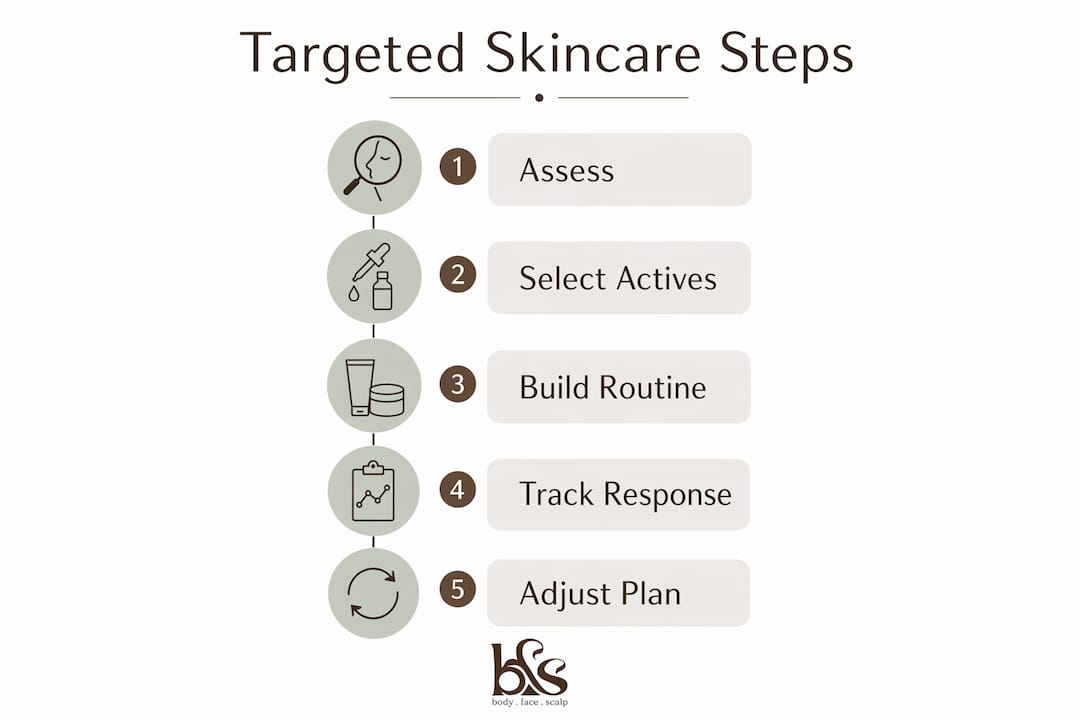
Targeted skincare works by matching active ingredients to the specific biological mechanisms driving your skin concern. A generic moisturiser hydrates broadly. A targeted routine goes further: it selects ingredients that repair your barrier, reduce pigment production, or clear pores, depending on what your skin actually needs.
The contrast with one-size-fits-all skincare is significant. Generic products are formulated for the average skin type, which means they often under-deliver for people with specific concerns like melasma, cystic acne, or chronic dryness. Personalised skincare, by contrast, starts with your skin’s actual condition and works backward to the right ingredients.
At Bodyfacescalp, we build every formulation around this principle. Skin across your body, face, and scalp functions as one interconnected system. Treating one area in isolation, or using mismatched products, creates imbalances that slow results.
How targeted skincare addresses dryness, sensitivity, acne, and hyperpigmentation
Dryness and sensitivity
Dry and sensitive skin requires a specific order of operations. Barrier-supporting hydration must come before any active ingredient. Retinoids, for example, can cause dryness and irritation when applied to a compromised barrier. Soothing ingredients like ceramides and humectants (water-attracting molecules such as hyaluronic acid) stabilise the skin first, making actives more tolerable and effective.

For sensitive skin, the sensitive skin routine principle is simple: soothe, strengthen, then protect. Skipping the first two steps and jumping straight to actives is one of the most common mistakes we see.
Acne
AAD guidelines recommend combination topical therapy for acne, pairing benzoyl peroxide with retinoids to target multiple acne pathways at once. Benzoyl peroxide kills acne-causing bacteria. Retinoids clear pores and reduce comedones (clogged follicles). Together, they address the comedolytic, anti-inflammatory, and antimicrobial mechanisms that drive breakouts.
Adherence matters as much as ingredient selection. Acne treatment requires weeks of consistent use before visible improvement appears. Building an acne-safe routine that balances potency with tolerability keeps you consistent long enough to see results.
Hyperpigmentation
Hyperpigmentation treatment requires understanding what is driving the pigment, not just brightening the skin. Clinical evidence points to tranexamic acid and azelaic acid as the most effective pigment-modulating actives, particularly for melasma and post-inflammatory hyperpigmentation. Sun protection is non-negotiable alongside these actives. Without it, UV exposure continues to trigger melanin production and undoes the work of any brightening ingredient.
Pro Tip: Apply your mineral sunscreen as the final step every morning, even on cloudy days. UV exposure is the single biggest factor that worsens hyperpigmentation, and no pigment modulator works without this foundation in place.
How does skin assessment improve personalised skincare results?
Effective personalised skincare starts with a thorough skin assessment, not a guess. A proper evaluation goes well beyond identifying your skin type as oily, dry, or combination.
- Skin type and condition. Your skin type is relatively stable, but your skin condition changes with season, stress, diet, and product use. Both factors determine which actives are appropriate right now.
- Barrier integrity. A compromised barrier shows up as redness, tightness, or flaking. Introducing strong actives before repairing the barrier worsens these symptoms.
- Sebum and moisture balance. Personalised skincare evaluates sebum production versus moisture levels, irritation patterns, texture, and ageing goals. These variables shift the ingredient strategy significantly.
- Goals and timeline. Treating active acne requires different pacing than preventing fine lines. Knowing your primary goal focuses the routine and prevents over-layering.
Tracking your skin’s response over time is equally important. A reaction diary, where you note how your skin responds to each new product over two to four weeks, gives you real data to refine your routine.
Modern tools add another layer of precision. AI and imaging-based skin analysis can assess multiple variables in real time, offering data-driven ingredient recommendations. These tools are genuinely useful for identifying patterns you might miss. However, AI cannot replace a dermatologist for complex or medical concerns like severe acne, rosacea, or prescription-strength treatments.
Pro Tip: Before adding a new active to your routine, use it on a small patch of skin for five to seven days. This tells you how your barrier responds before you commit to full-face application.
What are active ingredients and which ones target specific concerns?
Active ingredients are the functional components in skincare products that produce a measurable change in the skin. They are distinct from base ingredients like water, emollients, or preservatives, which support the formula but do not treat the skin directly.
| Active ingredient | Primary concern targeted | How it works |
|---|---|---|
| Tretinoin (retinoid) | Acne, photo-ageing | Boosts cell turnover, clears pores, stimulates collagen |
| Niacinamide | Oiliness, redness, uneven tone | Regulates sebum, calms inflammation, supports barrier |
| Azelaic acid | Redness, acne, pigmentation | Reduces melanin production, anti-inflammatory |
| Tranexamic acid | Melasma, hyperpigmentation | Blocks pigment transfer pathways |
| Benzoyl peroxide | Acne | Kills acne-causing bacteria, reduces comedones |
| Mineral sunscreen | All concerns | Blocks UV to prevent damage and pigment worsening |
A few key points about these actives:
- Tretinoin is a prescription retinoid. It is potent for acne and photo-ageing but must be introduced gradually under medical supervision to avoid barrier disruption.
- Niacinamide is one of the most versatile actives available. It calms inflammation, regulates oil, and supports the barrier, making it suitable for sensitive, acne-prone, and combination skin types.
- Tranexamic acid has become a leading choice for melasma because it works at the pigment transfer stage, a mechanism that older brighteners like kojic acid do not address as directly.
- Mineral sunscreens containing zinc oxide or titanium dioxide are foundational for every targeted routine. They protect against UV-driven damage that worsens acne scarring, hyperpigmentation, and premature ageing.
Best practices for building an effective targeted skincare routine
The most effective targeted routines are simple ones. Over-layering strong actives disrupts the skin barrier and delays improvement, even when the individual ingredients are correct. More products do not equal better results.
Follow these principles when building your routine:
- Start with three steps. Cleanse, moisturise, and protect with sunscreen. These three steps form the foundation of every effective routine, regardless of your concern.
- Add one active at a time. Introduce a single new active ingredient and use it consistently for four to six weeks before assessing results or adding another.
- Sequence correctly. Apply water-based serums before moisturiser. Apply sunscreen last in the morning. Retinoids and other potent actives generally work best at night.
- Pace your routine. Sequencing and pacing actives is as important as ingredient choice. Rushing the process by using too many actives too soon is the leading cause of barrier disruption.
- Consult a professional for complex concerns. Prescription actives like tretinoin, and conditions like rosacea or severe melasma, require a dermatologist’s evaluation. A personalised skincare plan from a qualified professional accounts for factors a product label cannot.
Adherence is the variable most people underestimate. Skin cell turnover takes roughly four to six weeks. Pigmentation changes take longer. Committing to a consistent, simple routine for at least eight to twelve weeks gives actives the time they need to work.
For a structured starting point, the 2026 skincare routine guide from Bodyfacescalp walks through evidence-based ingredient selection matched to specific skin concerns.
Key takeaways
Targeted skincare works because it matches specific active ingredients to the biological mechanisms driving your skin concern, rather than applying generic products and hoping for results.
| Point | Details |
|---|---|
| Definition matters | Targeted skincare selects actives based on your specific concern, not your general skin type. |
| Barrier first | Repair and hydrate the skin barrier before introducing potent actives to avoid irritation. |
| Fewer actives, better results | Over-layering disrupts the barrier; one active at a time improves tolerability and outcomes. |
| Consistency drives results | Acne and pigmentation concerns require eight to twelve weeks of consistent use to show improvement. |
| Professional guidance counts | AI tools assist with personalization, but a dermatologist remains essential for complex or medical concerns. |
What I have learned from watching people build targeted routines
Targeted skincare changed how I think about skin health entirely. Before I understood the evidence behind ingredient selection, I treated skincare like a collection: the more products, the better. That thinking is wrong, and it costs people real results.
The most common mistake I see is over-layering. Someone with hyperpigmentation will stack a vitamin C serum, a tranexamic acid treatment, an azelaic acid product, and a retinoid, all in the same routine. Each ingredient is individually correct for the concern. Together, they overwhelm the barrier and cause the redness and sensitivity that makes people give up. Fewer, well-chosen actives outperform complex routines every time.
The second mistake is impatience. Targeted skincare is not fast skincare. Pigmentation takes months to shift. Acne scars take longer. The people who see the best results are the ones who commit to a simple, consistent routine and track their progress honestly rather than switching products every few weeks.
My honest recommendation: start with your barrier. If your skin is dry, tight, or reactive, no active ingredient will perform well until that foundation is solid. Bodyfacescalp’s approach of treating the body, face, and scalp as one system reflects this thinking. Skin health is not a collection of isolated problems. It is one system that responds to how well you support it.
— Mohid
Targeted skincare products from Bodyfacescalp
Bodyfacescalp formulates products specifically for the concerns this article covers: dryness, sensitivity, and hyperpigmentation in Canadian climate conditions.
The Barrier Restoring Moisturizer is designed to repair and protect the skin barrier before actives are introduced, which is the foundational step every targeted routine needs. For a broader look at concern-specific formulations, the Bodyfacescalp skin care collection brings together evidence-based products matched to individual skin needs. Every product in the range is built around barrier health first, so your actives have the best possible environment to work in.
FAQ
What is targeted skincare in simple terms?
Targeted skincare means choosing specific active ingredients based on your individual skin concern, such as acne, dryness, or hyperpigmentation, rather than using generic products. The goal is to match each ingredient to a biological need for more effective results.
How do I choose targeted skincare products for my skin?
Start with a thorough skin assessment that considers your skin type, barrier condition, sebum and moisture balance, and primary concern. Introduce one active ingredient at a time and track your skin’s response over four to six weeks before adjusting.
What active ingredients work best for hyperpigmentation?
Tranexamic acid and azelaic acid are the most clinically supported actives for hyperpigmentation, particularly melasma. Both must be paired with a daily mineral sunscreen, since UV exposure continues to drive pigment production regardless of which actives you use.
Can targeted skincare work for sensitive skin?
Yes, but the sequence matters. Sensitive skin requires barrier repair with soothing, hydrating ingredients before any active is introduced. Niacinamide is a well-tolerated starting active for sensitive skin because it calms inflammation and supports the barrier simultaneously.
Is AI-based skin analysis reliable for building a personalised routine?
AI and imaging tools provide useful data-driven analysis and can identify patterns across multiple skin variables. They are a helpful starting point, but they cannot replace a dermatologist’s evaluation for complex conditions or prescription-strength treatments.