

Why is my skin dry even after moisturising?
TL;DR:
- Dry skin often results from a compromised skin barrier that increases water loss despite moisturizing efforts. Consistent use of occlusive, humectant, and emollient ingredients, especially on damp skin, can help repair barrier function and improve hydration. External factors like harsh cleansers, hot showers, and climate also significantly impact skin moisture retention.
You apply your lotion every morning. You never skip a night. And yet your skin still feels tight, rough, or flaky by midday. If you have ever wondered why is my skin dry even after moisturising, you are not alone, and the answer goes well beyond choosing a “better” product. The real issue often sits beneath the surface, in a structure called the skin barrier, and until you address that, no amount of lotion will fully solve the problem. This article explains exactly what is happening and what you can do about it.
Table of Contents
- Key takeaways
- Why your skin barrier is the real issue
- Common reasons moisturiser stops working
- How to choose and use moisturisers effectively
- When dry skin signals something more
- Lifestyle habits that support skin hydration
- My take on why moisturiser keeps failing people
- Barrier repair skincare from Bodyfacescalp
- FAQ
Key takeaways
| Point | Details |
|---|---|
| Barrier dysfunction drives dryness | A compromised skin barrier loses water faster than moisturiser can replace it, making hydration feel temporary. |
| Timing changes everything | Applying moisturiser on damp skin right after bathing locks in significantly more hydration than applying it on dry skin. |
| Humectants need occlusives | Ingredients like hyaluronic acid draw water to the skin but require an occlusive layer to prevent that water from evaporating. |
| Climate is a hidden cause | Cold, dry Canadian winters and indoor heating strip the skin’s natural oils and worsen transepidermal water loss. |
| Consistency beats the perfect product | Applying an appropriate emollient multiple times daily matters more than finding a single miracle formula. |
Why your skin barrier is the real issue
When we talk about causes of dry skin, most people picture a lack of moisture. The truth is more specific. The problem is usually your stratum corneum, the outermost layer of skin made up of dead skin cells held together by lipids like ceramides, cholesterol, and fatty acids. Think of it as a brick wall. The cells are the bricks, and the lipids are the mortar sealing them together. When that mortar breaks down, water escapes freely.
This process is called transepidermal water loss, or TEWL. A healthy barrier reduces TEWL and keeps skin plump and comfortable. A damaged barrier allows water to evaporate faster than any moisturiser can replenish it. That is precisely why you can moisturise diligently and still feel dry an hour later.
Moisturisers work in three ways:
- Occlusives (like petroleum jelly, shea butter, or dimethicone) form a physical film on the skin to slow water evaporation.
- Humectants (like glycerin, hyaluronic acid, or urea) attract water molecules into the skin from the environment or deeper skin layers.
- Emollients (like squalane or jojoba oil) fill the gaps between skin cells to smooth texture and support the lipid matrix.
The catch is that even the best moisturiser works with your barrier, not instead of it. If the barrier is significantly compromised, products skim the surface without delivering lasting results. Understanding how barrier repair works is the first step toward solving persistent dryness.
Pro Tip: Look for moisturisers that combine all three types of ingredients: a humectant to draw water in, an emollient to smooth and soften, and an occlusive to seal everything in place.
Common reasons moisturiser stops working
If your skin still feels dry after lotion, one or more of the following factors is likely working against you.
- Hot showers. Warm water strips natural oils more effectively than most people realise. A long, hot shower can undo your entire skincare routine before you even reach for moisturiser.
- Harsh cleansers. Soaps and body washes with sulphates, fragrances, or high pH levels disrupt the acidic mantle of your skin. Your skin’s natural pH is around 4.5 to 5.5. Most bar soaps sit much higher, which weakens the barrier with every wash.
- Applying moisturiser too late. Moisturising long after washing allows the skin surface to dry out and tighten. Once that happens, the window for effective occlusion closes quickly.
- Wrong product for the climate. A lightweight lotion may work well in a humid summer, but in a Canadian winter with indoor heating running all day, your skin requires something thicker and more occlusive to counteract the relentlessly dry air.
- Fragrance and alcohol in products. Both are common irritants that trigger low-grade inflammation and damage the skin’s lipid barrier over time, even in people who do not notice obvious redness or reactions.
- Over-exfoliating. Removing too much of the outer skin layer too frequently disrupts the very structure you are trying to support. If your skin is flaky and your exfoliation routine is aggressive, the flaking may actually be a sign of barrier damage rather than a reason to scrub more.
Pro Tip: Cold and dry climates, indoor heating, and frequent washing are among the most common and overlooked causes of dry skin in Canada. Addressing these external triggers is just as important as choosing the right product.
How to choose and use moisturisers effectively
The difference between a lotion, a cream, and an ointment matters more than most people appreciate.
| Format | Water content | Best for |
|---|---|---|
| Lotion | High | Normal to slightly dry skin in mild weather |
| Cream | Medium | Dry to very dry skin year-round |
| Ointment | Very low | Severely dry, cracked, or compromised skin |
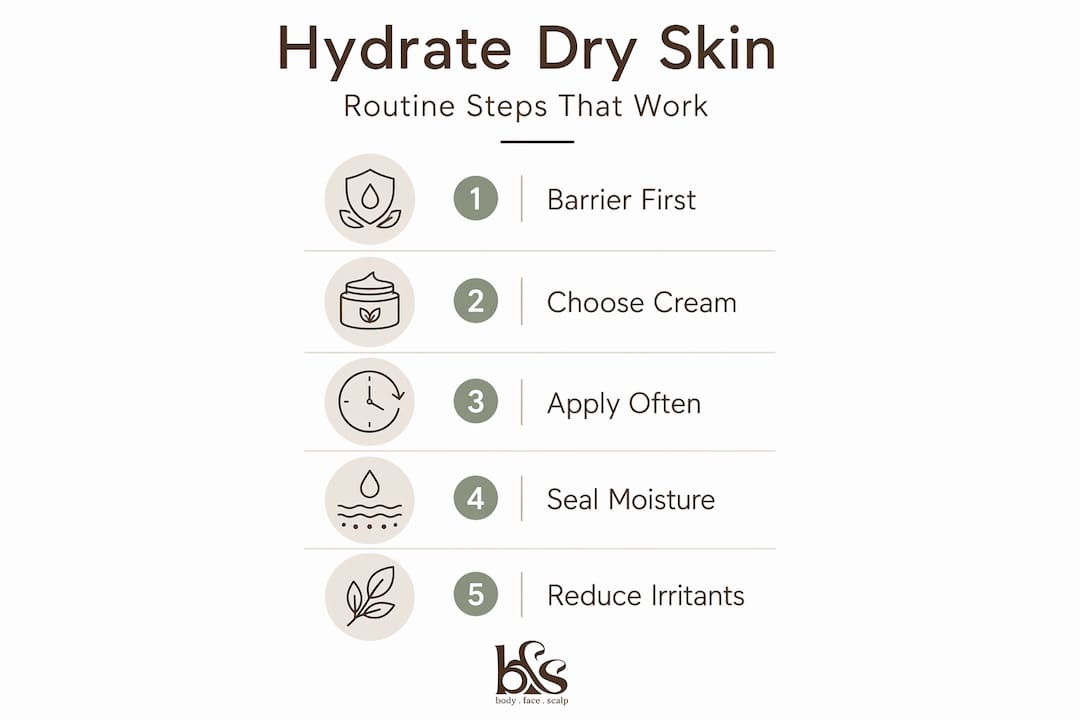
If your skin is consistently dry, a cream or ointment will outperform a lotion in almost every scenario. That is not a marketing claim. It is a function of occlusive content. Ointments like petroleum jelly are among the most effective occlusives available precisely because they form a dense barrier film.
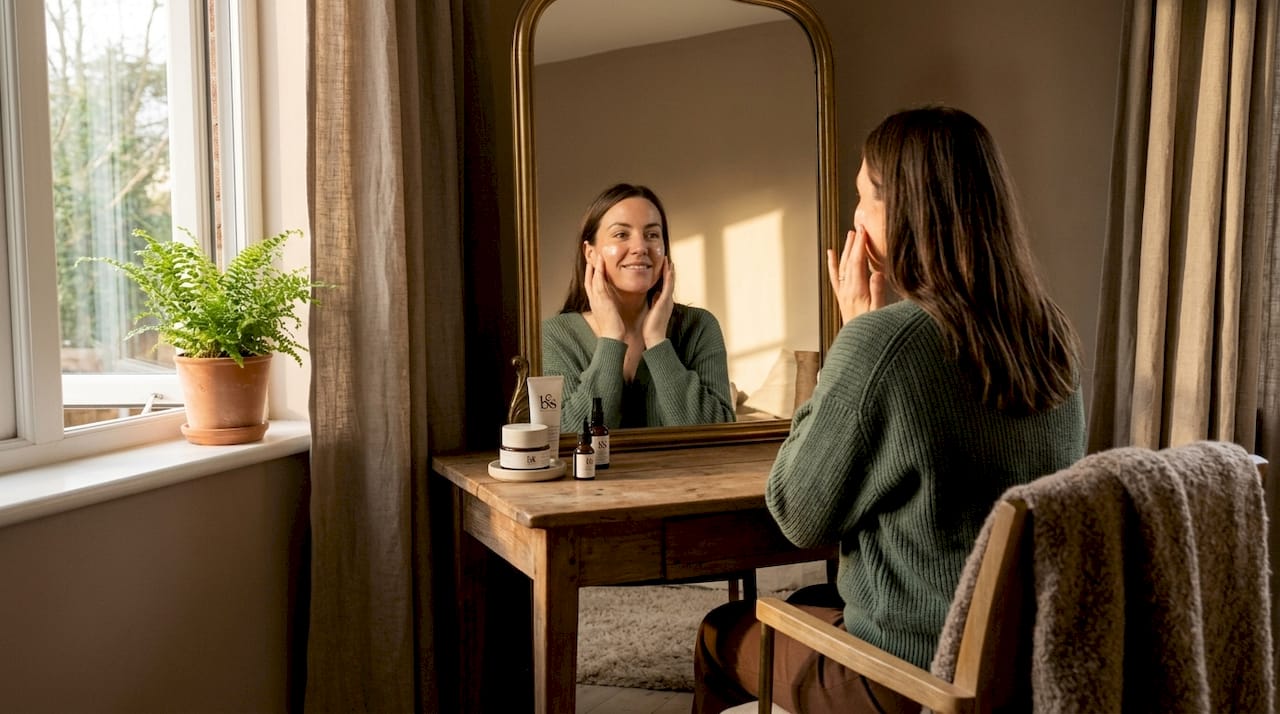
The soak and smear technique is clinically recommended for a reason. After your bath or shower, gently pat your skin until it is damp but not dripping, then apply your moisturiser within two to three minutes. You are essentially trapping the water still sitting on the surface of your skin.
Here are the formulation qualities worth prioritising when selecting the best moisturisers for dry skin:
- Ceramides to replenish the lipid matrix of the stratum corneum
- Glycerin or urea as a humectant for active hydration
- Dimethicone, shea butter, or petrolatum as an occlusive to seal moisture in
- Free of synthetic fragrance and denatured alcohol
- pH-balanced formulations that respect the skin’s acidic mantle
One detail that surprises many people: humectants alone can worsen dryness in low-humidity environments. Hyaluronic acid serums, for example, will draw water toward the surface of your skin, but if there is no occlusive layer on top and the air is dry, that water simply evaporates. In Canada’s winter climate, applying a hyaluronic acid serum without sealing it in with a cream is often counterproductive.
Consistency matters more than perfection. Applying an appropriate emollient multiple times daily, especially after bathing, produces better results than any single high-end product applied occasionally.
When dry skin signals something more
Sometimes the answer to why your skin is flaky or persistently dry is not in your product shelf. Certain skin conditions impair the barrier at a structural level, and standard moisturisers alone are not enough to manage them.
Common conditions that cause barrier dysfunction include:
- Atopic dermatitis (eczema): Characterised by chronic inflammation and a genetically impaired barrier that allows excessive water loss. Skin will feel dry, itchy, and reactive regardless of how often you moisturise.
- Keratosis pilaris: A build-up of keratin that blocks hair follicles, causing rough, bumpy, dry patches most commonly on the arms and thighs. Often mistaken for just dry skin.
- Psoriasis: An autoimmune condition causing rapid skin cell turnover, resulting in thick, dry, scaly plaques that do not respond to conventional moisturisers.
- Contact dermatitis: Triggered by an allergen or irritant, this causes inflammation that impairs the barrier and makes the skin feel persistently dry and irritated.
Medications are another underappreciated factor. Diuretics, antiandrogens, and cholesterol-lowering drugs can all contribute to dry skin as a side effect. If your dryness started or worsened after beginning a new medication, speak with your doctor before changing your skincare routine.
Signs it is time to see a dermatologist include skin that cracks and bleeds, significant itching that disrupts sleep, a visible rash, or dryness that does not improve after several consistent weeks of barrier-focused care.
Lifestyle habits that support skin hydration
Skincare products address the outside of the barrier. These habits support it from every angle.
- Use a humidifier. Indoor heating during Canadian winters can drop indoor humidity to desert-like levels. A humidifier in your bedroom keeps the air from pulling moisture directly out of your skin overnight.
- Shorten and cool your showers. Pat skin dry rather than rub, and limit showers to five to ten minutes in lukewarm water to preserve your skin’s natural oil film.
- Switch to fragrance-free products. Fragrance is one of the leading causes of contact sensitisation and low-level barrier damage. It appears in soaps, laundry detergent, and even some moisturisers labelled for sensitive skin.
- Drink adequate water. Hydration from within supports skin cell function, though it will not single-handedly solve barrier damage. Consider it a foundation, not a fix.
- Eat fats that support skin lipids. Omega-3 fatty acids from salmon, walnuts, or flaxseed contribute to the lipid structures in the skin. Deficiencies can show up as chronically dry, rough skin.
Pro Tip: Treating dryness without addressing external irritation and environmental triggers will often fail to improve symptoms. Think of lifestyle changes and topical care as two sides of the same approach.
My take on why moisturiser keeps failing people
I have seen this play out so many times. Someone spends money on a well-reviewed product, applies it every day, and still comes back frustrated because nothing is working. When I dig into their routine, the pattern is almost always the same. They are applying moisturiser five minutes after a hot shower on completely dry skin, using a fragrance-heavy formula, and living through a Canadian winter with no humidifier running.
The product is not the problem. The routine is.
What I have learned is that barrier repair is about reducing evaporation, not simply adding water. Most people think hydration is the goal. It is actually retention. You can pour water into a broken cup all day. Until you fix the crack, it will never stay full.
The other thing I want people to stop believing is that dryness is solved in a week. If your barrier has been compromised for months or years, rebuilding it takes consistent effort over at least four to six weeks before you see meaningful change. That patience is not passive. It requires showing up with the right products, applied at the right time, while removing the things that are actively breaking the barrier down.
Skincare is not a quick fix. It is a practice. The clients I have seen get the best results are the ones who accept that and commit to a barrier-focused face care workflow instead of chasing individual hero products.
— Mohid
Barrier repair skincare from Bodyfacescalp
At Bodyfacescalp, we built our entire formulation philosophy around one idea: that dry, reactive skin is almost always a barrier problem, not a hydration problem. That distinction shapes every product we make.
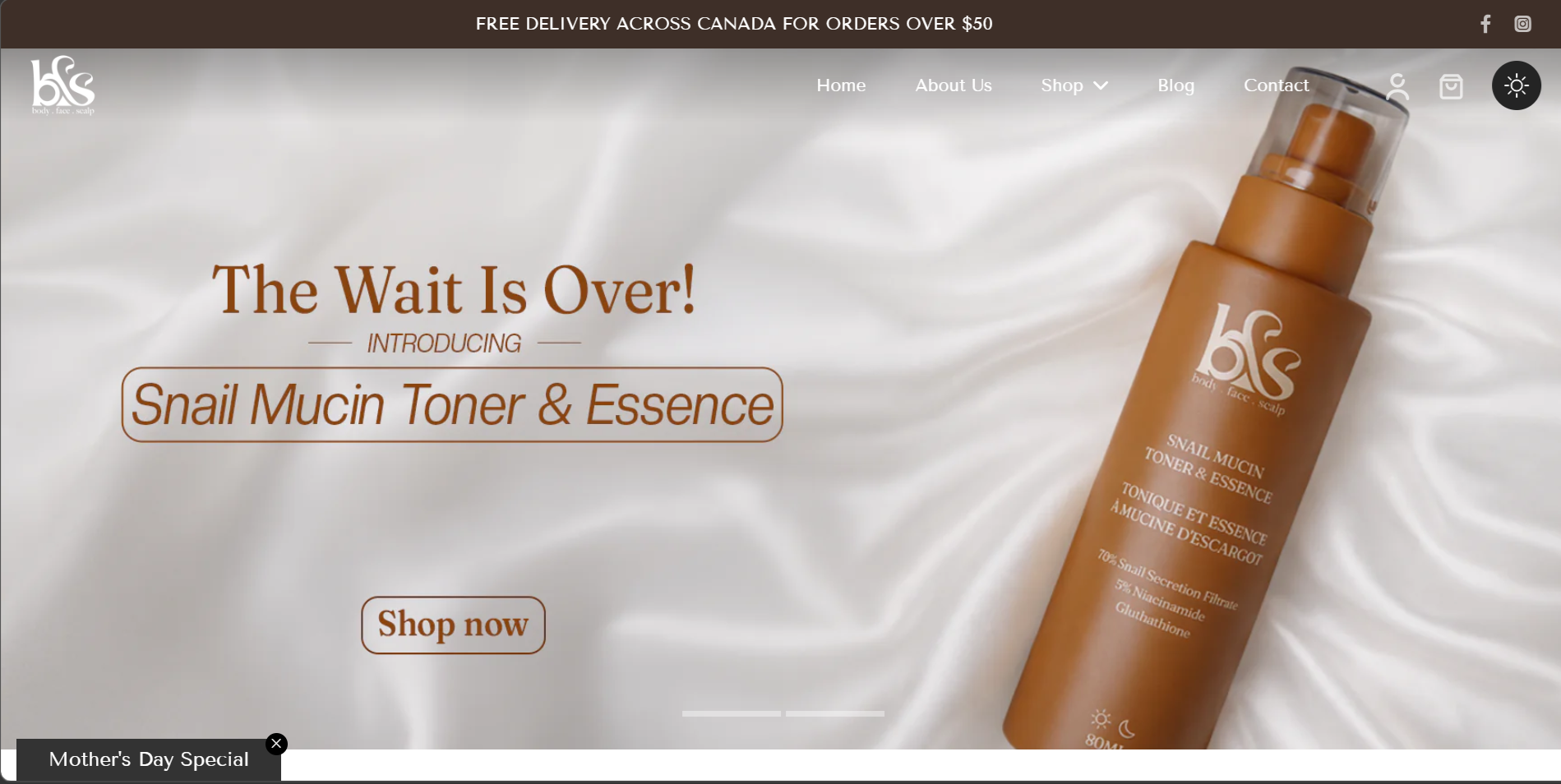
Our Barrier Restoring Moisturiser was designed specifically for the kind of persistent dryness that lotion alone cannot resolve. It combines ceramides to replenish the lipid matrix, glycerin as a humectant, and dimethicone as an occlusive seal. No synthetic fragrance. No denatured alcohol. Formulated to work in Canada’s cold, dry climate where standard moisturisers consistently fall short.
If you are ready to address dryness at the source rather than masking it, explore our full skincare collection or consider the Advanced Repair Trio, a complete barrier care system for those dealing with more significant dryness and sensitivity. We also offer education-led guidance across our site to help you build a routine that actually works for your skin.
FAQ
Why is my skin still dry right after applying lotion?
If your skin feels dry shortly after applying lotion, the product likely lacks a sufficient occlusive ingredient to seal in moisture. Applying lotion to fully dry skin instead of damp skin also reduces its effectiveness significantly.
What does transepidermal water loss mean?
Transepidermal water loss (TEWL) refers to water passively evaporating through a damaged or compromised skin barrier. High TEWL is the primary reason skin remains dry despite regular moisturising.
Can I use hyaluronic acid if I have dry skin?
Yes, but always follow it with a cream or occlusive moisturiser. Humectants alone can worsen dryness in low-humidity environments by drawing water to the surface without preventing its evaporation.
When should I see a doctor about dry skin?
See a dermatologist if your skin cracks, bleeds, or itches severely, or if consistent barrier-focused care over four to six weeks produces no improvement. Underlying conditions like eczema or medication side effects may require targeted treatment.
How do I hydrate dry skin more effectively?
Apply a fragrance-free cream or ointment containing ceramides and glycerin within two to three minutes of bathing while skin is still damp. Repeat at least twice daily and run a humidifier in dry indoor environments.